


Floating Button

An economic survey from the supermarket shelf

Daryl Guppy
Daryl Guppy • 5 min read
An economic survey from the supermarket shelf
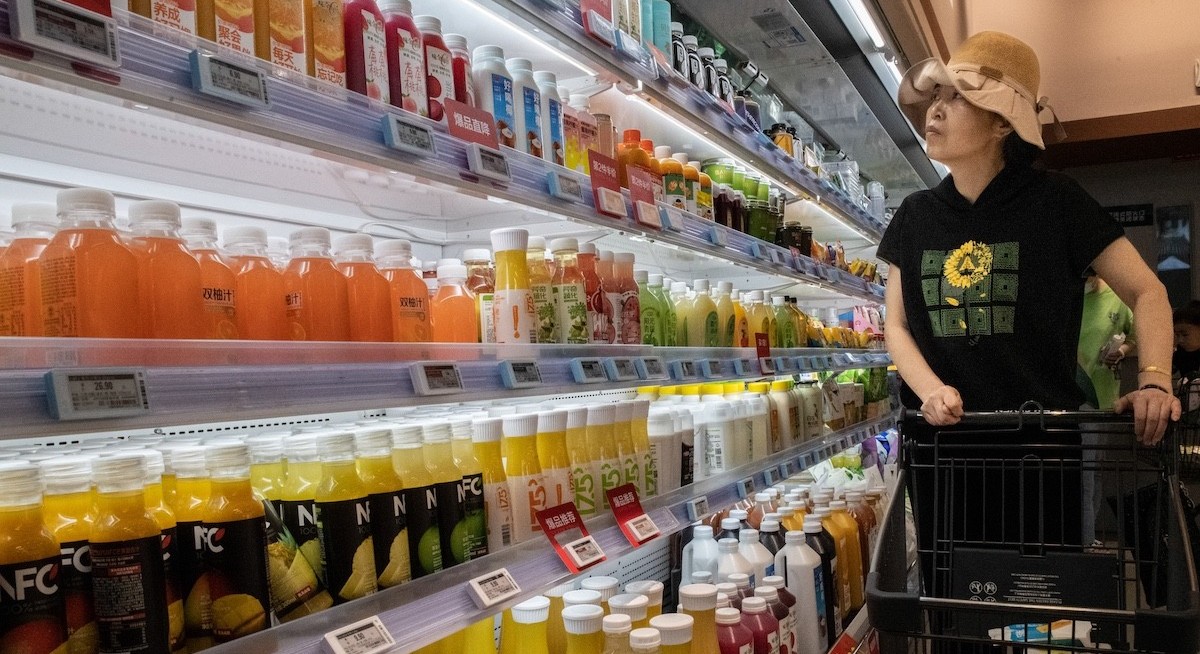
Rise of consumerism in China: A colourful array of beverages to choose from in a Beijing supermarket. Photo: Bloomberg
Font Resizer
Share to Whatsapp
Share to Facebook
Share to LinkedIn
Scroll to top
Follow us on Facebook and join our Telegram channel for the latest updates.

I love visiting and exploring Chinese supermarkets. Let me explain. Flying to a conference event in China is often not as simple as arriving, attending and departing. Due to flight schedules, there is often additional “free” time before and after the conference, as well as after the endless rounds of banquets and drinking sessions.

For the first few visits, people often take the opportunity to play tourist, visiting the Great Wall or the Forbidden City in Beijing. There are multiple choices, but visit often enough and yet another visit to the Temple of Heaven is less than appealing.

With limited time, there is a danger of getting trapped in the hotel room, waiting for late checkout while reading emails and scrolling through social media.

This is where China’s neighbourhood supermarket comes into play. The supermarket in China has evolved to meet the changing needs of the Chinese consumer. The supermarket provides an insight into the real lives of ordinary people. The product displays reflect changing tastes and levels of disposable income. They also provide a real-time assessment of the Chinese economy.

Take tofu, for instance. Two decades ago, the shelves were filled with locally produced, unbranded tofu in rough packaging or sitting in containers, which were filled directly at the supermarket. Today, that industry has disappeared and tofu shelves are filled with global brand-name products in sleek packaging at higher prices.

A decade ago, domestic yoghurt brands were edging out the Chinese product on shelves. Now, a wide variety of international and domestic yoghurt brands, both common and exotic, dominate the shelves. It’s not just the flavours. It is also the packaging and presentation.

See also: New World Development posts 1H loss as woes persist

Chocolate is also one of my favourite items to shop for. There was a time when the chocolate industry believed there was little appetite for chocolate in China, given bleak sales. Often, only a small shelf of chocolate was available. However, the reason for low sales was not the product, but the packaging.

The bestseller was Hershey Kisses because they came individually wrapped, which suited Chinese hygiene preferences when sharing food.

Today, the chocolate aisle in China has exploded, with almost all products available in small, bite-sized portions, each individually wrapped, making them ideal for sharing. Despite the higher prices, sales are brisk.

See also: China ousts nine military lawmakers as Xi’s defence purge widens

A decade ago, the Chinese supermarket often had a street-market section where noodles, soups, mantou (steamed buns), dumplings, and other dishes were prepared on-site. These were similar to what we have in Singapore’s food courts, but the individual counters were smaller and often staffed by fierce-looking aunties who served customers with a disgruntled attitude.

These sprawling kitchens have largely disappeared, replaced by a more sophisticated display of finished products which have prepared out of sight in a sterile central kitchen. It reflects a change in eating habits and tastes.

The open racks of loose, dried ingredients, such as preserved vegetables, salted eggs, pungent spices, cured meats and mysterious animal parts, like those found in some old shophouses in Chinatown, have largely disappeared, replaced by branded, packaged sachets that guarantee freshness, provenance, quality and traceability.

The international variety of fresh vegetables and fruits has been added to the more limited range of local produce, meeting both demand and the ability to pay.

Thirty minutes in the supermarket can tell you more about the Chinese economy than hours spent poring over statistics.

Technical outlook of the Shanghai market

With just a few days of trading after the Spring Festival holiday, there is not much change of note with the Shanghai index. Reaction to the US Supreme Court’s tariff decision and to Trump’s rejection of court rulings has been muted. The index quickly resumed its upward trend rebound.

For more stories about where money flows, click here for Capital Section

The Shanghai index has again moved above the key resistance level near 4,100. This continues the good rally that led into the Spring Festival holiday period.

The market bounce developed from the support region indicated by the long-term group of averages in the Guppy Multiple Moving Average (GMMA) indicator. The upper edge of the long-term GMMA provided support for the rebound following the US court ruling on Trump’s tariffs and his response.

The most important feature of the rebound is that the long-term GMMA did not compress in response to the market retreat. This shows that investors remained confident in the stability of the longer-term uptrend.

A successful break above 4,100 has an upside resistance at the previous uptrend line. This is currently near 4,270. The target for the trading band calculation is 4,300. After the first week of March, the primary resistance feature is the trade band projection near 4,300. This is because the trend line will be above 4,300 in early March.

The lower edge of the short-term GMMA touched the upper edge of the long-term GMMA and then rebounded. The sustained width of the long-term GMMA suggests the trend remains strong.

The GMMA relationships suggest a good probability of an uptrend continuation following the Spring Festival holiday break.

Daryl Guppy is an international expert in financial technical analysis. He has provided weekly Shanghai Index analysis for mainland Chinese media for two decades. Guppy appears regularly on CNBC Asia.

×
The Edge Singapore
Download The Edge Singapore App
Google playApple store play
Keep updated
Follow our social media
© 2026 The Edge Publishing Pte Ltd. All rights reserved.

