
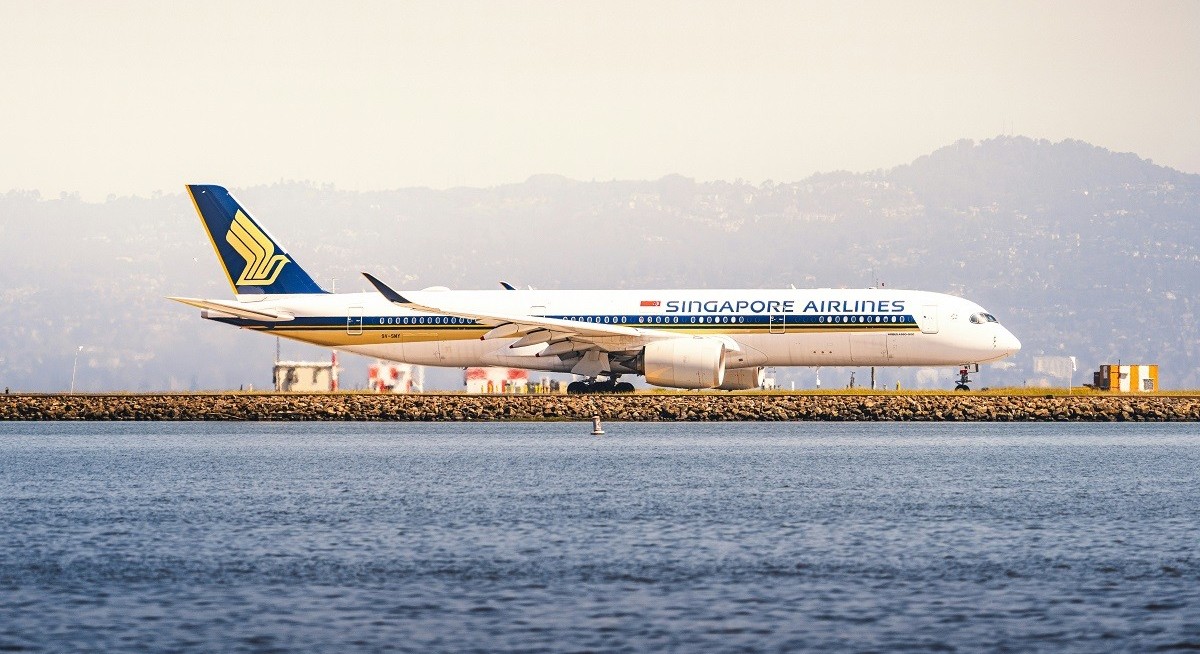

SIA reported core net profit of $505 million, down 4% y-o-y, after taking out the one-off $1.1 billion accounting gain from the merger of Air India and SIA’s then associate Vistara in November 2024.
“Given the stronger seasonality in the second half of the year, we expect momentum to carry through into 4QFY2026, underpinned by sustained travel demand and improved yield performance,” state the analysts in their Feb 26 note.
As such, Liu and Ong have revised their FY2026 and FY2028 earnings forecasts by 40% to 91%, on the back of a stabilised pax yield, narrowing Air-India’s losses, and positive operating leverage. By applying a 1.3 times P/B multiple, they have derived a higher target price of $7.03, up from $6.35 earlier.
Two other brokerages have also raised their target prices for SIA. Citing the better-than-expected passenger yield, which has stabilised at a new post-pandemic equilibrium, Jason Sum of DBS Group Research sees a “more constructive pricing backdrop” emerging.
See also: Continued cost optimisation strengthens outlook for Seatrium
“This turnaround is notable given persistent pricing pressure across the Apac region amid intensifying competition, though we note that 3QFY2026 is typically the strongest seasonal quarter,” he says.
Sum adds that the airline is guiding for “stable” yields rather than “gradual moderation”, thereby supporting upward revisions to operating profit estimates for FY2026 and FY2027. By applying a valuation multiple of 4.7 times EV/Ebitda, Sum has derived a new target price of $7.50, up from $6.50.
However, he believes that much of the recovery is already priced in, and yields may “undershoot” as competition intensifies, and that “uncertainty” remains over the durability of yield strength.
See also: Yangzijiang promises quality earnings, dividend growth and inexpensive valuation
For now, the 4.7 times EV/Ebitda multiple, versus 4.1 times for its peers across the region, appears “balanced” and supports his “hold” call. “While the yield landscape appears to be stabilising, we would prefer to see this sustained over subsequent quarters before turning more constructive, particularly given ongoing regional capacity additions,” says Sum.
Similarly, Roy Chen of UOB Kay Hian has raised his target price from $6.16 to $7.18 while maintaining his “hold” rating. He calls the passenger yield a “positive surprise”. Still, he is disappointed by the heavier-than-expected drag from Air India, with SIA’s share of losses at $200 million rather than $100 million as he had earlier estimated.
Nonetheless, Chen is cheered by SIA’s strong balance sheet, with a net cash position of nearly $2 billion as at end Dec 31, 2025, equal to 9% of the airline’s market value.
Chen says he is “overall positive” about the 3QFY2026 results and has raised his FY2026 and FY2028 earnings estimates by 1% and 18%, respectively, to reflect a steadier passenger yield outlook.
His revised target price of $7.18 is based on 1.36 times FY2027 P/B, which is pegged to 1.5 standard deviations above SIA’s long-term historical mean P/B of 1.08 times. “Air India is a major wild card for our forecasts in the medium term. A faster-than-expected turnaround of Air India would be a key re-rating catalyst for SIA,” says Chen.
Back when SIA was coming out of the pandemic, it enjoyed record earnings from revenge travel as people flocked to the skies after years of lockdown — and were willing to pay top dollar for the privilege. Citing the moderation of passenger yield, Ada Lim of OCBC Group Research points out that SIA has reached the “end of the post-pandemic runway for exceptionalism”.
Lim warns that tariff uncertainty and global growth concerns may weigh on travel demand and worsen supply chain disruptions. Persistent or widening losses from Air India in the near term may also be an overhang on its share price, she says.
“Nonetheless, we remain confident that SIA’s brand proposition, service quality, and product innovation will allow it to navigate the volatility and transition from normalisation to growth. In our view, SIA continues to hold long-term value in investors’ portfolios,” says Lim. While Lim has also kept her “hold” call, her revised fair value for the stock is $6.88, up from $6.40.


