

Floating Button
Home Capital Investing strategies

FSSA plays both defence and offence

Rasmus Nemmoe
Rasmus Nemmoe • 10 min read
FSSA plays both defence and offence
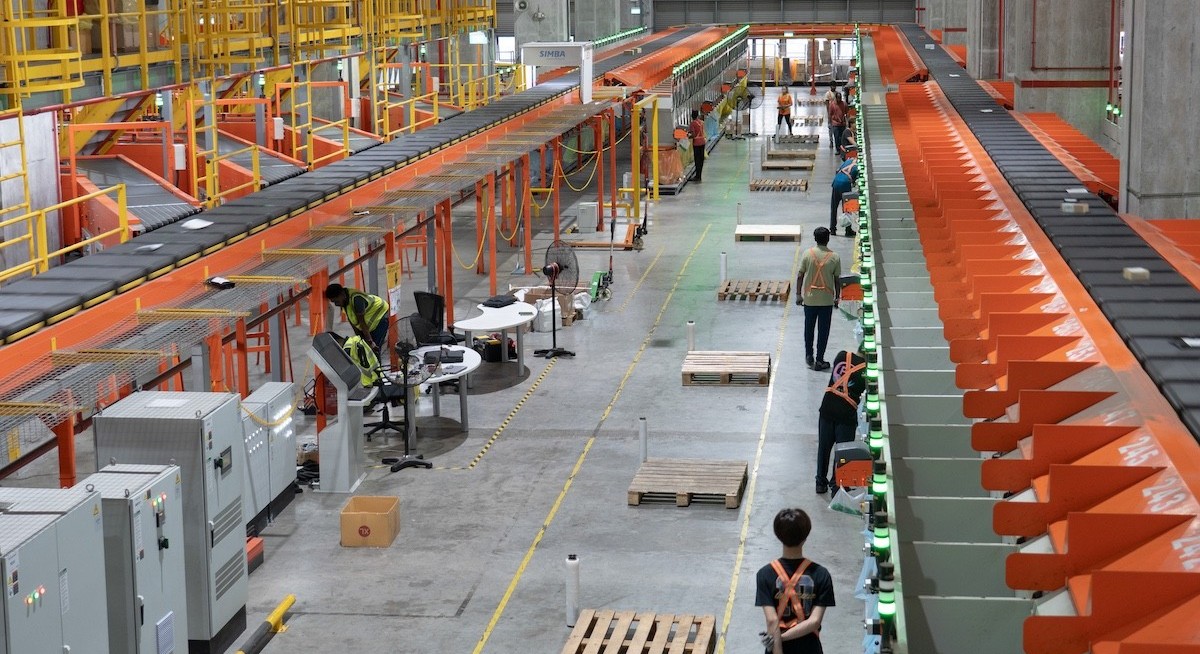
FSSA likes Sea, which runs businesses including ecommerce platform Shopee, where it is starting to enjoy self-reinforcing structural advantages. Photo: Bloomberg
Font Resizer
Share to Whatsapp
Share to Facebook
Share to LinkedIn
Scroll to top
Follow us on Facebook and join our Telegram channel for the latest updates.

The world today feels more uncertain than it has for decades. This is not just a matter of sentiment; it reflects a genuine shift in the global order.

In the post-Cold War period, the world followed a broadly unipolar system — a rules-based framework anchored by the US — that delivered a prolonged “peace dividend” and supported the steady deepening of global trade and capital flows.

However, it is increasingly being recognised that this period has come to an end. A more multipolar world is not inherently a worse one, but history shows that it is typically more conflict-prone. As power becomes more diffuse, it becomes increasingly difficult to enforce a rules-based order, and there are growing incentives to test the boundaries.

The late 19th century offers an imperfect but useful parallel: this was a period marked by rising powers, intensifying strategic rivalries and frequent flashpoints, even as innovation and trade continued to expand. The point is not that history repeats — it rarely does — but that multipolarity generally results in higher friction. This shift matters to investors for two reasons.

First, the reliability premium that has underpinned global capital markets may begin to erode. For decades, the US benefited from an exceptional combination of deep and open capital markets, strong institutions and a global security role that reinforced the perception of being the “best and safest” destination for capital. This attracted persistent inflows and enabled the US to run large external and fiscal deficits without an immediate market penalty.

But if confidence in its institutional predictability weakens, even at the margin, its risk premia will rise, and diversification away from the US becomes more rational. The adjustment may be gradual, but it does not need to be abrupt to have meaningful implications for investors, especially as emerging market economies now account for more than half of global GDP, roughly double their share 25 years ago, but only about 10% of global equity indices.

See also: Gold and oil swing after first strikes as JP Morgan flags uncertainty; Singapore seen as safe haven

Significant effect

If the institutional and policy gap between the US and emerging markets narrows — with the US becoming less predictable and parts of the emerging world becoming more so — even modest reallocations of capital could have a significant effect.

Second, the political economy underpinning US “exceptionalism” appears more fragile than it once was. Over time, systems that deliver disproportionate gains to capital while hollowing out the middle classes tend to become politically unstable — a dynamic anyone familiar with Argentina and Brazil in the mid-20th century will recognise.

See also: First Venezuela, now Iran. For the markets, it’s one battle after another

Rising inequality, regulatory capture and policy volatility are not just social considerations; they are investment risks. They often result in greater interventions, more populist policymaking and less predictable outcomes. Whether this is attributed to individual political actors or deeper structural forces is largely beside the point. The direction of travel is towards a less predictable policy environment — and that is rarely conducive to sustained high valuation multiples.

Against this backdrop, one question we are frequently asked relates to defence stocks and why we don’t own any. After all, defence stocks have been a clear beneficiary as geopolitical risk moved to the foreground.

Our answer is simple: defence companies sit firmly on our exclusions list. We have long had areas we simply do not invest in. These include businesses with structurally harmful products (such as tobacco), economic activities tied to addiction or social harm (for example, gambling), or externalities that are too large and too difficult to price with any confidence.

The common thread is not moral posturing but prudence. As long-term investors, our focus is on a company’s licence to operate and stakeholder alignment.

Over long holding periods, businesses that are misaligned with key stakeholders — employees, suppliers, customers or society at large — tend to face persistent licence-to-operate risks and non-linear regulatory outcomes that can overwhelm even robust investment cases.

Experience suggests that where one set of stakeholders is consistently disadvantaged, minority shareholders are rarely immune. Defence sits in a different category, but the same risk lens applies. While we are not against weapons being used in genuine defence, the problem is that it is extremely difficult to determine where defence ends and offence begins. In a world of proxy conflicts, dual-use technology and opaque end-users, a product’s ultimate use is inherently uncertain. The same platform that can protect civilians in one context can enable escalation in another.

In addition, unlike many other industries, a meaningful part of the customer base is the state, which means the ethical boundary is ultimately set by politics, not by the company. That ambiguity makes stewardship and accountability impossible to assess with any confidence. Without clarity on end-use and alignment, we would rather stay on the sidelines.

For more stories about where money flows, click here for Capital Section

Recent relative performance

A brief comment on recent portfolio performance is warranted. While we are not normally focused on short-term performance numbers, the magnitude of the relative underperformance since mid-2025 naturally deserves some explanation.

To put the recent performance into context, the strategy rose by 7% (USD) in the second half of 2025 and by 24% (USD) over the full year. Under normal circumstances, we would consider this a very healthy outcome. However, market returns over the same period have been exceptionally strong (16% and 34% respectively), driven primarily by areas of the benchmark that are not aligned with our investment approach.

In particular, the strongest contributors have been parts of the technology hardware and semiconductor supply chain supported by elevated AI-related capital expenditure (capex), China value stocks (notably state-owned enterprises (SOEs), including energy-related companies), Korean cyclicals (outside of memory, where our exposure is concentrated in SK Hynix and Samsung Electronics) and the broader materials complex across emerging markets.

Price-takers vs price-setters

Taken together, these dynamics account for the majority of the divergence. Our positioning — and lack thereof — is set out below. Starting with IT hardware, while we recognise the strength of the capex cycle (and continue to own the likes of TSMC and SK Hynix), we remain cautious on most technology hardware businesses as long-term investments.

In our experience, they tend to be structural price-takers rather than price-setters, operate in highly competitive and capital-intensive industries, and struggle to maintain durable competitive advantages over time. Periods of supernormal profitability tend to attract rapid capacity expansion and new entrants, which ultimately compress margins and returns.

Outside a small number of areas with genuine barriers to entry — such as foundry and memory semiconductors — it is difficult for the majority of hardware businesses to compound value consistently over the long term.

For similar structural reasons, we do not believe that Chinese value stocks, Korean cyclicals (aside from memory), or much of the materials complex across emerging markets are well-suited for long-term investors. The underlying issues are structural and recurring: Chinese value stocks are largely dominated by SOEs, where alignment with minority shareholders is weak, and capital allocation is often driven by policy objectives rather than returns.

Secondly, Korean cyclicals are, by definition, highly cyclical businesses with volatile earnings and limited scope for long-term compounding. Unlike the memory companies, SK Hynix and Samsung Electronics, most other industries in Korea are capital-intensive but lack durable competitive advantages. High fixed costs, limited pricing power and rapid capacity responses tend to compress returns over the cycle, making it difficult for these businesses to generate sustained excess returns.

Finally, the broad materials complex across emerging markets faces similar structural issues: many companies are state-owned to begin with, and/or operate in jurisdictions where the rule of law is not ideal, which makes the “stroke-of-the-pen” risk an important constraint on long-term shareholder returns.

There will be periods when our investment approach is out of favour. In liquidity-driven market rallies, cyclical and deep-value companies that benefit from strong fund flow dynamics tend to outperform, while quality- and fundamentals-led approaches can lag.

In a world with more uncertainties, we have not changed the way we invest. If anything, it reinforces the importance of sticking to our core investment principles: focusing on businesses with durable competitive advantages, recurring cash flows, balance sheet resilience, capable management teams and aligned owners.

We are long-term investors, and while these relative return setbacks can be unpleasant, our experience of investing over numerous cycles is that a disciplined investment process focused on the fundamentals of value creation ultimately pays off — but it can be a bumpy ride in the meantime.

Amid the market rally, we are keeping a close eye on valuations. We believe our holdings continue to offer attractive long-term compounding opportunities. Our analysis suggests they can grow earnings at a mid- to high-teens compound annual growth rate on a weighted average basis over the medium term — a rate that has historically been higher than the broader market and which we also expect to be the case in the coming years.

Against this growth backdrop, the portfolio’s aggregate valuation, at 17.8 times price-to-free cash flow (versus 22.1 times for the broader market), looks attractive and reasonable to us. This leaves us optimistic from both an absolute and a relative perspective.

New investment

Finally, we have initiated a position in Sea, a Southeast Asian internet group with operations across e-commerce (Shopee), digital financial services (SeaMoney, now rebranded to Monee) and online gaming (Garena). The group’s primary markets are in Southeast Asia, with a growing presence in Brazil.

We have followed Sea for many years. We first met the company in 2018 and did more substantive work in early 2020, but we stayed on the sidelines as there were simply too many open questions.

Today, however, we believe it is a structurally better business. Gaming remains a high-margin, cash-generative segment — and while it is more mature now, it is still a valuable profit engine. Where our perception has shifted most is on e-commerce and fintech.

In the past, we thought it was too hard to build a sustainable advantage in third-party marketplaces and that affordability constraints in its core markets would limit penetration. But our other holding, MercadoLibre, a Latin American online marketplace, has shown that these challenges can be overcome — and Shopee’s execution increasingly suggests the same.

In key markets such as Indonesia and Vietnam, Shopee’s scale advantage has started to self-reinforce — its higher order density has improved the efficiency of its logistics, lowered delivery costs and strengthened user engagement, thus effectively locking in its lead.

Similarly, on fintech, we were unsure how big the opportunity could be, but again, MercadoLibre provides a useful parallel. E-commerce is one of the best foundations for building a fintech ecosystem, given the rich data on merchants and buyers and the natural credit demand around discretionary consumption.

If Sea’s trajectory follows a similar pathway to MercadoLibre’s, fintech could eventually surpass e-commerce as its key profit driver. Through multiple meetings with the management team over the years, we have come to view Sea’s leadership as long-term minded, having been together for many years and focused on building a business to last.

Long-term value creation

The period following Covid-19 was challenging, but it appears to have been formative. Its founder, Forrest Li, and the senior management team went through a difficult adjustment, made hard decisions — including foregoing incentives — and communicated well with employees during a period of stress. The organisation seems to have emerged stronger as a result, with more discipline and a more proactive strategy.

There is now also a clearer emphasis on long-term value creation, including reinvestment in logistics and customer experience, rather than a narrow focus on short-term earnings.

At the time of purchase, Sea was trading on a free cash flow yield of 5%. While not a bargain, we view the valuation as increasingly attractive relative to the improved quality of the business. We expect Sea to generate sustained cash flow growth over time, which should support long-term value creation.

We look forward to holding this company long into the future.

Rasmus Nemmoe is a portfolio manager of FSSA Investment Managers

×
The Edge Singapore
Download The Edge Singapore App
Google playApple store play
Keep updated
Follow our social media
© 2026 The Edge Publishing Pte Ltd. All rights reserved.

