
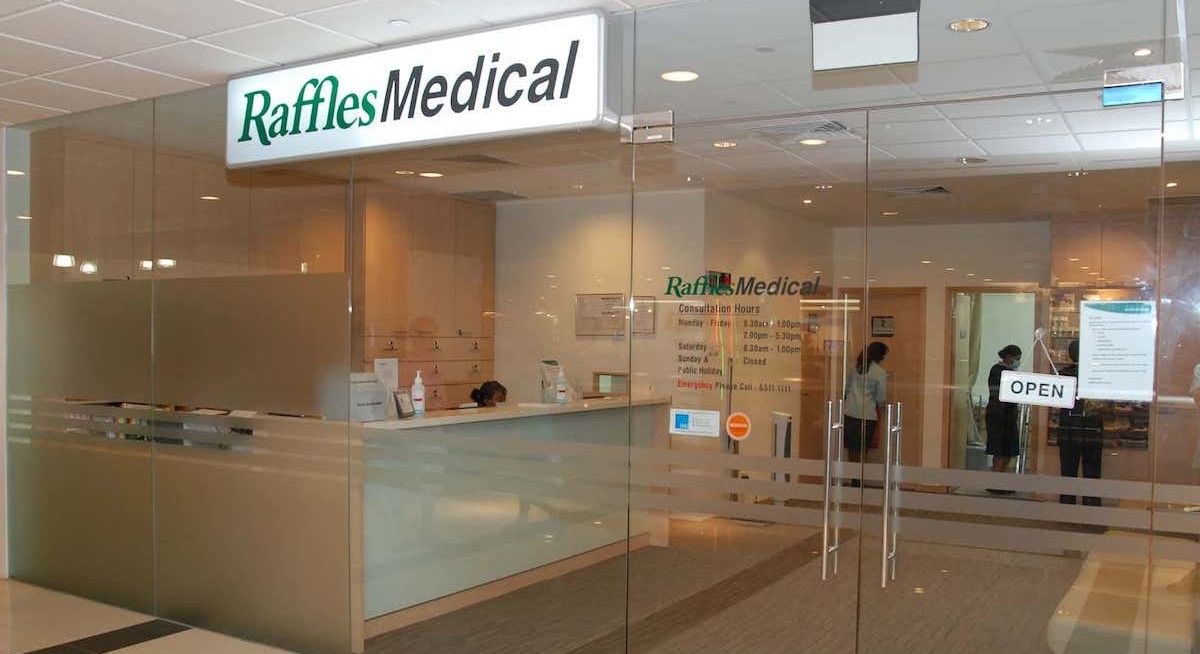

For founder and executive chairman Dr Loo Choon Yong, he is eager to lead an even larger entity than the sole clinic he started. Besides focusing on growing his existing markets of Singapore, China, Vietnam, Cambodia, Japan and Hong Kong, Loo is eyeing further expansion.
He points out that populations in Singapore and China are ageing. “[Singapore] is home, this is the market we know better. We must always focus [here]. In fact, we are prepared to invest more right now,” says Loo, without sharing a specific timeline for investing in the local market. He notes that demand is increasing and that the supply “will come forward” and, given space constraints, growth will more likely come from smaller medical centres and clinics rather than full-fledged hospitals.
China, on the other hand, still has much room to grow. “We will have more patients [in China]. The cost is lower there too,” says Loo, referring to China’s strong medical tourism industry that attracts expats and those from neighbouring countries. In contrast, Singapore, with its high-quality healthcare offerings and a strong Singapore dollar, tends to attract wealthy individuals from the region.
Meanwhile, across the border, Loo had previously expressed interest in expanding in Johor, with the intention of taking advantage of the upcoming Johor-Singapore Special Economic Zone (JS-SEZ). “There may be a scope. We may have an outpatient thing. But whether or not we will be opening a hospital remains to be seen,” says Loo.
See also: The power of pieces: From fractional horses to digital tokens
Analysts are generally positive across the board on RMG’s future growth. Amanda Tan of DBS Group Research is keeping her “buy” call but has lowered her target price to $1.25 from $1.32, citing slower-than-expected momentum in China. Nonetheless, Tan likes RMG’s resilient Singapore base, with insurance driving the next leg of growth.
“Overall, China operations remain loss-making at the group level in FY2025, with Ebitda breakeven expectations now revised from both the Shanghai and Chongqing hospitals reaching breakeven in 2026 to only one hospital expected to achieve breakeven in 2H2026, with Shanghai more likely given its greenfield structure and absence of goodwill,” says Tan, while noting that patient volumes are gradually building as management advances its strategy of converting health screening into treatment and deepens collaborations with established local hospitals.
Capital management policy also remains disciplined, with the company committed to distributing at least 50% of sustainable earnings annually. RMG also has significant headroom for additional share buybacks, which could provide incremental support for the share price, says Tan.
See also: Citi expects Asia investment banking momentum to carry into 2026
UOB Kay Hian’s Roy Chen views RMG’s 2HFY2025 performance as lacklustre, while noting that key business performances are a mixed bag. Nonetheless, he is keeping his “buy” call and $1.25 target price. He expects steady performance in the near term, with a 7.5% CAGR in core earnings to FY2028, driven by steady Singapore operations and improving profitability in China.
Eric Ong of Maybank Securities also has a “buy” call but a slightly raised target price of $1.20 from $1.13. He calls the hospital services segment the “star performer. At the same time, the insurance arm has managed to narrow its full-year losses through disciplined claims management and prudent expense control.
The Raffles Longevity Centre is set to open its doors in 1Q2026. This is a physician-led, multidisciplinary facility focused on helping individuals achieve healthier, longer lives. Ong expects to see more meaningful contributions in 2HFY2026.
Shekhar Jaiswal of RHB Bank Singapore is the most bullish, with his “buy” call. He has raised his target price to $1.30 from $1.15. While revenue and patmi were largely in line, he sees further improvement in hospital operations due to specialist-led volume and supportive insurer panel flow. Meanwhile, China losses continue to narrow despite ebitda breakeven pushed to 2027.
Also, insurance profitability has improved materially and should benefit from tighter Ministry of Health (MOH) rider rules from April. “A net cash balance supports accretive M&A, with the Vietnam deal in late-stage due diligence,” he adds.


