






First REIT had a challenging 1Q2026 due to currency headwinds. Rental and other income declined 8.4% y-o-y to $23.2 million in 1Q2026. Net property and other income fell 8.3% y-o-y to $22.5 million over the same period. The decrease in rental and other income was primarily due to the loss of income following the divestment of Imperial Aryaduta Hotel & Country Club as well as the significant depreciation of Indonesian Rupiah and Japanese Yen against the Singapore Dollar, partly offset by higher rental income from Indonesia and Singapore properties. Distributable Income declined by 12.5% y-o-y to $10.6 million in 1Q2026. DPU has dipped to 0.50 cents in 1Q2026 down 13.8% y-o-y mainly due to foreign currencies depreciationg against the Singapore dollar, and an enlarged unit base resulting from the issuance of units for payment of management fees. Net asset value per unit as at Mar was 24.42 cents down from 24.97 cents a year ago due to depreciation of the foreign currencies against the Singapore Dollar.
As at Mar 31, 44.2% of the debt portfolio was either on fixed rates or hedged. Aggregate leverage rose to 44.6% and interest coverage ratio amounted to 4.4 times. Cost of debt improved to 3.9% in 1Q2026 compared to 4.7% a year ago. First REIT has secured a 12-month extension of its $300 million term loan and revolving credit facilities, extending its maturity date from May 2026 to May 2027. The Manager is currently in discussions with lenders for the refinancing of the Japanese Yen-denominated social loan due in September 2026.
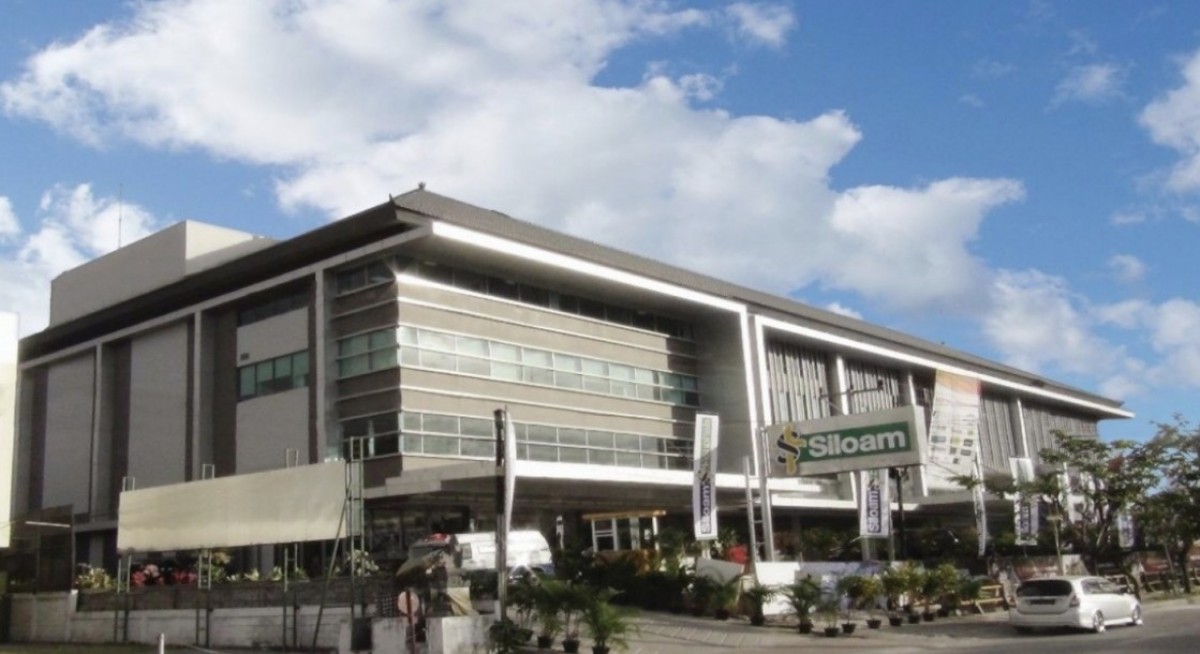
In March 2026, the Manager announced the short-term lease renewal for Siloam Hospitals Lippo Cikarang, commencing on Jul 1 to Dec 31, with an option for further extension from Jan 1 2027 to Jun 30 2027.
On April 1, the manager had announced a proposed series of transactions of eight hospital assets to PT Siloam International Hospitals Tbk and the divestment of three non-hospital assets to PT Lippo Karawaci Tbk at an agreed property value of $471.5 million, a 2.1% premium to valuation; and put options for the remaining six hospitals in Indonesia portfolio which will unlock IDR 3.9 trillion, approximately $294.8 million when exercised.
The divestments will eliminate First REIT’s IDR/SGD foreign currency volatility and income drag which had impacted unitholder returns. The phased divestment approach provides transaction certainty and prioritises DPU stability, supporting distribution resilience while recycling capital from non-core and non-healthcare assets, and assets with rental arrears. The aggregate leverage will significantly reduce to 16.7% following repayment of certain secured loans and debt securities.
The Board also intends to make a Special Distribution of approximately $9.7 million, after the completion of the proposed divestments. The proposed divestment require unitholders’ approval.
See also: EnGro Corp expects ‘significant improvement’ in its 1HFY2026 earnings
Escalating conflicts, shifting trade and monetary policies among major economies have contributed to heightened volatility in energy prices, currency movements and capital flows. Financial conditions have tightened, though they remain moderately accommodative in both advanced and emerging markets.
Interest rates and foreign currency exposures will remain key areas of focus for First REIT. Bank Indonesia has continued its intervention measures to support the Indonesian Rupiah after it reached record-low levels.This contributed to Indonesia’s foreign exchange reserves falling for a third straight month in March to a near two-year low since 2022, as efforts to stabilise the rupiah were ramped up.
Bank of Japan highlighted that surging oil prices and supply disruptions stemming from the Middle East conflict pose risks to economic growth, prompting caution for its monetary policy.The Japanese Yen has hit record lows against the Singapore Dollar, with $1 surpassing JPY125 in April 2026. The Monetary Authority of Singapore has tightened monetary policy and raised its inflation forecasts, citing heightened volatility in global energy prices and supply disruptions stemming from the Middle East conflict. A tighter policy stance potentially strengthens the Singapore Dollar, exacerbating the weakness of the Indonesian Rupiah and Japanese Yen.




