
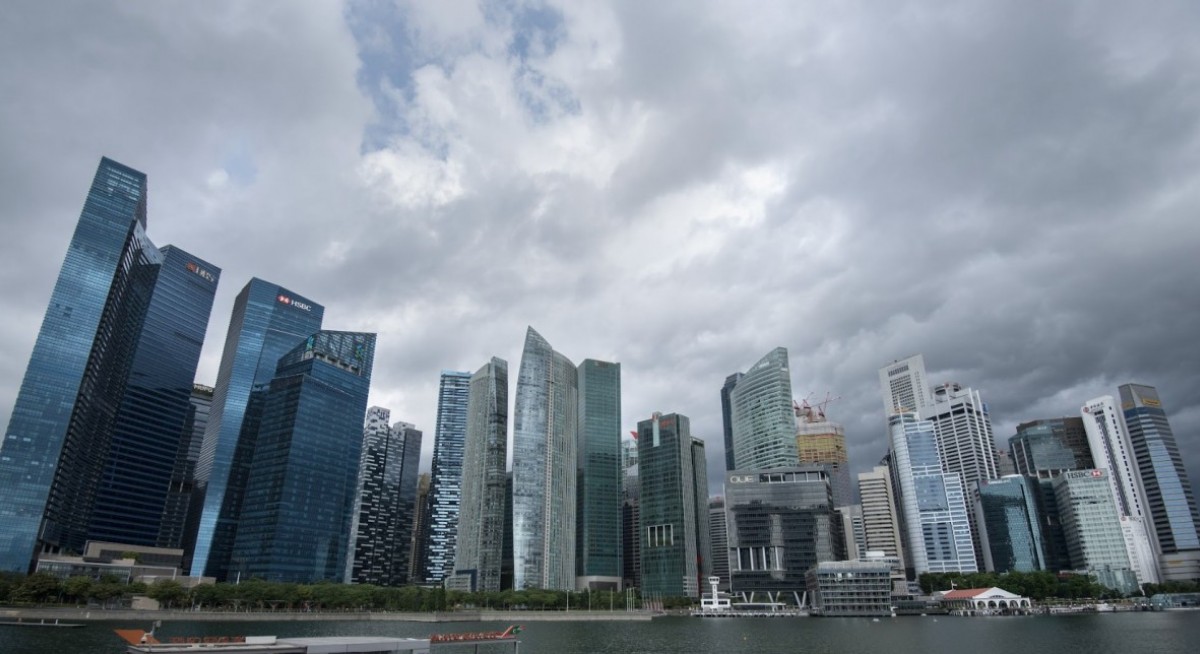

From a technical perspective, the STI ended the week at 4,848, below the rising 50-day moving average at 4,862. Since the index fell below its 50-day moving average on a Friday, the break cannot be seen as temporary. Notably, the STI’s indicators had pointed to signs of a consolidation.
Both 21-day RSI and quarterly momentum had started to form negative divergences with the index. Quarterly momentum has not broken down, but 21-day RSI has. Directional movement indicators have just turned mildly negative.
The consolidation/ correction could take one of two forms: a sharp but swift decline to the 200-day moving average at 4,428 or lower, followed by a rebound; or a multi-month rangebound formation. It is likely that the consolidation phase stretches out into weeks at the very least for the negatives and risks to be priced in.
See also: The uptrend is intact but it may need a rest
The SPX, which closed at 6,830 on Mar 5, has been rangebound since October 2025. The trading range is likely to be between 6,710 and 6,905. 6905 is also the level of the flat 50-day moving average and may turn into a resistance. In addition, the 50- and 100-day moving averages could form a negative cross at 6,836 or thereabouts. The 200-day moving average at 6,578 is the next support level for the SPX.
It appears increasingly that the Iran War could last longer than Trump wishes it to last. Trump needs quick victories because his attention span is relatively short. The biggest black swan is if he gets bored with the war and starts ignoring it. The US and Israel may not be able to fight a war of attrition, like, for example, Russia’s invasion of Ukraine.
See also: Ringgit could head to RM2.90 vs SGD as STI plods higher
In its Quarterly Global Outlook 2Q 2026, UOB Economics Research says its base case (60% probability) is for timeline of four weeks “which suggests a benign downward price trajectory for crude oil prices after a short-term increase towards the US$80-90 range. We are also cognisant that the probability for more pessimistic outcomes remains a material 40%. We have discounted the optimistic scenario of an immediate/near-term ceasefire as highly unlikely because it would be viewed as a political loss by the Trump administration.”
For the time being, UOB has maintained its GDP growth forecasts. On the interest rate front, it expects two rate cuts by the Federal Reserve, of 25bps in June and another in 3Q2026. “The recent escalation of geopolitical tensions in the Middle East has introduced a fresh bout of volatility into the US treasury market. We reiterate our view that Sora–Sofr spreads will continue to normalise this year, contributing to a modestly higher Sora trajectory—assuming current events do not trigger a renewed surge in safe-haven inflows similar to those observed in 2025,” the UOB report says.


