






1. What makes GXS Bank different from traditional banks, and what is one misconception people commonly have about digital banks in Singapore?
GXS Bank is a technology-led digital bank, bringing together the strengths of human expertise and empathy with new technologies, such as AI, that can help us scale faster. Customers can access the full suite of GXS banking services in-app, with help available when they need it — without having to find a bank branch.
Some may think a digital bank runs just on AI and data, but behind GXS Bank are hundreds of people with a shared mission: to make banking better and more inclusive for everyday consumers and small businesses.
Digital banks such as GXS Bank also hold a banking licence issued by the Monetary Authority of Singapore. This means we comply with the same regulatory requirements and standards as traditional banks, including risk management, cybersecurity, data protection, and fair treatment of customers.
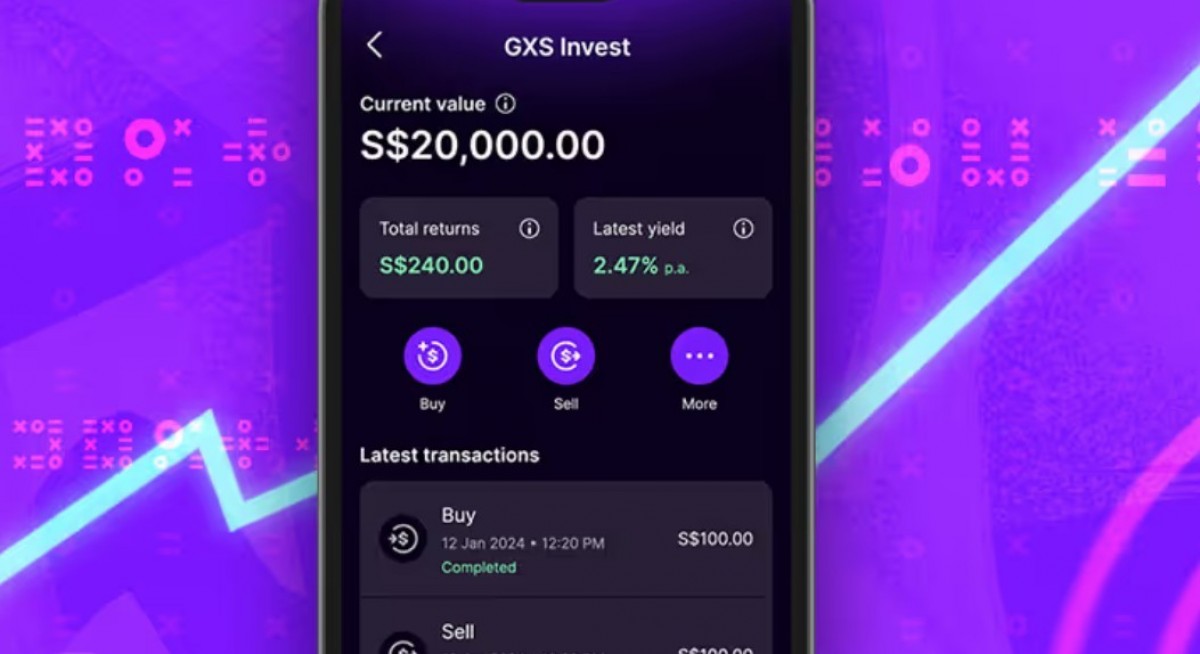
However, being built from scratch in the digital era has enabled us to implement best practices and rethink how we can improve banking. Take the design of our flagship savings account as an example. To make our customers’ money work harder for them rather than eroding their savings with fees, the GXS Savings Account credits interest daily and has no minimum balance requirement.
2. As one of two full digital bank licensees in Singapore, which enables it to serve both retail and wholesale customers, what are GXS Bank’s key strategies to capture market share and drive growth for its business?
See also: Serial Achieva: From traditional IT distribution to technology infrastructure and solutions
Our first principles guide our strategy: What pain points are we trying to solve for customers and how can we leverage our strengths to do so?
We have a unique advantage in being part of a regional digital bank network that includes our subsidiary, GXBank in Malaysia; our minority stake in PT Superbank in Indonesia; and a regional ecosystem that includes Grab and Singtel.
We invested in developing regional technology and product stacks, enabling us to launch all three digital banks within two years of each other. Having these regional infrastructures also enables us to share innovations and roll out new products and services more quickly across markets.
For example, in Singapore, we launched the GXS Savings Account in 2023, featuring Saving Pockets. Saving Pockets function like sub-accounts within the GXS Savings Account, enabling customers to manage their finances without tracking multiple bank accounts. With our shared regional product capabilities, GXBank in Malaysia and Superbank in Indonesia also launched their deposit product with the same Pockets mechanism.
Another significant strategic pillar for us is our ecosystem. The combined data insights, resources and expertise of Grab and Singtel enable us to build cost-effective, data-informed products that address our customers’ needs.
The third strategic pillar for us is our continued investment in AI. Productivity gains from AI free up our team’s headspace to experiment and test innovations that could benefit customers.
3. How has the acquisition of Validus Group’s Singapore business accelerated GXS’s entry into the trade finance and working capital loan segments?
With GXS Capital (formerly Validus Capital) fully integrated into the bank, we now offer a comprehensive suite of credit products for micro, small, and medium-sized businesses (MSMEs) in Singapore.
Businesses in the early stages of growth are often interested in the GXS Biz Account, our interest-bearing operating account and the GXS FlexiLoan Biz, an unsecured flexible business loan that functions as a line of credit.
With the GXS Biz Account, they can make their spare funds work harder for them, while the GXS FlexiLoan Biz provides certainty about the credit that is available to them.
For more stories about where money flows, click here for Capital Section
Companies seeking supply chain financing can also obtain it through GXS Bank via GXS Capital. These SMEs can convert their unpaid invoices and purchase orders to cash within a day, and with minimal documentation required. GXS Capital also offers other innovative lending solutions, such as working capital loans and revenue-based merchant financing.
Through the enhanced product capabilities from our acquisition of GXS Capital, we have also been able to tailor our products to meet the needs of SMEs in specific industries. For example, through our partnership with point-of-sale platforms, loans held by our business banking customers in the food and beverage industry can be repaid automatically from their earnings.
4. To drive sustainable growth through 2026, what are some key initiatives for GXS Bank?
Driving sustainable growth means putting customers at the centre of everything we do. Our focus is on building digital banking experiences that are simple, accessible, and that solve real-life pain points, especially for those underserved by traditional banks. We believe that when we solve for the underserved, we make banking better for all customers.
In 2026, we are doubling down on our ecosystem banking experience. We want to strengthen the benefits flywheel for consumers and businesses that use our ecosystem platforms or work with our partners. This could include boosted reward points when they transact on Grab, or pre-approved loans for businesses, which provide certainty of credit they can access as and when required.
As a digital bank, we also believe in being where our customers are so that they do not need to come to us. Part of our ecosystem strategy is to embed financial services into the digital touchpoints they use. An example of this is our partnership with point-of-sale platforms to provide financing to businesses in the food and beverage industry via their platforms. This year, we will continue to expand our partner ecosystem across both business-to-business and business-to-consumer spaces.
5. Given that close to 20% of FlexiLoan customers have little or no credit history, how does GXS Bank leverage proprietary Grab and Singtel ecosystem data to achieve strong returns on this segment compared to traditional credit bureau-based models?
By combining alternative data, including ecosystem data, with traditional credit bureau information, GXS Bank can assess creditworthiness with a broader set of signals. This has been a catalyst for improving credit access for Singaporeans. Through our proprietary credit assessment models, we can evaluate applicants who might otherwise have their doors closed simply because they lack sufficient credit history. Those who may fall through this credit access crack include self-employed consumers and gig workers, as well as small businesses such as sole proprietorships.
In both retail and business banking, we have found that the majority of our customers in these segments are disciplined in repaying their loans. This affirms to us that what everyday consumers and small businesses need is better access to credit.
6. How does GXS measure success beyond customer numbers?
Our primary goal is to deliver banking experiences, products and features that make sense for our customers. As a bank, we also have the responsibility to grow steadily and sustainably so we can serve our customers for years to come.
As our first principle, we stay focused on solving real customer problems, using technology and our ecosystem strengths wisely. Business and customer growth are by-products of achieving our goal. In Singapore, we doubled our revenue and tripled our loan book from 2024 to 2025.
7. What have been some key challenges in growing a digital bank so far?
Our customers expect service at their fingertips. Without a physical network, we knew we had to plan for diverse scenarios to ensure our technology infrastructure was resilient and had the necessary contingencies in place.
With scam threats constantly evolving, we must remain vigilant and ready to protect our customers. Part of this is ensuring customers have the right information and resources to protect themselves, especially as bad actors perpetrate scams to take advantage of unwitting consumers and businesses. We do this by sending out regular customer communications on trending scams to help our customers identify and avoid falling prey to them.
Beyond customer education, we have a dedicated task force at GXS Bank that examines how we can implement intervention measures to thwart scammers attempting to defraud our customers.
8. How is AI shaping product development at GXS today?
We see AI as an extension of our team. AI is used across the bank to free up time for our people on higher-value matters and to amplify and augment their work.
In product development, AI has been a game-changer for our team of data analysts and technologists. AI powers much of what we do, whether we are extracting insights from data, sharpening our risk models, iterating our bank app and products or interacting with our customers.
For example, today our coders can use generative AI (Gen AI) to generate code and resolve customer queries, saving them significant time from coding from scratch. Gen AI has also raised the bar on what our colleagues without technical expertise can do. Our business teams can use Gen AI to create a design prototype based on their business hypothesis, visualising what the banking journey for a new product could look like. This has helped us refine our ideas and innovate for our customers faster.
9. What are the key areas where GXS is investing heavily to support long‑term scale?
We have three growth engines that we continue to invest in.
The first is AI. Being a digital native, GXS Bank’s modular technology and data infrastructures are already set up to maximise AI’s potential. We embed AI to solve customer pain points and support our people — and we continually review our infrastructure, frameworks and policies so we can use AI ethically and mindfully while staying future-proof.
Our second growth engine is our people’s expertise and passion, along with their desire to make a change in banking. As we increase the number of AI tools we use at the bank, we want to ensure that our people advance their AI knowledge. To that end, we have been enhancing our AI training programmes, from on-the-job training to regular regional AI Days, where we showcase how colleagues across the organisation are using AI. These initiatives help equip and inspire colleagues across the region to use AI confidently in their day-to-day work.
The third growth engine for us is our ecosystem. We are part of an ecosystem that includes Grab and Singtel, serving more than 50 million people across Southeast Asia. The resulting data insights help us design better products and strengthen our credit assessment models without compromising our risk appetite. And by leveraging ecosystem channels — such as the Grab app and Singtel retail stores — we can reach more customers at a lower acquisition cost, helping us keep products affordable and scale sustainably.
10. What’s one bold bet GXS is making for the future of banking?
We believe that digital banks will eventually be the primary mode of banking for the digital generations.
Customers will expect the same level of intuitive digital service experiences from banks as they do in other online journeys, from how they engage on social media to their reliance on mobile devices to make payments in both the physical and online worlds.
Customers will expect banking to be at their fingertips and there when they need it. We aim to be the bank in their pocket and on the apps they use daily.
10 in 10 – 10 questions in 10 minutes with SGX-listed companies
Designed to be a short read, 10 in 10 provides insights into leading companies through a series of 10 Q&As with management. Through these Q&As, management will discuss current business objectives, key revenue drivers, and the industry landscape. Expect to find wide-ranging topics that go beyond usual company financials. For more, visit sgx.com/research.
For more information about the company, visit gxs.com.sg.
GXS Bank is currently a non-listed company.
Raphael Lim is an associate director for research and FinLit at the Singapore Exchange Group




