
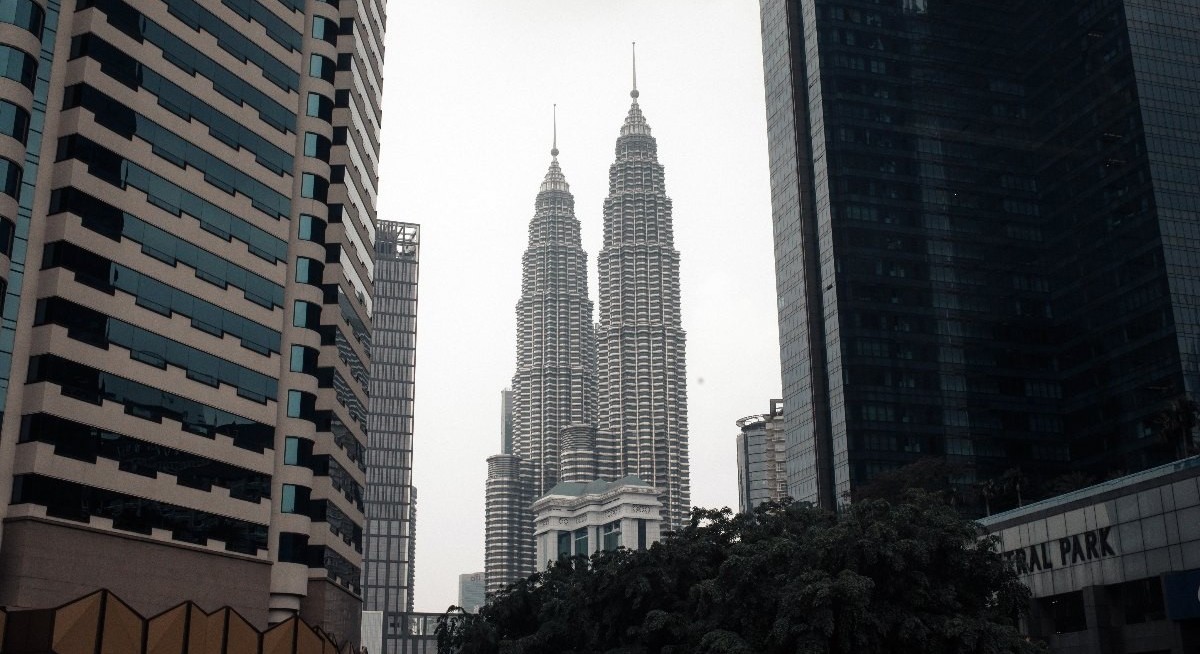

To create more jobs, raise wages and enable the population to escape the middle-income trap, Malaysia should pivot its economic strategy. We believe the services sector offers the strongest prospects as a future driver of growth. In particular, Malaysia has demonstrated regional competitiveness in three service segments: mass tourism and the related higher value-added segments of medical and education tourism.
Sunsets as a Surplus
Malaysia registered 42.2 million international arrivals in 2025, surpassing Thailand as Southeast Asia’s most visited country for the second consecutive year. This is an amazing achievement, showcasing the nation’s regional competitive advantages, which must be preserved and further built upon.
Tourist receipts — a form of services export — are shaping up to be a crucial source of foreign currency, one that could provide a stabilising effect on the current account and foreign-exchange (forex) reserves, including against volatile portfolio capital flows and trade uncertainties.
See also: Time for Malaysia to pivot from manufacturing to services
Travel was the single-biggest sector driving the nation’s services account back into surplus territory of RM700 million ($225 million) in 3Q2025, after 14 straight years of deficits. Indeed, travel has always been the one segment consistently in large surplus territory (except during the pandemic) (see Chart 1). In 3Q2025, inbound tourist receipts surged 11.8% quarter on quarter to RM29 billion, and travel recorded a net surplus of RM13.1 billion (more than offsetting outbound tourist spending, including for overseas education).
The tourism sector is economically impactful, arguably more so than manufacturing, owing to its long value-supply chain, inclusiveness and high multiplier effect. In addition, tourism spending has relatively low economic leakage, that is, our local supply chain is fairly well developed (low import content) and, therefore, more domestic value retained. According to the Department of Statistics Malaysia’s Tourism Satellite Account, the country’s tourism industry in 2024 was worth RM291.9 billion, contributed 15.1% to GDP and supported 21.6% of the country’s workforce.
See also: Markets rise when merit is recognised
From the point of entry, tourist dollars are spent on transportation (air flight, taxi, ridesharing, bus/coach, car rental and other forms of connectivity), accommodation (international hotel chains, boutique and budget hotels, Airbnb rentals, homestays), F&B (restaurants, cafés, hawkers, food suppliers, manufacturers, wholesalers, farmers), logistics, retail, digital platforms (bookings, tour operators), attractions, entertainment, souvenirs and so on. Also, increased activity in these areas would generate spillover effects across other segments of the economy, such as insurance and finance.
In short, tourism creates employment for millions of Malaysians, both directly and indirectly, from semi-skilled workers to those in the informal gig economy. It is more labour-intensive and faces lower risks of job displacement from automation — which is more likely to affect manufacturing — and it cannot be relocated or offshored.
As tourism spreads from major cities to secondary towns and off-the-beaten-path destinations, it can drive development in the latter — improving infrastructure, stimulating economic activity, creating local jobs (preventing hollowing-out and even encouraging entrepreneurship), raising incomes and reducing urban-rural inequality — while also fostering socio-political stability. This is especially important for states lacking strong manufacturing bases. As we said, it is inclusive, benefiting large corporates (such as airport operators, airlines, hotel owners) as well as a wide-range of small and medium enterprises (SMEs) and small family-run businesses. The sector also generates tax revenue for the government coffers (such as airport tax, sales and services tax on consumption, and income taxes from businesses/individuals).
Malaysia’s strong regional competitive advantage
Rapid economic growth in developing Asia, rising disposable incomes and a growing middle-class underpin the significant potential for regional tourism. The total addressable market is huge and growing — more so as tech and AI improve productivity, leaving more time for leisure and as people increasingly shift from spending on material goods to spending on travel and experiences.
Malaysia has much to offer, to both international visitors and domestic travellers — from cosmopolitan cities to nature and adventure experiences, including Taman Negara and FRIM, Unesco World Heritage Sites such as Gunung Mulu and Kinabalu Parks, pristine beaches and world-class diving at Sipadan, Mabul and the Perhentian Islands, as well as heritage cities such as Melaka and George Town in Penang. The nation offers a wide array of culinary delights, reflecting its multi-cultural heritage; is multilingual, sharing similarities with our closest neighbours; boasts strong regional connectivity and modern infrastructure; and enjoys a relatively safe and geopolitically neutral environment, with minimal natural hazards — all at very affordable costs.
For more stories about where money flows, click here for Capital Section
The promotion of domestic tourism — “Cuti-Cuti Malaysia” — in recent years is particularly significant, as it boosts demand, scalability and economic activity, while also helping to reduce forex outflows by encouraging Malaysians to spend on local holidays rather than overseas. While foreign tourist arrivals often make the headlines, domestic tourism is actually larger and more reliable, driven by visiting relatives, long weekends, festive periods and school holidays. Case in point: About two-thirds of hotel guests are domestic Malaysians. And while their average spend is typically lower due to shorter stays and self-driving travel, it generates minimal economic leakage, as it supports small and micro local businesses.
As mentioned above, foreign tourist arrivals have recovered strongly, exceeding pre-pandemic highs, and faster than neighbouring Thailand and Indonesia. The top source markets for foreign visitors are Singapore, Indonesia, China, Thailand, Brunei and India. Notably, arrivals from China and India recorded significant growth, driven largely by Malaysia’s visa-free entry for both countries.
While Malaysia has been gaining popularity as a holiday destination in the region, this is no time to be complacent. The competition for tourist dollars is just as intense as the global market for goods.
What more can we do?
For the government and its business entities — there is NO need for grand investment plans. For example, do not build theme parks, huge hotel-resorts or invest in cruise liners. If there is sufficient demand and if these or any other projects are profitable, we can be sure the private sector will do it. There are many other areas that the government can and should focus on.
For one, public funds will be much better used to improve and expand public infrastructure, facilities and critical services. For instance, there remains significant connectivity gaps in both the digital infrastructure and public transport systems nationwide. Malaysians will benefit, and this will also make the country more attractive to foreign visitors. Two birds, one stone.
The main criteria for most tourists, aside from affordability and the attractions, are accessibility, the quality of public transportation, convenience, hospitality and, above all, safety and security. Therefore, the best way the government can help boost tourism is to ensure a welcoming, stress-free environment. Digitalisation can be helpful — for example, Singapore’s passport-free, biometric-driven digital border system at Changi Airport.
Case in point: The granting of visa-free entry (up to 30 days) for China and India has proven to be a very rewarding policy decision, spurring strong growth in the number of tourist arrivals from the two countries. China and India have a combined population of 2.9 billon, or 35% of the world’s total, with rising disposable incomes and growing demand for experiences. In other words, they are huge markets that are still relatively untapped. In addition, the Chinese and, to a lesser extent, Indians are high-spending tourists (see Chart 3).
First impressions are important. The airport is often the first point of contact for foreign tourists. Ensure a frictionless airport experience — from quick immigration and baggage handling to convenient dining, shopping and onward connections — while providing a comfortable environment for layovers. Recent reports of scammers operating within the vicinity of the airport, a high-security area, must be taken seriously by the government.
A single bad experience can determine whether a visitor returns or recommends the country to others. Viral videos can quickly undo the time, effort and money spent promoting Malaysia internationally. Look no further than Thailand, which has gained a reputation as a hub for scams, leading to a significant drop in visitor numbers.
Safety standards must also be vigorously upheld. For instance, Malaysia has had repeated fatal accidents involving tourist buses/coaches, usually the result of driver negligence, fatigue, speeding and poor maintenance. While rules and safety protocols exist, enforcement is weak (unfortunately, a common theme in this country). The government must strengthen oversight, enforce regulations more strictly, and ensure that repercussions for drivers and company owners or directors go far beyond a mere slap on the wrist, if we are to ensure compliance with the law.
The Ministry of Tourism, Arts and Culture plays a key role in promoting the country to the world. This should be a priority ministry, not an afterthought. Well-planned campaigns and events, including festivals, can attract more visitors, extend their stays and increase overall tourist spending — all contributing to national income. For example, the Cuti-Cuti Malaysia campaign is widely regarded as successful in raising awareness of domestic tourism.
Historically, Visit Malaysia campaigns have been linked to higher tourist arrivals. Greater efforts could be made to attract visitors from South Korea, Australia, Japan, the US and Europe, including “snowbird” tourists during winter — who tend to stay longer and spend more. Expanding visa-free access would further support this effort.
Malaysia’s rich biodiversity, centred on diverse ecosystems, must be protected — both for future generations and to preserve the long-term economic potential of these natural assets. Currently, conservation and preservation receive limited attention. At the same time, the government must remain vigilant against over-tourism, which has sparked backlash in other countries.
For the private sector, better training for employees is needed to enhance hospitality skills. Malaysians are naturally friendly, but frontline customer service can be more welcoming, knowledgeable and service-oriented, taking pride in professionalism. In this respect, we lag behind our Thai neighbour (and competitor).
In conclusion, Malaysia’s tourism sector has made significant progress towards regional competitiveness, but more can be done. We are not experts, but these suggestions reflect our experiences. What is clear is this: Let the private sector continue to do what it does best — invest, innovate, create demand and compete — while the government acts as a facilitator. This includes improving public infrastructure, facilities and services; enforcing high safety and security standards; and prioritising multi-channel promotion, especially through digital platforms and social media collaborations, highlighting Malaysia’s unique selling points — experiential diversity across attractions, nature, food, heritage and culture — to the world with better storytelling.
Disclaimer: This is a personal portfolio for information purposes only and does not constitute a recommendation or solicitation or expression of views to influence readers to buy/sell stocks, including the particular stocks mentioned herein. It does not take into account an individual investor’s particular financial situation, investment objectives, investment horizon, risk profile and/or risk preference. Our shareholders, directors and employees may have positions in or may be materially interested in any of the stocks. We may also have or have had dealings with or may provide or have provided content services to the companies mentioned in the reports


