





The pandemic was a defining moment for the construction industry; it exposed several structural vulnerabilities, from the industry’s reliance on cross-border labour mobility to supply chain disruptions and productivity constraints. However, it also became a catalyst for transformation, says Lee Kay Chai, president of the Singapore Contractors Association Limited (SCAL).
Founded in 1937, SCAL is a not-for-profit organisation representing more than 3,000 construction firms and allied businesses here.
Lee says the pandemic forced companies to adapt their operations, strengthen workforce management practices and accelerate digital adoption. “We have also seen stronger collaboration across the public and private sectors, which has been critical in stabilising project pipelines and addressing operational challenges.”
Lee, who is also executive director of Lian Soon Construction, says many firms are now more conscious of the need to build more sustainable and resilient business models, be it through improving productivity, investing in technology or strengthening workforce development. “While challenges remain, the industry today is more forward-looking and better-prepared to navigate future disruptions.”

New working group
See also: YTL Cement balances business, sustainability and ecosystem-building
Attracting new blood to the industry and retaining talent are high on the priority list for Singapore’s construction industry. “While the industry offers meaningful opportunities to build the nation’s infrastructure and built environment, it is also a highly regulated sector with complex operational demands,” says Lee.
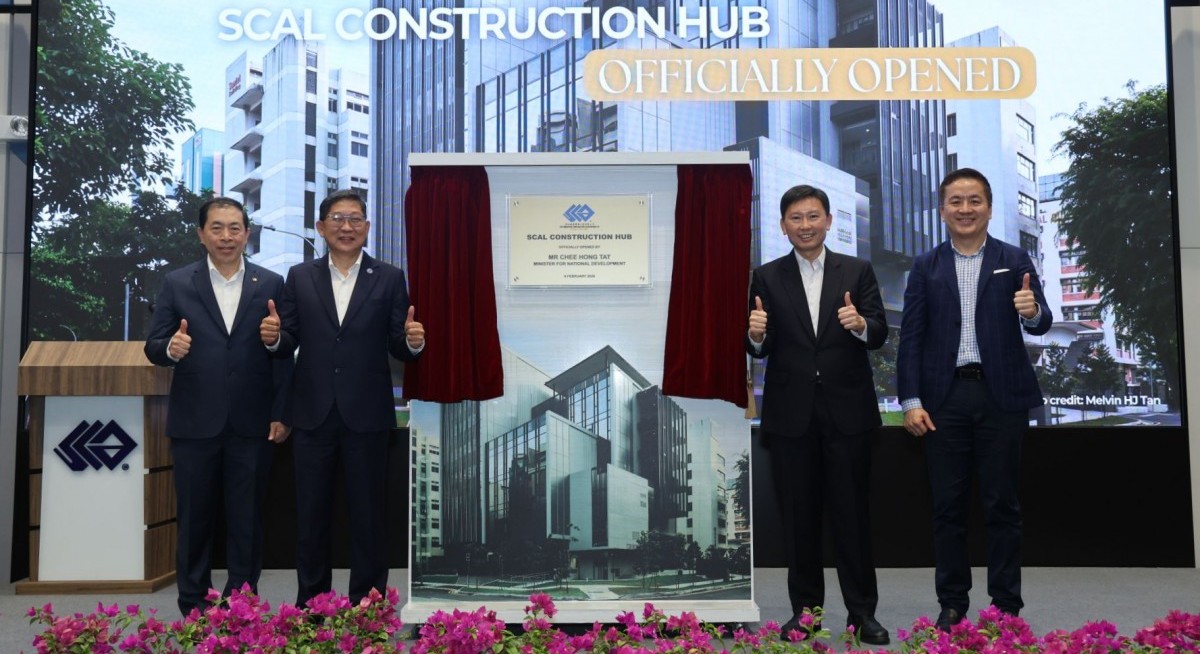
Speaking at the opening of the SCAL Construction Hub in February, Lee said: “People have the impression that construction jobs are tough and you work long hours — but it is not necessarily the case these days.”
Alongside talent initiatives, Lee sees a “strong need” to continually review and develop policies and industry practices that enable firms to operate more productively and efficiently.
See also: Tiong Woon’s turnaround story goes beyond ‘just rental, rental, rental’
The industry is working closely with the Singapore government to identify “systemic improvements”, says Lee. SCAL will be representing the industry in a new working group chaired by Minister of National Development Chee Hong Tat, examining both “firm-level” and “system-level” transformation across the sector.
To this end, Lee has announced two subcommittees to develop recommendations for individual firms and the broader industry.
An enterprise transformation sub-committee will focus on driving firm-level transformation and identifying ways to accelerate the adoption of productive technologies and progressive construction methods.
“This is important because improving productivity not only strengthens companies’ competitiveness but also allows the industry to create higher-value roles that are more attractive to professionals and young talent,” says Lee.
Meanwhile, an ecosystem and regulatory review sub-committee will focus on addressing broader system-level challenges and constraints. Its scope includes reviewing regulatory compliance requirements, improving procurement and contracting practices, and encouraging stronger collaboration across stakeholders.
“By reducing unnecessary complexity and improving how projects are structured and delivered, the industry can operate more efficiently and create a more sustainable and attractive environment for talent”, he adds. “When young professionals see an industry that embraces technology, values skills development and offers meaningful career progression, they will be far more inclined to build their careers with us.”
‘Thoughtful’ innovation
Construction projects involve many stakeholders, from developers and consultants to contractors and regulators. Poor coordination across this ecosystem can sometimes lead to inefficiencies, delays and cost pressures, says Lee.
While innovation plays an important role in addressing these challenges, it must also be “implemented thoughtfully” and in a way that reflects “on-the-ground realities”, adds Lee, who has over three decades of experience in the construction industry.
“For instance, while prefabrication and off-site manufacturing can improve productivity and quality under the right conditions, their effectiveness depends heavily on design coordination, buildability considerations and site constraints,” says Lee to City & Country. “If these factors are not carefully aligned from the outset, they can sometimes lead to downstream issues on site that require rework.”
Sustainability for long-term relevance
Lee will deliver a presentation at The Edge Singapore’s Sustainable Construction Symposium 2026 on how embracing innovation can transform Singapore’s construction industry.
Happening April 29 at Pan Pacific Orchard, the half-day conference will bring together architects, engineers and sustainability professionals to discuss how the construction sector can contribute to Singapore’s sustainable development.
Sustainability is fundamentally about responsibility, says Lee — responsibility to the environment, to future generations and to the communities that our industry serves. “Embracing sustainability… is essential for the long-term relevance and competitiveness of our industry.”
The construction sector holds “significant influence” over resource consumption, energy efficiency and carbon emissions, adds Lee. “This means we also have a responsibility to be part of the solution. By adopting greener materials, improving construction methods and designing more sustainable buildings, we can reduce our environmental footprint while delivering long-term value to society.”
Sustainability is not just a regulatory requirement — it is an opportunity for the industry to innovate and lead, adds Lee. “When contractors integrate sustainability into their business strategies, it drives better design, smarter construction processes and ultimately, more resilient infrastructure.”
Photo: SCAL

For enquiries, contact events@theedgesingapore.com or click here to register your interest




