

He adds that JustCo will launch in India, Malaysia, the Philippines, Hong Kong, Dubai and Saudi Arabia. Already, the company has signed new leases to open eight new locations in the coming months.
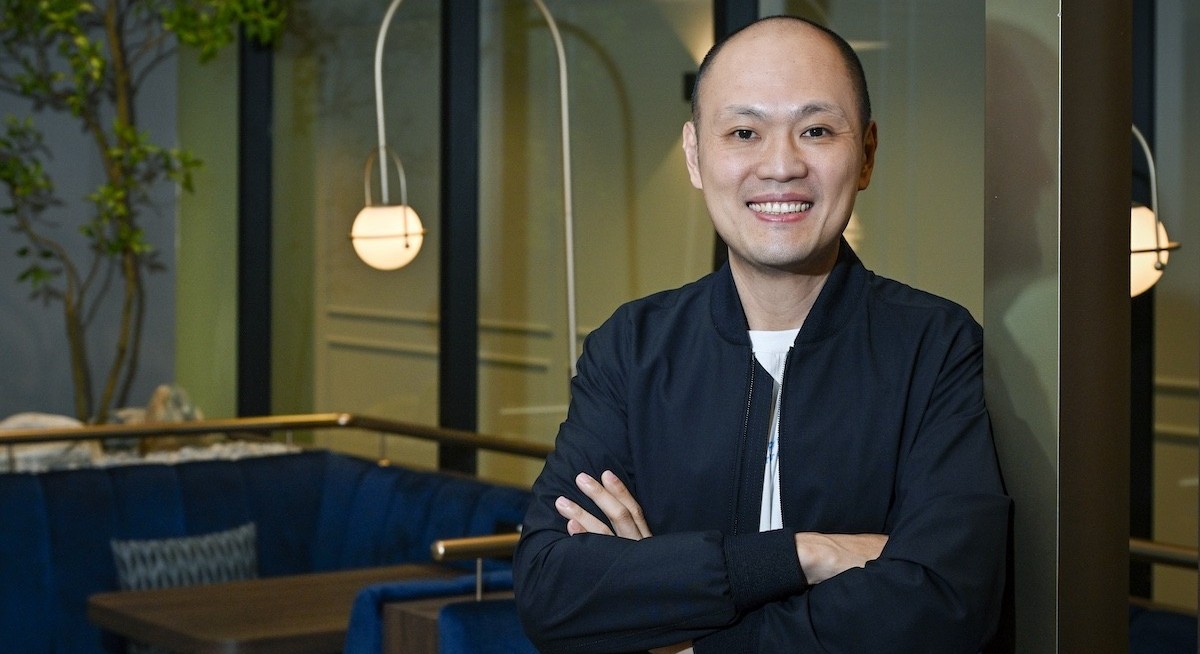
Kong tells City & Country: “We have an established portfolio of brands, we are seeking to deliver a comprehensive co-working ecosystem that caters to all market segments, and to position JustCo as a leading operator in Asia Pacific able to shape every facet of tomorrow’s work through our wide network of centres.”
Already in Tokyo, Osaka, Bangkok and Taipei, The Collective typically targets about 25,000 sq ft in premium Grade-A office buildings
See also: Uni-Asia focuses on disciplined execution and seizing opportunities in Japan real estate
Just expand
JustCo launched its first The Collective in Singapore at Labrador Tower on Feb 6. It is the brand’s fifth location in Asia, and this launch makes the city-state the first market to host all three of its concepts.
According to Kong, the push to launch the group’s luxury brand here follows strong demand from The Collective in other markets — Tokyo, Osaka, Bangkok and Taipei.
See also: Challenging year ahead? Fengshui consultant Joey Yap’s advice for 2026
JustCo started the luxury brand to address a specific customer need. “On and off, we had enquiries from our customers [in JustCo] for something more fine and more attentive to their needs,” says Kong, adding that customers wanted more from an office space, including daily breakfast, better coffee, wellness offerings and more.
JustCo’s expansion plan rests on a deliberate separation of brands — and, by extension, buildings, formats and customer segments. However, Kong says that the group is not simply chasing higher margins. The target market for this brand is niche and is thus expected to account for only about 10% of the overall portfolio, while JustCo and The Boring Office will lead the group’s expansion strategy.
JustCo launched The Collective at Labrador Tower on Feb 6
While the core JustCo brand remains the group’s volume engine — targeting enterprise and larger mid-market demand — The Boring Office is a no-frills, conducive space for work that is “better than a Starbucks”, says Kong, whose family is in the real estate business.
Critically, The Boring Office also offers JustCo a way to enter different building grades without diluting the main brand. Kong was concerned about placing JustCo in Grade-B buildings because it could blur positioning between Grade-A and Grade-B sites.
Creating separate brands solves that, he says, and enables the company to offer different products to cater to different needs.
Format and location choices differ accordingly. The Collective typically targets sites around 25,000 sq ft in premium Grade-A commercial office buildings, while JustCo eyes at least 20,000 sq ft of space in Grade-A or A-minus commercial and retail buildings.
Meanwhile, The Boring Office floorplans range from 5,000 to 10,000 sq ft and can be found in Grade-B commercial and retail properties, as well as some industrial sites. Kong also sees a longer runway for The Boring
Office in suburban Singapore. The constraint, however, is not the demand, but the supply. “They don’t have space,” he says of these catchments. For comparison, JustCo’s current mall locations include Marina Square, at about 60,000 sq ft, and The Centrepoint, at about 70,000 sq ft.
Asset-heavy meets asset-light
JustCo’s regional growth is being executed through a mix of master leases and management contracts, a simultaneously asset-light and asset-heavy pairing that Kong says helps balance returns and risk.
Currently, the split represents about 60% master leases and about 40% management contracts. While master leases can deliver higher upside, it comes with fixed commitments. Management contracts, on the other hand, carry lower risks, but also lower profits.
In his view, both models help the group grow sustainably, as the asset-light approach allows it to scale faster with better capital management, while the asset-heavy approach allows for stability and better control over the space.
The fine balance between expansion through a combination of both models is tricky to manage. The co-working industry has been shaken up since Covid-19; while the pandemic has popularised co-working spaces, competition also increased, and smaller operators have struggled to survive.
“One of the reasons why we lasted three years is because we are cash flow positive,” says Kong. “Financial discipline is very important.” The group is even “constantly” on the lookout for potential M&A opportunities.
According to the Accounting and Corporate Regulatory Authority (Acra) data, JustCo’s revenue has shown steady growth. It grew revenue from US$99 million in FY2022 ended Dec 31, 2022, to US$113.8 million in FY2023 and US$128 million ($161 million) in FY2024.
Due to its steady cash flow, Kong says the group is able to fund its expansion plans organically, but may look into other ways to raise funds in the future.
Potential IPO?
Kong has not ruled out taking the company public. “Eventually, we will need to have some liquidity event [for our investors],” he says. JustCo counts Singapore’s sovereign fund GIC, real estate giant Frasers Property, Japan’s Daito Trust Construction and Thai Developer Sansiri among its investors.
Operationally, JustCo is leaning on data and standardisation to keep expansion manageable across markets, while still allowing for local adaptations. Kong describes building in-house systems, such as predictive AI, to reduce downtime between tenants and identify the chances that tenants will renew their leases.
This is based on “100 attributes” like office attendance, meeting room use and other signals, says Kong, which help improve both occupancy and service response times at scale.
The Collective in Labrador Tower is the first Singapore branch of JustCo's luxury co-working brand
On demand, Kong argues that flexible workspace is benefiting from both enterprise cost discipline and a return-to-office push. “Across Asia Pacific, flexible workspace demand is being driven by a strong return-to-office push alongside multi-year secular shifts in how enterprises manage their real estate,” he says. “Even in Singapore, there is still structural headroom for the industry as businesses prioritise capital efficiency, flexibility and scalable workspace solutions.”
JustCo is using that thesis to enter new markets. However, doing so brings cultural complexity. Kong acknowledges local incumbents are already present, but JustCo’s expansion efforts have made the brand a well-known regional player with a meaningful cross-border network.
For now, JustCo’s outlook centres on scale and network effects. Kong believes a wider network is the best hedge against changing work patterns, as flexible work increasingly means people moving between locations rather than staying at home.


