

The aviation industry is undergoing a major technological shift, moving from automated systems to more autonomous, decision-driven models. While airlines have steadily adopted AI for efficiency and customer-facing tasks, a fundamentally different capability—agentic AI—has emerged and is beginning to reshape how the sector operates.
Unlike generative AI, which focuses on content creation and recommendations, agentic AI can plan, decide and execute complex actions with limited human intervention. It introduces a new level of operational intelligence that can directly influence how airlines run their business and deliver more seamless travel experiences.
Consumers are already reinforcing this momentum. Adobe’s latest From Assistants to Agents: The AI Evolution report found that, on average, five in 10 Singaporeans have heard of agentic AI. Furthermore, 58% expect to use the new technology within the next three years.
The opportunity for the aviation industry now lies in converting this growing AI adoption into measurable performance gains and better customer experiences. Organisations must focus on delivering exceptional services to avoid falling short in customer expectations and satisfaction.
Going from reactive to autonomous
Consider a typical flight disruption. Today, generative AI can suggest rebooking options, help draft announcements or surface customer data in seconds, but these actions still depend heavily on human approval and manual coordination across multiple teams.
Agentic AI, on the other hand, flips the script. Rather than simply layering the technology stack, this technology enables end-to-end optimisation across critical functions, from analysing customer behaviour patterns and disruption management to airline crew scheduling and customer service. This transforms operations from fragmented, reactive workflows into coordinated systems that can act with speed and precision. The use of AI agents also accelerates operational efficiencies across different functions while enhancing the agility required to respond to shifting customer expectations, allowing organisations to be simultaneously proactive and responsive in a fast-moving, customer-centric world.
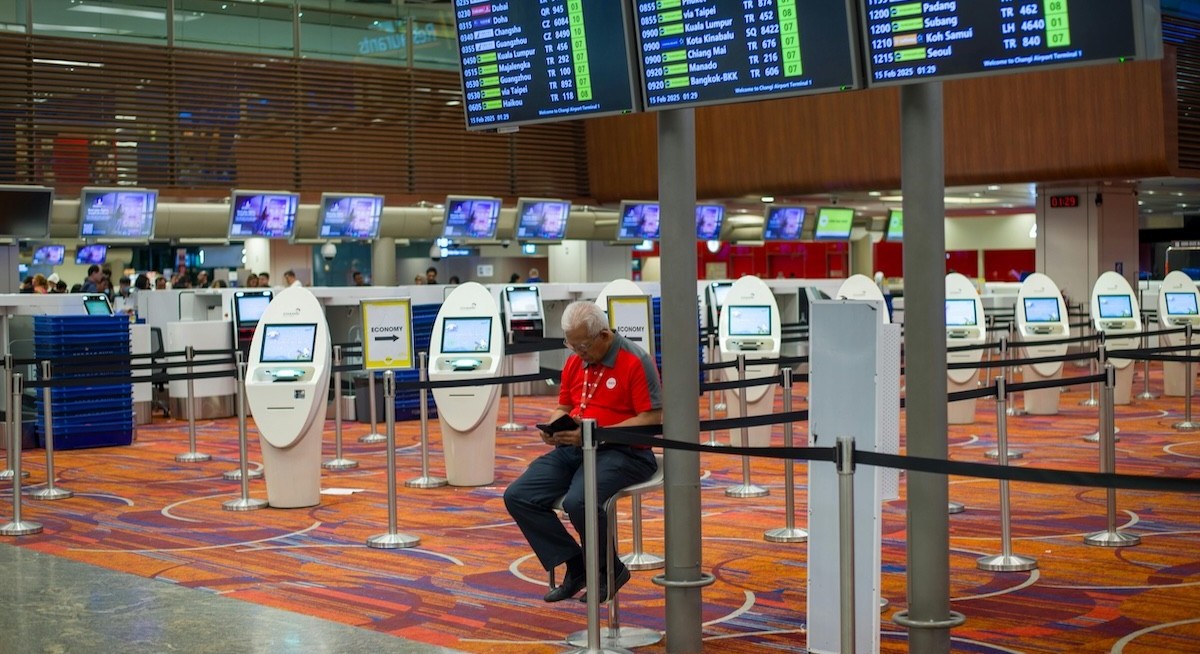
This transformation is already taking shape in the industry. Changi Airport Group is exploring agentic AI to automatically activate cleaners, coordinate service recovery teams, deliver timely announcements and optimise resources during a flight delay. The shift from reactive management to predictive orchestration is what prevents passengers from encountering the downstream effects of a flight disruption. It also ensures that employees can be redeployed for deeper, empathetic customer engagement, service recovery and personalised support—areas where human judgment remains essential.
As digital native travellers reshape customer expectations and move fluidly across touchpoints, speed, context and relevance have become non-negotiable. Real-time insight is now a key differentiator, and exceptional airlines and airports will be those capable of anticipating and adapting experiences in the moment, and orchestrating each touchpoint with precision across the travel journey.
See also: Global funds unwind hottest AI trades as oil supply fears mount
The unified, quality data imperative
All that said, for agentic AI to deliver meaningful impact, it must operate across touchpoints and systems that have long functioned in silos, including pricing, inventory management, maintenance and crew scheduling—supported by a unified, high-quality data foundation. This level of coordination is essential to enable true autonomy, as it reduces operational friction and ensures decisions are made with consistency and precision.
However, according to the Adobe 2025 AI and Digital Trends Report, 73% of organisations revealed that they do not have a unified view of their customers at this stage. In the aviation industry—specifically airlines—this may cascade from inconsistent experiences across channels into operational inefficiencies that stem from a lack of reliable information for decision-making. During travel peak seasons, this could result in errors and frustrated customers that erodes at brand trust.
To strengthen customer relationships through meaningful and personalised experiences, industry players are compelled to rethink legacy systems and dismantle siloed processes. But a silver lining remains—as organisations evaluate how best agentic AI can play a role in enhancing customer experiences, 61% of Asia Pacific organisations are looking at data integration and real-time insights being primary influences on their technology investment decisions in the next one to two years. Building a unified data foundation will be the key step in ensuring that they can deliver more relevant, personalised experiences that augment their end-to-end brand experience.
The next flight path with AI
Capabilities once considered impractical at enterprise scale, including real-time personalisation, automated operational coordination and predictive service recovery, are now achievable when agentic AI is embedded into business-critical workflows.
Moving forward, the most effective operating model will see agentic AI managing operational complexity with speed and precision, while people focus on the nuanced interactions that shape brand trust and loyalty. In this balance lies the future of authentic travel experiences, where operational intelligence enhances, rather than replaces, the human moments that define brand value and drive sustainable growth.
Shashank Sharma is the senior director of Digital Experience for South East Asia and Korea at Adobe


