

Floating Button
Home Digitaledge Cybersecurity

Google Cloud's security chief says context, not AI models, is the ‘real cyber defence superpower’

Nurdianah Md Nur
Nurdianah Md Nur • 5 min read
Google Cloud's security chief says context, not AI models, is the ‘real cyber defence superpower’
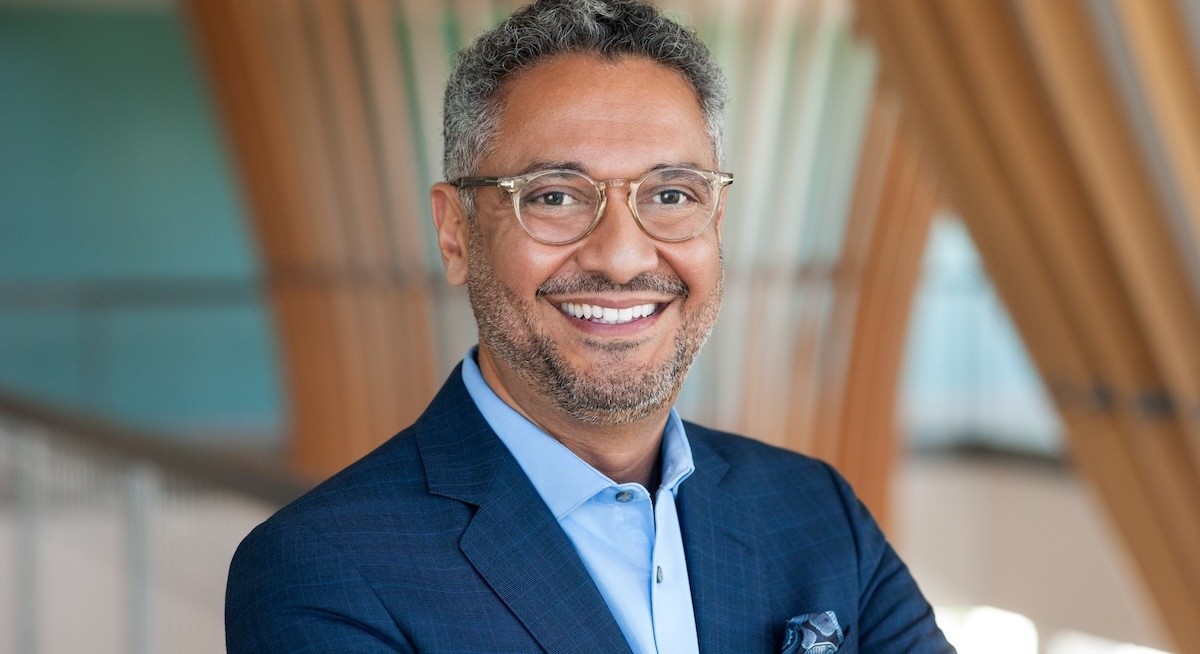
deSouza: Only we as defenders know where our company's most valuable assets are. With AI, we can bring all that together and truly deeply understand the context we operate in. That is a cyber defence superpower. Photo: Google Cloud
Font Resizer
Share to Whatsapp
Share to Facebook
Share to LinkedIn
Scroll to top
Follow us on Facebook and join our Telegram channel for the latest updates.

For years, cybersecurity has been framed as a losing game for defenders, with cyber attackers needing only one way in. Francis deSouza, chief operating officer and president of Security Products at Google Cloud, says that assumption is starting to break down.

Cyber defenders, he says, already hold an advantage that has not been fully used. They understand their own environments in detail, from where critical assets sit to how employees typically behave. The constraint is speed. AI agents could change that by allowing organisations to act on that knowledge far more quickly.

"Only we as cyber defenders know where our company's most valuable assets are. Only we know where our employees usually operate and what would look different. With AI, we can bring all that together and truly deeply understand the context we operate in. That is a cyber defence superpower," he says on the sidelines of Google Cloud Next '26 in Las Vegas.

The argument challenges a widely held view that artificial intelligence (AI) is strengthening cyber attackers through automated exploits, faster vulnerability discovery and AI-generated phishing. DeSouza does not dispute that threats are rising. However, he questions whether that means cyber defenders are falling behind, as the same technology now allows them to turn existing knowledge into action.

That shift depends on visibility, since context cannot be used if it is not seen. Yinon Costica, co-founder of Wiz (which was acquired by Google), says any AI-driven security programme must start with a clear view of every AI component running across an organisation.

"The ability to really institutionalise a visibility programme which sees any AI component that is in use is key in order to start a security programme. As cyber defenders, we do have a lot of context about our environments that we can share with the AI. If we take the first-mover advantage and use AI with better context, we actually stand a chance to win," he says.

See also: Digital identity is infrastructure, not an afterthought

AI agents that find, prioritise and fix threats

With such a foundation in place, cybersecurity systems can move beyond reacting to alerts and begin simulating how attackers operate within an environment. One way this is being applied is through autonomous testing.

At the same event, Wiz introduced three AI agents named after the cybersecurity teams they are designed to assist.

See also: Cybersecurity’s biggest problem is not the threat, but the follow-through

The red agent (named after traditional penetration testing teams) scans internet-facing applications and application programming interfaces (APIs), identifies entry points and attempts to exploit them. The result is a prioritised set of vulnerabilities confirmed to be exploitable, rather than a list of theoretical risks. "We solved the toughest problem in security, which is the organisation's ability to find something validated automatically. If the red agent found something, it should be immediately prioritised for the teams to fix," says Costica.

Prioritisation matters because most organisations face more alerts than they can realistically handle. To help with that, Wiz’s green AI agent takes validated findings and automates remediation by mapping the issue across systems, identifying ownership and generating fixes for developers or coding agents.

Costica shares that the conventional process requires days or weeks of coordination across multiple teams. "[With the green AI agent,] from the moment we find a risk, we can automate the process to actually find who owns the fix and deliver a code fix to the developers. We are living in the future in the eyes of cybersecurity," he states.

Where the red and green agents handle testing and remediation, Wiz’s blue agent closes the loop on active threats. When a compromise is detected, it automates the investigation that human analysts typically work through manually across tier-one and tier-two incidents, at a speed that human teams cannot sustain when attacks move at machine pace.

The impact is starting to show in enterprise use. Energy giant Shell says it now identifies urgent vulnerabilities in near-real time using Wiz, compared to the process taking three days and two weeks previously. The compression reflects a shift from detection to execution, where systems resolve issues within the existing environment rather than treating every alert as a separate investigation.

Google Cloud has built a comparable layer into its own security operations platform. A triage agent that has processed more than five million alerts reduces investigation time from about 30 minutes to under a minute, suggesting the tool is already operating at production scale rather than in early trials.

Meanwhile, the threat-hunting agent can scan large datasets for patterns that human analyst teams cannot match in speed or sophistication, while a detection agent can automatically update rules as new intelligence emerges.

To stay ahead of the latest tech trends, click here for DigitalEdge Section

Google Cloud also says it is incorporating dark web intelligence into its detection systems, with a claimed 98% accuracy rate.

Despite the above, deploying AI agents at scale introduces governance challenges, including managing permissions and preventing unauthorised agents from operating inside enterprise systems. To address that, the Gemini enterprise agent platform assigns each AI agent a unique cryptographic identity to track its activity, says deSouza. Whether that holds across large, multi-cloud environments remains an open question.

That question extends to the model layer too. Several of Google's competitors are moving toward cybersecurity-specific frontier models, arguing that purpose-built models will outperform general-purpose ones in security contexts.

DeSouza is sceptical. He points to coding as an example, in which a domain-specific model turned out unnecessary because Gemini improved quickly enough to handle it. He expects the same to play out in cybersecurity. "I believe that Gemini is a terrific model for our security needs. You shouldn't expect to see a cyber model that's different," he says.

×
The Edge Singapore
Download The Edge Singapore App
Google playApple store play
Keep updated
Follow our social media
© 2026 The Edge Publishing Pte Ltd. All rights reserved.

