

Singapore's push to make data centres more sustainable is prompting experiments that range from growing living neurons to power computers to running facilities at warmer temperatures.
DayOne, a Singapore-headquartered data centre developer, is partnering with Melbourne-based biological computing start-up Cortical Labs to develop a major biological data centre.
Unlike traditional data centres built around energy-intensive silicon chips, the biological data centre would use "wetware" — or clusters of neurons grown from stem cells that form brain-like networks capable of processing information — to run AI workloads with far lower energy use than conventional hardware.
Under the partnership, DayOne will provide capital and strategic input while working with Cortical Labs and the National University of Singapore's (NUS) Yong Loo Lin School of Medicine to build a prototype platform.
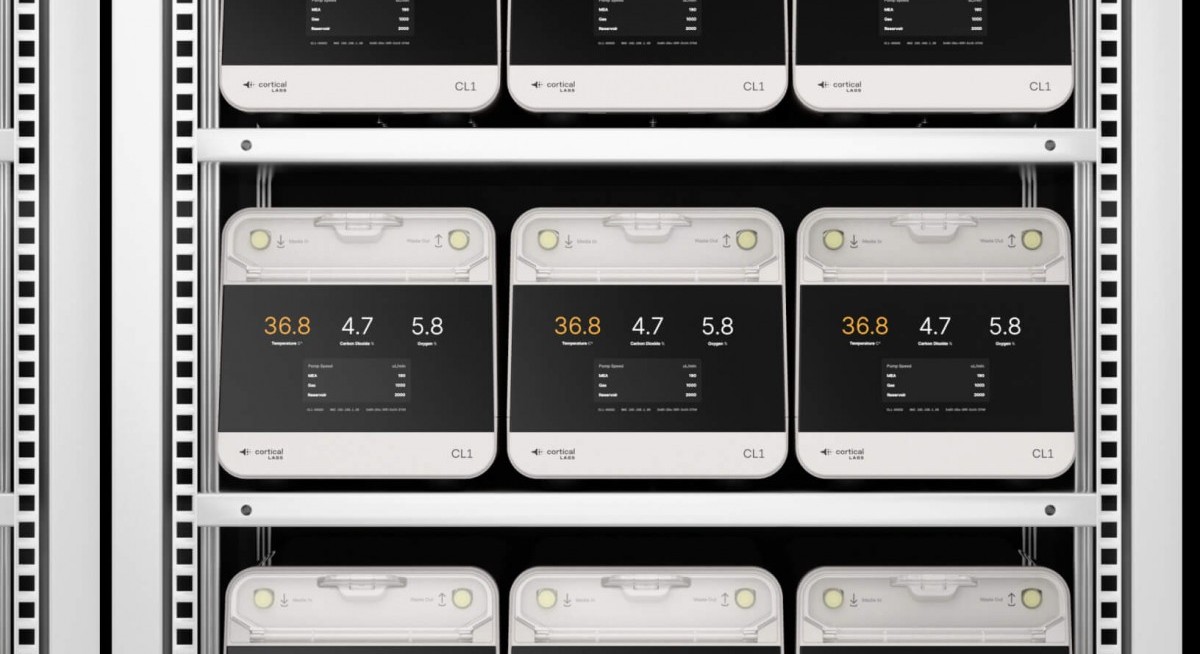
Cortical Labs expects an initial deployment at NUS to comprise a single rack containing 20 Cortical Cloud units used to benchmark the performance and efficiency of wetware-based computing systems.
DayOne and Cortical Labs plan to begin with laboratory validation at NUS before potentially moving the technology into a live environment within a DayOne commercial data centre, where it would be tested under real operating conditions, including defined power limits, environmental controls and compatibility with standard cooling infrastructure.
See also: Schneider Electric backs NUS’ Sustainable Tropical Data Centre Testbed phase 2 on Jurong Island
If technical milestones are met, the parties are exploring a phased expansion that could potentially reach up to 1,000 wetware computing units in a Singapore facility, subject to technical validation and regulatory approvals.
"Singapore is raising the bar for sustainable data centre growth, and the market is responding with new approaches, beyond just bigger builds. Partnering with Cortical Labs allows us to explore a new compute paradigm that complements Singapore's and the region's sustainability-led trajectory, supporting continued innovation while staying aligned to evolving efficiency and greener-energy expectations," says Jamie Khoo, chief executive of DayOne.
Researchers at NUS will play a central role in this project. Cells used in the biological computing platform will be cultured at the university's Life Sciences Institute under the supervision of Professor Rickie Patani, who is both a Professor of Neuroscience at NUS Medicine and the Director of the Neurobiology Programme at NUS Life Sciences Institute.
See also: Singapore’s SIT and Hitachi to co-develop hybrid AC/DC rack power testbed for data centres
"Wetware systems can help researchers explore new approaches to learning, adaptation and biological modelling. Our expertise in neurobiology research, particularly in understanding how to generate specific subtypes of clinically relevant human neurons and glia from stem cells, provides a strong foundation for translating these biological principles into biocomputing platforms," says Patani.
He adds that for applications such as drug discovery and neurological disease research, the ability to run experiments on brain-like biological networks alongside conventional computing could accelerate hypothesis testing and shorten cycles from laboratory insight to meaningful real-world impact.
Warmer server halls
Meanwhile, BDx Data Centers has successfully implemented the Infocomm Media Development Authority’s (IMDA) Tropical Data Centre Standard (SS 697:2023) in its multi-tenant facility.
The standard provides operational guidance for running data centres under thermal conditions suited to tropical climates, helping operators reduce cooling demand while maintaining reliability.
At its SIN1 facility in Paya Lebar, BDx increased operating temperatures from 23°C to 25°C under its Temperature Increase Program introduced in 2025. The adjustment has reduced cooling-energy consumption by 7% while maintaining 100% uptime in a live multi-tenant environment, in line with IMDA guidance and global ASHRAE standards.
"By implementing Singapore's Tropical Data Centre Standard in a live environment, we have demonstrated that efficiency gains can be achieved without compromising reliability," says Mayank Srivastava, chief executive of BDx Data Centers.
BDx uses an AI-driven digital twin to adjust cooling performance in real time, enabling cooling performance tuning under tropical operating conditions to strengthen efficiency, resilience and thermal stability at higher operating temperatures.
The company is also working with customers to tap Singapore's Energy Efficiency Grant (EEG), which supports the deployment of pre-approved energy-efficient IT equipment in commercial data centres in the city-state. This reinforces the objectives of SS 697:2023 and reduces the facility's overall energy intensity.


