

Floating Button
Home Digitaledge Digital Economy

Rethinking factories: Why Singapore will lead the next era of manufacturing

Benjamin Johnson
Benjamin Johnson  • 7 min read
Rethinking factories: Why Singapore will lead the next era of manufacturing
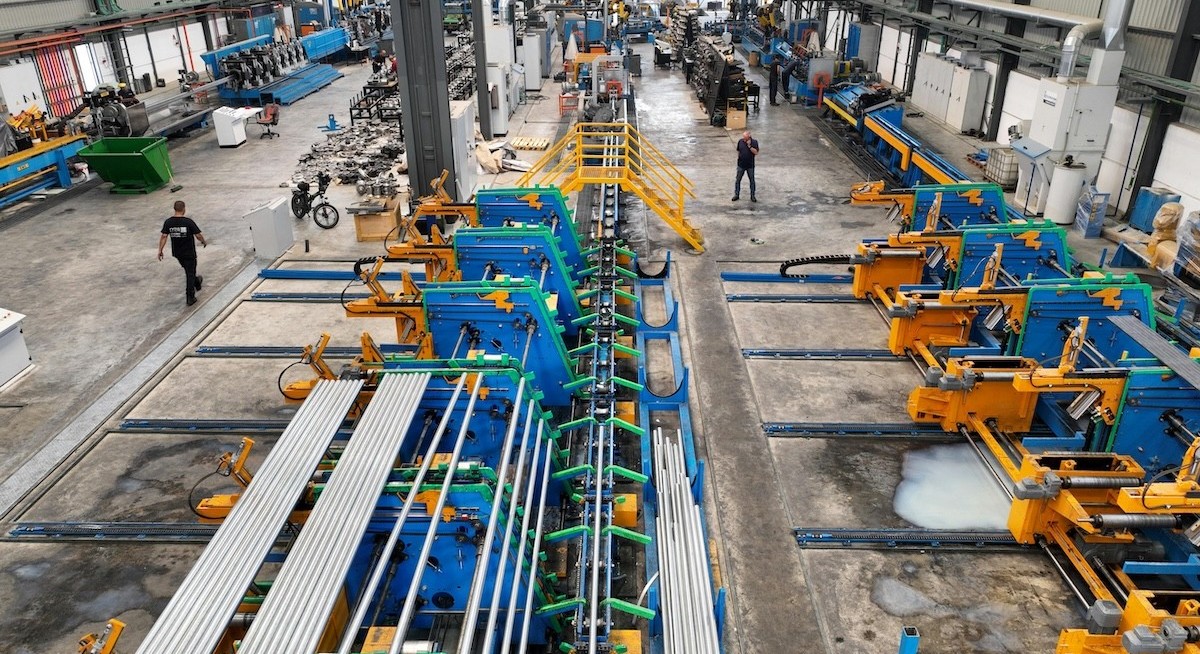
Here’s how getting operations and digital foundations right will determine whether Singapore’s national AI Missions can deliver globally competitive, best-in-class factories. Photo: Pexels
Font Resizer
Share to Whatsapp
Share to Facebook
Share to LinkedIn
Scroll to top
Follow us on Facebook and join our Telegram channel for the latest updates.

Singapore’s manufacturing sector is one of the few in the world that consistently punches above its weight.

From semiconductor fabs in Woodlands to advanced biomedical facilities in Tuas, Singapore’s manufacturers are already operating at world-class standards. Yet the next frontier of manufacturing in Singapore is not physical expansion; it’s digital advantage.

The factories of the future will be connected learning systems that can anticipate change, adapt quickly to both shocks and customer needs, and deliver sustainably at scale. For global manufacturers, the real competitive edge lies in orchestrating complex production networks through data, software and people. And Singapore is providing the perfect launch pad for smart factories of the future. That direction has now been reinforced at the highest level: in Budget 2026, Prime Minister Lawrence Wong announced national AI Missions, with advanced manufacturing singled out as a priority sector where Singapore aims to “build best‑in‑class factories that can compete globally”.

Making smart factories work in the real world

In Asia Pacific, long and diverse supply chains are exposed to everything from geopolitical tensions to extreme weather, so resilience comes from visibility and coordination. The ability to see, steer and optimise operations across multiple sites is as important as adding new capacity and creating new possibilities for what advanced manufacturing should mean for the next phase of growth. Coupled with the government’s push through its National AI Missions and Manufacturing 2030 vision, Singapore has the opportunity to position itself as the region’s leading hub for digital operations, where new manufacturing models are tested and scaled.

The phrase “smart factory” can be misleading, because it suggests a single site transformed by a single technology. In reality, scaling digital operations across a network is usually a long and complicated journey that starts with process understanding and standardisation rather than AI or shiny dashboards. The hardest work happens long before the first algorithm is deployed.

At Henkel, we learned early that it is not about chasing a perfect, one‑size‑fits‑all blueprint, but about getting digital and operations teams to solve problems together across very different plants. Our sites vary widely in equipment, automation and local ecosystems, so we had to understand how each plant performs, how materials and products flow between them, and how decisions in one location ripple through the rest of the network. That shift – from optimising individual factories to orchestrating an ecosystem with shared data, common standards where they matter and local flexibility where it adds value – is what turns disconnected initiatives into a true smart‑factory network.

One of the most important lessons was rooted in data quality. Early in our journey, we assumed that if we built the right systems, input quality would naturally improve over time. In fact, it was the opposite: without deliberate design for high‑quality inputs that included automation, error‑proofing and simple ways for users to flag issues, even the best tools struggle to deliver consistent value. Since we started treating data quality as a primary design principle, user adoption has improved and new capabilities have delivered impact faster across our plants.

This lesson is highly relevant for Singapore’s ambitions: if the national AI Missions are to produce “best‑in‑class factories that can compete globally”, then getting operations and digital foundations right will matter just as much as the AI models themselves – and that is exactly where the future of manufacturing in Singapore will be won.

See also: Tightening digital certificate rules pose business continuity test for Apac firms

Singapore is already rethinking what a factory can be

The Manufacturing 2030 vision sets a clear target to grow manufacturing value‑add while moving up the technology and knowledge curve, supported by government-backed digital initiatives and focused talent programmes. It’s clear that the goal is not to win a race to the lowest cost, but to become a hub where advanced manufacturing models are designed, tested and then scaled. The latest AI Missions, backed by the new National AI Council, effectively raise the stakes: factories here are expected not just to be efficient, but to demonstrate what AI‑led operations can look like for the region.

This is why Singapore is an ideal base for digital operations and supply chain orchestration: the very functions that are key to unlocking the future of advanced manufacturing.

See also: Mastercard, DBS and UOB successfully trial autonomous payment by AI agent in Singapore

For example, Henkel’s move to Geneo at Singapore Science Park has brought together our Global Supply Chain Hub, the Global Adhesive Operations Digital team, an expanded adhesives application engineering laboratory, and our Adhesive Operations Digital Lab and technical centres under one roof. This co‑location allows planners, digital specialists and application engineers to work on shared problems, from improving service levels to solving complex reliability issues for electronics customers in Southeast Asia. This means that many of the architectural decisions about how to structure our digital backbone, segment plants and balance global standards with local flexibility are made and refined in Singapore before they are rolled out across our network.

In this way, global companies can use the city‑state as both a laboratory and a control room. New ideas can be co‑developed with local partners, validated on real production lines, then scaled across dozens of plants worldwide – turning Singapore into a multiplier for industrial innovation, not just a single high‑performing site.

What this means for the region and for people

For manufacturers across the region, the shift towards network‑level smart operations is already changing how they compete and where they create value. The differentiator is increasingly the ability to run a distributed system of factories as a coherent whole, rather than the cost profile of any single site.

As more decision‑making moves into data‑rich hubs, activities such as supply chain design, digital product and process development, and cross‑plant optimisation become central to regional growth strategies. This is especially relevant when a reliability issue in one market can be analysed using historical and real‑time data from multiple plants, replicated in a technical centre and addressed through coordinated changes to production and logistics.

Singapore’s talent agenda is leaning into this future, with a growing emphasis on digital literacy and cross‑disciplinary careers that blend operations, data and technology. By aligning education and industrial policy, Singapore is building an environment where people, not just machines, are equipped to make the most of digital factories. In that sense, the city‑state is not only hosting smart factories but also helping to shape the operating models and capabilities that will define the region’s next wave of manufacturing.

The future of the sector’s success lies in not how many plants are built, but how intelligently those plants are run. In a nation where land is scarce, labour costs are high and global competition is relentless, Singapore is well-acquainted with the fact that growth cannot come from scale alone. It must come from precision, connectivity and insight.

It’s this wisdom and forward-looking perspective that has made Singapore so much more than a location on a map for many global manufacturers. Ask anyone, and they’ll tell you that Singapore is a strategic hub where global supply chain excellence, digital capabilities and application expertise come together to support purposeful growth in Asia Pacific and beyond. That’s why we’re here. And that’s why the future of manufacturing starts in Singapore.

Benjamin Johnson is the global head of Digital Operations, Adhesive Technologies at Henkel

×
The Edge Singapore
Download The Edge Singapore App
Google playApple store play
Keep updated
Follow our social media
© 2026 The Edge Publishing Pte Ltd. All rights reserved.

