



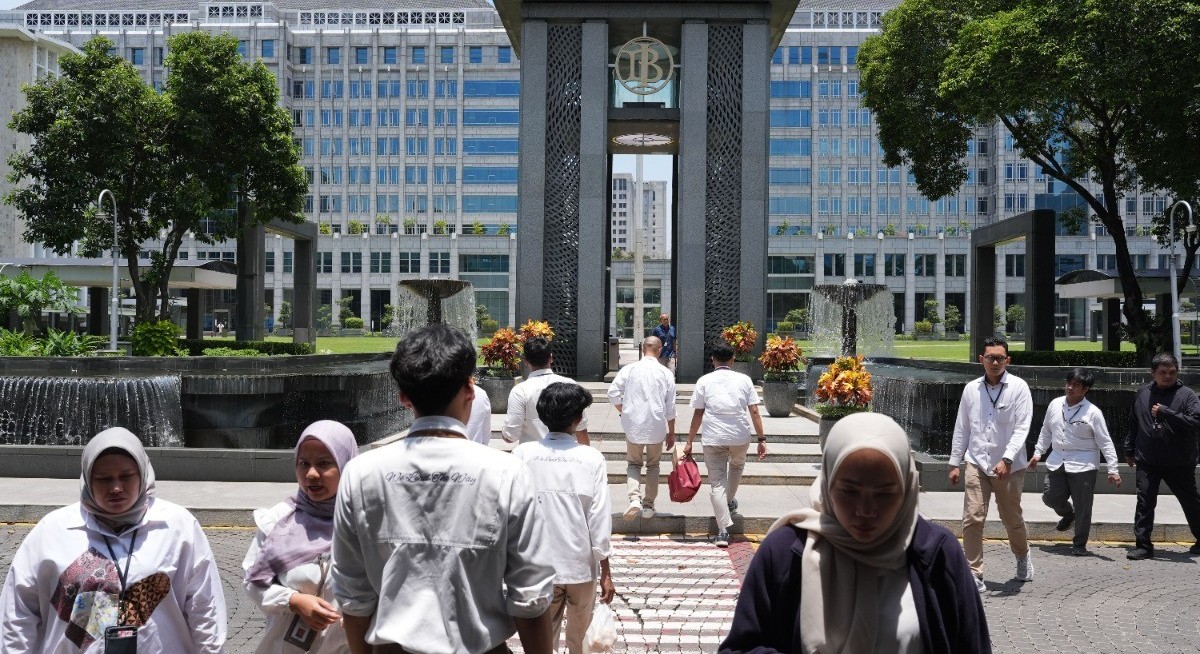


(March 17): Indonesia’s central bank tightened foreign-exchange regulations as policymakers in Southeast Asia’s biggest economy try to soften the impact of the Middle East war on inflation and the rupiah.
Bank Indonesia also kept its benchmark BI-Rate at 4.75% on Tuesday, as predicted by all 30 economists in a Bloomberg survey. The rate has been steady since October, and the central bank omitted previously used language about seeking room to lower borrowing costs.
Bank Indonesia will tighten regulations on cash purchases of foreign currency, reducing them to US$50,000 ($63,937) per buyer per month from US$100,000 starting April. Limits for forwards and swaps were increased, and the central bank will continue to act in the market where needed, Governor Perry Warjiyo said.
“We will continue to calibrate the optimal level of intervention to stabilise the rupiah” while ensuring Indonesia has sufficient foreign reserves, Warjiyo said. This calculation will depend on how long the war will last, its impact on the US dollar and Treasury yields, he said.
The currency was little changed at 16,986 per dollar after the decision, moving around a record low, while stocks closed 0.7% higher.

See also: Defiant Prabowo spars with Indonesia tycoons and market sceptics
“All measures are to prepare to defend the rupiah if and when necessary,” said Wee Khoon Chong, senior APAC market strategist at BNY. “There is no perfect strategy, but macroprudential measures are a more effective tool than hawkish comments.”
The US-Israeli attack on Iran has sparked a sharp rise in oil prices that threatens to speed inflation and slow Indonesia’s economic growth. The rupiah has meanwhile tested historic lows beyond 17,000 per dollar as investors shun risk.
The tighter rules on buying foreign currency represent a balancing act for Bank Indonesia, which wants to reduce downward pressure on the rupiah without spooking domestic and foreign investors.
See also: Asean says to keep energy, food trade open as war roils markets
“Bank Indonesia will continue to optimise monetary policy instruments to safeguard external resilience against global risks, including taking necessary adjustment measures to maintain stability,” Warjiyo said after the decision. “We are likely to maintain the BI-rate for the time being.”
The Middle East war is worsening the outlook for both the global economy and supply chains, and room for monetary easing is narrowing around the world, Warjiyo said. The central bank needs to anticipate and address the spillover impact on Indonesia’s economy and financial markets so as to sustain growth momentum, he added.
The new foreign exchange curbs come amid investor jitters as the Indonesian government deliberates temporarily breaching a long-held budget deficit ceiling to cushion the impact of the war. President Prabowo Subianto has pledged fiscal discipline, saying that any such change would be short-term to mitigate crisis conditions.
Reducing dollar-buying should help manage outflows, while higher thresholds for forwards and swaps could help smooth the movement of the currency, BNY’s Wee said.
While the rupiah is expected to remain stable, Warjiyo said Indonesia’s external buffers must be built up as the Middle East war sends capital outflows surging back to safe haven assets. Dimmer global growth prospects and costlier crude may also widen Indonesia’s current account deficit closer to the upper range of its 0.1% to 0.9% of GDP target, he said.
The monetary authority also needs to closely monitor inflationary pressures, with higher fuel prices raising the potential for imported inflation. Last month, a low-base effect and higher demand ahead of the Eid holiday pushed headline inflation further beyond Bank Indonesia’s 1.5%-3.5% target range.
Fear of a prolonged and severe Middle East war have been pushing central banks to consider delaying or abandoning their easing cycles. Earlier Tuesday, the Reserve Bank of Australia raised its key rate for a second straight meeting. In the Philippines, the finance chief said that the central bank could tighten at its meeting in April, despite just easing in its meeting last month.
Uploaded by Chng Shear Lane




