






(June 18): Indonesia’s central bank raised its key interest rate for a third time in about a month, extending its aggressive efforts to stabilise the rupiah and shore up investor confidence.
Bank Indonesia lifted the benchmark BI-Rate by 25 basis points to 5.75% on Thursday, in line with the majority of analysts surveyed by Bloomberg News.
The latest move follows a surprise hike on June 9 and a bigger-than-expected 50-basis-point increase in May, bringing total tightening to 100 basis points this year.
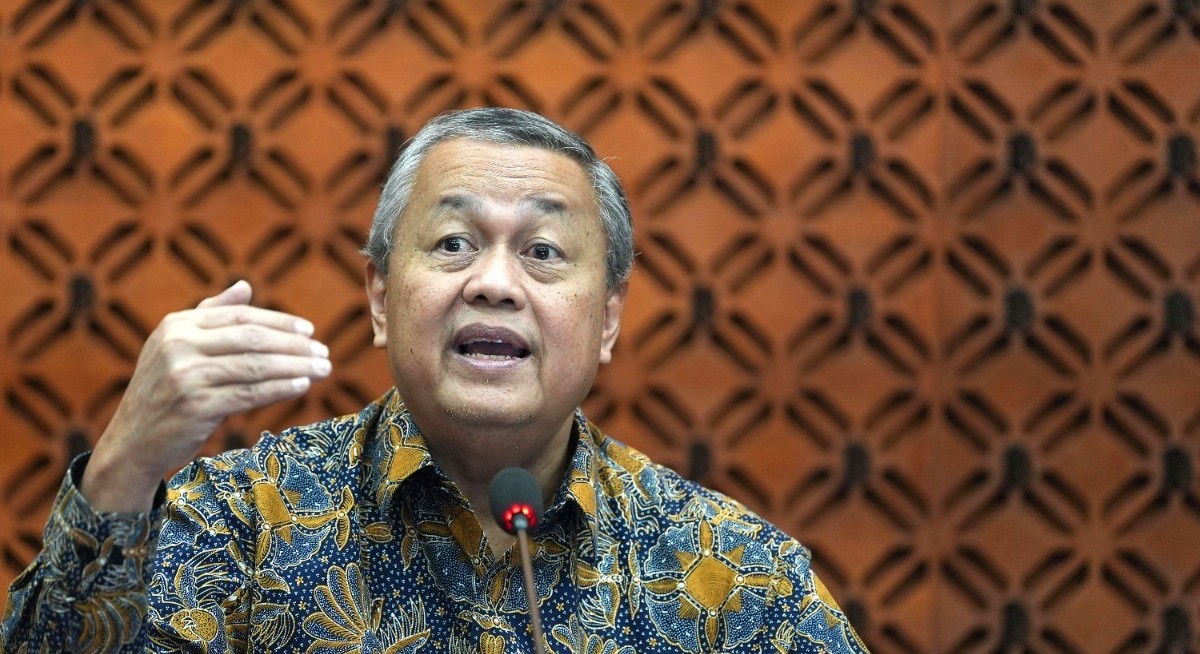
Governor Perry Warjiyo said in a briefing announcing the decision that the bank would continue to go “all-out” to support the rupiah, using his go-to catchphrase when describing Bank Indonesia’s support for the goals of President Prabowo Subianto.
The moves also underscore policymakers’ determination to prevent currency weakness from feeding into broader price pressures and, as it said in a statement, attract foreign portfolio investments.

See also: Philippines hikes rate again to temper war-driven inflation
“The signal is clear. Bank Indonesia is prioritising rupiah stability,” said Purbiantoro Lintang Nugroho, an economist at PT Bahana Sekuritas. “A more stable rupiah could help restore investor confidence and limit further foreign outflows.”
The rupiah reversed losses after the decision to close 0.2% higher against the dollar, while yields on 10-year government bonds rose 15 basis points, the most in over a week, and stocks declined. Before Thursday’s decision, the currency had gained about 2% from a record low after the surprise rate hike last week.
Warjiyo also said in the briefing that he expects the currency to continue to stabilise, supported by the bank’s measures and the economy’s strong fundamentals.
See also: Bank Indonesia chief touts higher bond yields to investors
The central bank also moved to clamp down on Indonesians fleeing the rupiah. Starting July, foreign currency transactions of US$10,000 ($12,903.75) or more will require an underlying transaction, continuing a gradual tightening from the US$100,000 threshold earlier this year.
BI estimates that the new limits will increase the proportion of transactions backed by underlying documents to 98.1% of total foreign exchange transactions.
Further tightening dollar-purchase rules “means there’s still a need to balance supply-demand dynamics for foreign exchange, by curbing likely speculative outflows”, said Jeffrey Zhang, a strategist at Credit Agricole CIB.
Policy adjustments
Emerging market assets could be under more pressure as the Federal Reserve, which left interest rates unchanged earlier Thursday, signalled support for raising borrowing costs later this year under new chair Kevin Warsh.
Bank Indonesia sees the possibility of Fed rate hikes to tame inflation, Warjiyo said, noting that US Treasury yields continue to rise.
“The risks are skewed to the upside for at least one more 25 basis point increase” by Indonesia, said Miguel Chanco, chief emerging Asia economist at Pantheon Macroeconomics. “Especially if talk of a potential Fed rate hike intensifies in the coming weeks and months, given Bank Indonesia’s built-in sensitivity to exchange-rate movements.”
To stay ahead of Singapore and the region’s corporate and economic trends, click here for Latest Section
Investors have also said recent gains in the rupiah may be temporary unless monetary tightening is supported by more consistent and market-friendly policy adjustments, including more efficient fiscal spending, clearer communication and a more predictable regulatory environment under Prabowo.
Plans for a new state-backed commodity export agency also risks disrupting the trade flows that help support the rupiah.
“BI can buy time and mitigate pressure on the rupiah, but sustained foreign inflows still require support from a credible fiscal stance, more efficient government spending, clearer policy communication, and more predictable regulations,” said PT Kiwoom Sekuritas Indonesia’s Liza Camelia Suryanata. “Without these, a BI rate increase will only be a short-term painkiller.”
Neighbouring Philippines also raised rates by a quarter-point on Thursday with inflation seen above target through 2028 despite the interim peace deal between the US and Iran.
While Indonesia’s inflation is seen staying within its 1.5%-3.5% target this year and next, higher food and energy costs, a possible El Niño dry spell, together with the lagged impact of currency weakness on imported goods, may stoke some price pressures.
On the upside, Indonesia’s real interest rates are now firmly positive and among the highest across major emerging markets, according to Gareth Leather of Capital Economics. “This provides Bank Indonesia with some policy space,” he said.
Uploaded by Chng Shear Lane




