



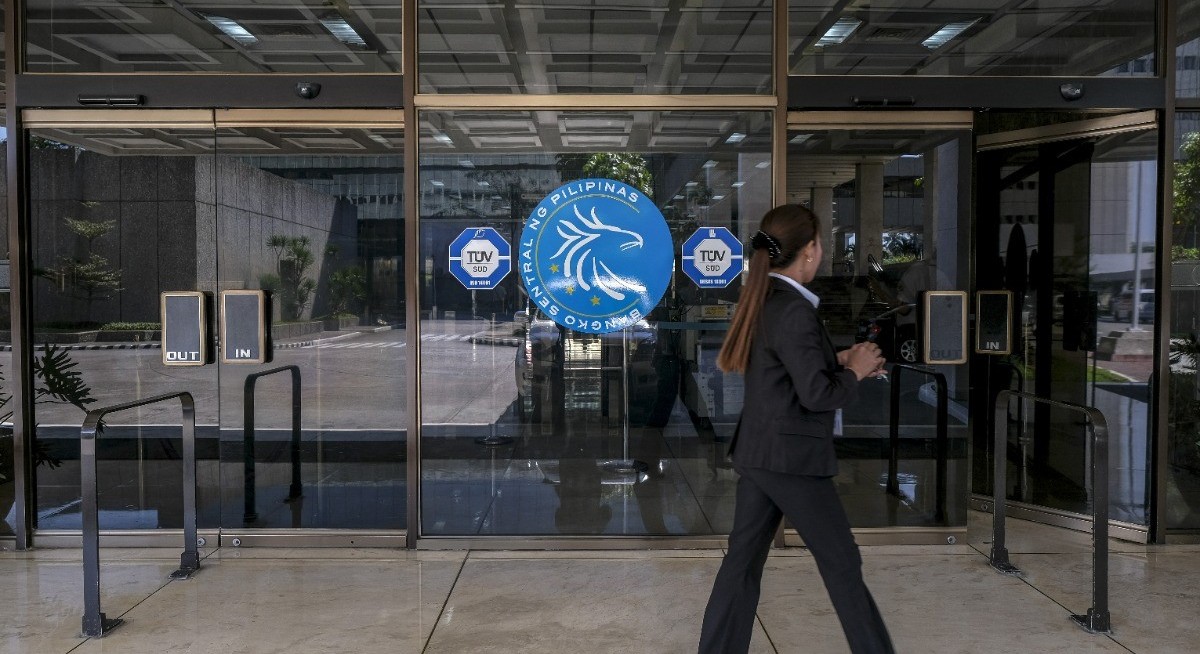



(June 18): The Philippine central bank raised its benchmark interest rate for a second consecutive meeting, and Governor Eli Remolona said another increase is possible in August with inflationary pressures still strong despite an interim US-Iran peace deal.
The Bangko Sentral ng Pilipinas (BSP) raised its target reverse repurchase rate by a quarter of a point to 4.75% on Thursday, as predicted by 23 of 30 economists in a Bloomberg News survey. The rest had expected a 50-basis point hike.
“There’s a hike that’s still possible,” Remolona told a briefing, saying monetary authorities have a lot of space to tighten. He said “25 basis points is possible, 50 basis points is possible depending on the data we see forward”. The central bank holds its next rate-setting meeting on Aug 27.
But Remolona signalled that monetary authorities aren’t leaning toward a steep rate increase going forward with inflation expectations intact. “You might want a bigger hike because you want to prevent de-anchoring of inflation. But if that’s not a big issue, and for now it’s not a big issue, then you could go with what I call baby steps,” he said.
The Philippine peso slipped 0.3% against the dollar after the BSP’s latest move, with the rate increase smaller than some had forecast. The main stock index trimmed gains.

See also: Indonesia raises rates again to go ‘all out’ supporting rupiah
The continued monetary tightening underlines the caution taken by Asia’s central banks, even as the US and Iran agreed to reopen the Strait of Hormuz that’s vital to the flow of energy supplies. Bank Indonesia raised its key interest rate for a third time in about a month on Thursday and earlier this week, the Bank of Japan increased its policy rate and pledged more hikes to quell inflation risks.
“Rising core inflation indicates broadening price pressures and second-round effects, including higher inflation expectations,” the BSP said in a statement.
Latest projections by the central bank point to a higher inflation path, with average headline inflation seen breaching the central bank’s 4% tolerance ceiling for this year and next, it said. For 2028, the BSP sees inflation settling slightly above its 3% goal.
See also: Bank Indonesia chief touts higher bond yields to investors
“Today’s policy action will help keep inflation expectations anchored and mitigate the risk of second-round effects,” the central bank said. The Monetary Board “is prepared to take further monetary action as needed to ensure that inflation returns to the 3% target”, it added.
Capital Economics economist Jason Tuvey expects the BSP to increase the key rate at least one more time, to 5% in August. “Beyond that, much will depend on the incoming inflation data and moves in the peso. If these prove more favourable, concerns about the weak economy may prompt BSP to move to the sidelines,” he said in a note.
The Philippines, which imports nearly all of its oil requirements from the Middle East, has been among the hardest-hit nations from the Iran war. While inflation eased last month to 6.8%, it remains well above the central bank’s 2%-4% target.
Oversea-Chinese Banking Corp Ltd economist Lavanya Venkateswaran sees a 25-basis-point hike at each of the BSP’s remaining three meetings for the year, saying inflationary pressure may linger through the third quarter.
Meanwhile, the Federal Reserve stood pat on Wednesday, with Chairman Kevin Warsh refraining from providing clear rate guidance. Many Fed officials, however, expect they’ll need to raise rates at least once in 2026 — a stance that can prop up the dollar.
The Philippine peso has recovered from its record low of 61.75 to the greenback earlier this month, but it remains down nearly 3% this year. “A large depreciation over a few weeks could cause some inflation,” Remolona said, reiterating that monetary authorities allow the peso to seek its level based on market forces.
Uploaded by Chng Shear Lane




