

Floating Button
Home News SE Asia Stocks

Thai stocks extend Middle East-spurred losses as trading resumes

Bernadette Toh / Bloomberg
Bernadette Toh / Bloomberg • 3 min read
Thai stocks extend Middle East-spurred losses as trading resumes
Thailand is among the most exposed economies in the region to higher oil prices spurred by the conflict due to the country’s high energy imports, according to analysts
Font Resizer
Share to Whatsapp
Share to Facebook
Share to LinkedIn
Scroll to top
Follow us on Facebook and join our Telegram channel for the latest updates.

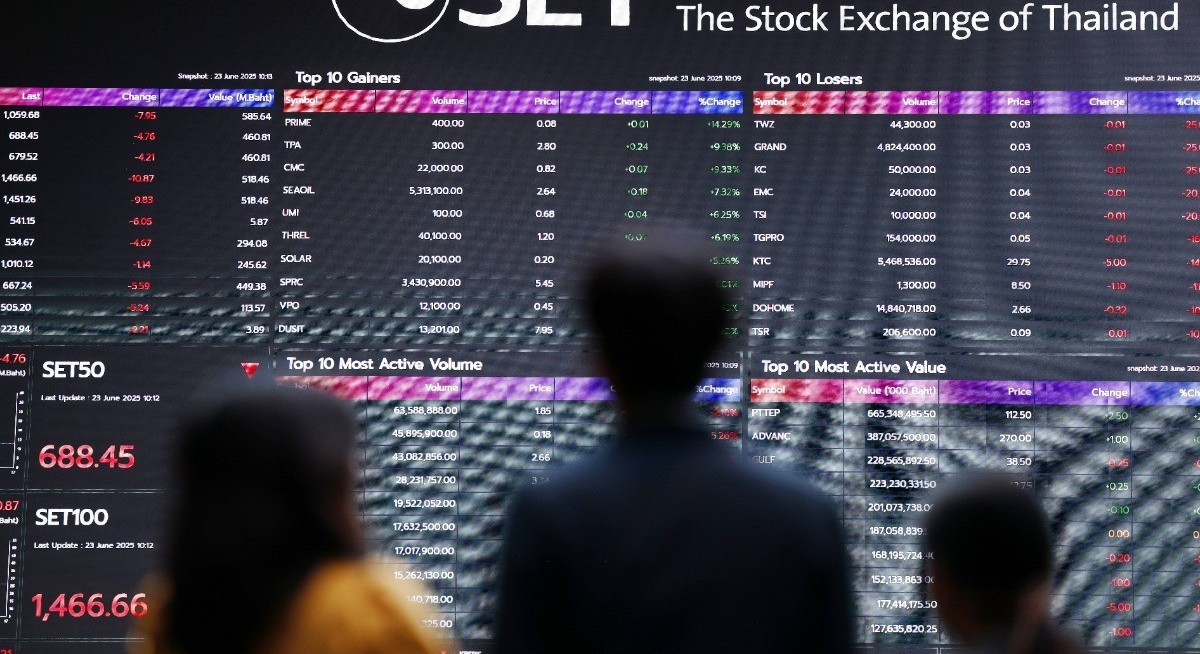
(March 4): Thailand’s stock gauge extended declines as trading resumed, with escalating tensions in the Middle East continuing to weigh on sentiment.

The Stock Exchange of Thailand SET Index losses widened to as much as 8.6% in the afternoon session. Trading in shares was halted for 30 minutes earlier after the gauge fell by the 8% threshold.

A broad selloff is sweeping across Asian equities as investors grapple with mounting uncertainty over the duration and impact of the Iranian war. The pullback effectively wipes out the more than 13% post-election gains in the Thai benchmark last month, narrowing the index’s advance this year to about 8%.

“Trading conditions have been affected by escalating tensions in the Middle East, which have prompted investors globally to reduce exposure to risk assets and shift toward safe-haven assets or those positioned to benefit from the current situation,” the exchange said in a statement. The local bourse is in close coordination with relevant regulatory authorities, it added.

Thailand is the hardest hit market in Southeast Asia after conflict in the Middle East prompted concerns over inflation due to rising oil prices. Analysts said the country is among the most vulnerable in Asia to elevated crude prices due to the country’s oil imports. The local stock gauge has declined more than 10% so far this week.

See also: MSCI pressure mounts on billionaire-held Indonesia shares

Foreign funds had poured into the country’s stocks last month after Prime Minister Anutin Charnvirakul’s decisive election victory bolstered expectations of policy continuity and stronger growth. Renewed concerns about higher cost of energy may weigh on economic prospects. Thailand’s gross domestic product growth already lags that of Southeast Asia peers.

“Higher energy costs immediately translate into concerns around inflation, current account pressure and corporate margin compression,” said Tareck Horchani, head of sales trading, prime brokerage at Maybank Securities. Disruption to air routes would also affect Thailand’s key tourism sector, he said.

Thai markets were also weighed by a broad unwinding of artificial intelligence-related trade, with firms such as Delta Electronics Thailand Pcl among the biggest drags on the gauge.

See also: Global investors shun Thailand as election overhang hits assets

The SET gauge is still the best performer in Southeast Asia this year, with gains of around 8%. The baht is up 0.5% against the dollar on Wednesday after slumping more than 2% in the past two days. It is outperforming most Asian peers on Wednesday as currencies in India and Indonesia decline amid the risk-off sentiment.

Uploaded by Chng Shear Lane

×
The Edge Singapore
Download The Edge Singapore App
Google playApple store play
Keep updated
Follow our social media
© 2026 The Edge Publishing Pte Ltd. All rights reserved.

