
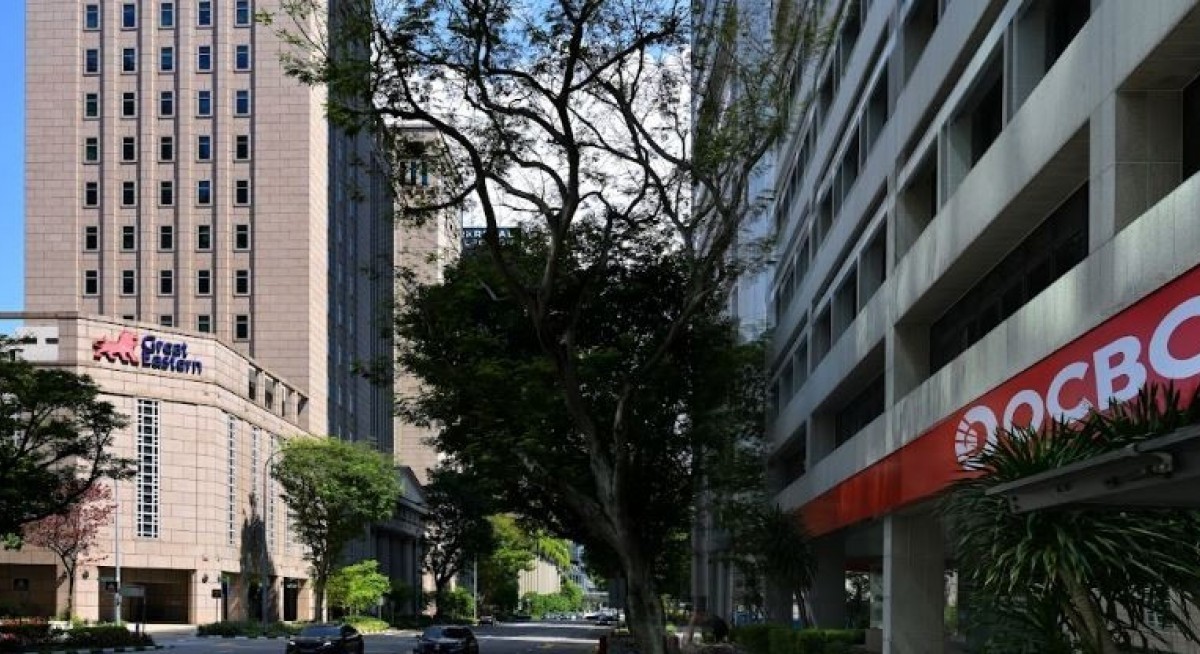

Oversea-Chinese Banking Corporation (OCBC) has no plans to raise its stake in Great Eastern Holdings, says group CEO Tan Teck Long at the bank’s FY2025 results briefing on Feb 25, his first after succeeding Helen Wong, who stepped down on Dec 31, 2025.
“That is a chapter behind us already. We will not be looking at acquiring more GE shares in the foreseeable future,” says Tan in response to a query on the possibility of another buyout in the near term.
On May 10, 2024, OCBC made a $1.4 billion privatisation bid for the 11.56% stake in Great Eastern that it did not own. At the time, Wong described the offer as a “natural progression” of the bank’s strategy.
“We have been looking at opportunities to best use our capital and believe the offer allows us to deploy our resources into a key business that is expected to be earnings accretive to OCBC,” she said then.
The attempt was unsuccessful, leading to Great Eastern’s shares being suspended for nearly a year. The insurer subsequently resumed trading on Aug 21, 2025, after a 1-for-1 bonus issue brought Great Eastern’s free float to above the minimum requirement of 10%.
To Tan, OCBC’s 93.7% stake in Great Eastern is “good enough” for collaboration at the group level, and as such, there is no need to increase its stake further.
See also: Singapore banks draw $77 bil in new wealth from Asia’s rich
Great Eastern, which increased profit contribution to the bank, is seen to be a key part of OCBC’s “whole-of-wealth” proposition. In his CEO presentation, Tan said the bank will expand its affluent customer base in Malaysia by leveraging the Great Eastern Malaysia ecosystem. According to Tan, the base in Malaysia’s Great Eastern business alone is almost half the size of Singapore’s population.
The insurer was also part of the bank’s shift to cater to an ageing population.
Great Eastern also has plans to pivot to the high net worth wealth segment, with group CEO Greg Hingston calling it a “very significant opportunity” for the insurer.
See also: HSBC profit beats as wealth division boosted by client income
“It’s a segment that we’ve probably been underweight in, historically, in a very fast-growing segment opportunity and particularly in Singapore, given [its] international financial centre status,” he adds.
“On high net worth strategy, we'll be launching the first phase of that to the market. So we will be announcing something next week. So I can't talk about it in detail now, but you'll see the first evolution of Great Eastern refocusing on that segment,” he continues.
Dividends over buybacks
When asked if the bank is looking to distribute more special dividends as opposed to share buybacks under its $2.5 billion capital return plan, which the bank seeks to complete by 2026, Tan shares, candidly, that he prefers special dividends instead of capital management to reward the bank’s shareholders, especially its long-term shareholders.
OCBC reported earnings of $7.42 billion for the FY2025 ended Dec 31, 2025, 2% lower y-o-y, as non-interest income offset the declining net interest income. The bank said it will pay a final ordinary dividend of 42 cents per share and a special dividend of 16 cents, which is drawn from the $2.5 billion capital return plan. Including its interim dividend of 41 cents, OCBC's total payout for the year will come up to 99 cents, equivalent to a payout ratio of 60%.
On Feb 24, Great Eastern reported a net profit of $1.21 billion, 21% higher y-o-y, which reflects both favourable investment returns and the strength of the group's underlying business fundamentals, said Hingston.


