





(March 9): China’s consumer-price growth accelerated to the quickest in over three years and factory deflation moderated again, after a rally in energy markets and as household spending boomed during a later-than-usual Lunar New Year holiday.
The consumer price index (CPI) climbed faster than all forecasts in February and reached 1.3% from a year earlier, after a 0.2% rise in January, according to data released by the National Bureau of Statistics (NBS) on Monday. The median estimate of economists surveyed by Bloomberg was 0.9%.
Producer prices narrowed their drop to 0.9% from a year earlier, the least since July 2024, even while declining for a 41st straight month. The core CPI, which excludes volatile items such as food and energy, hit 1.8% — the highest since 2019.
“There’s further inflationary pressure likely ahead in March thanks to the surge in oil prices,” said Lynn Song, the chief economist for Greater China at ING Bank. “Unless the oil price shock is notably stronger and longer than expected, inflation is unlikely to inhibit PBOC (People's Bank of China) easing this year.”

President Donald Trump’s war with Iran has sent oil prices surging, as more major Middle East producers curbed production and the Strait of Hormuz — a chokepoint for a fifth of global oil flows — remained all but closed. On Monday, Brent soared as much as 29% to near US$120 ($153.94) a barrel, the biggest intraday move since April 2020, with the US threatening to deepen a conflict that’s upended energy markets.
See also: Chinese sovereign bonds slump as oil surge fans inflation worry
China, the world’s biggest oil importer, faces possible inflationary spillovers, though it’s created a cushion by stockpiling crude at onshore sites over the past year at a rapid rate, including for strategic storage. Should oil stay at US$100 this year, economists at Barclays plc estimate it would lift China’s CPI inflation by 0.3 percentage point versus their current forecast of 0.4%.
“The transmission impact of global geopolitical conflicts on energy prices is starting to manifest itself,” NBS statistician Dong Lijuan said in a statement accompanying the data release. China’s domestic fuel prices rose 3.1% in February from the previous month, according to Dong, though they still declined sharply from a year earlier.
The upheaval in oil markets has the potential to alter the calculus for policymakers, especially if the spike in crude prices persists. Until now, the PBOC has been telegraphing a cautious approach to monetary easing after delivering a single 10 basis-point reduction to the policy interest rate in 2025.
See also: Fosun shares rebound on shareholders’ pledge to boost stake

In comments last week, PBOC governor Pan Gongsheng warned that external volatility could spill over into China, vowing that the central bank will try to insulate the domestic market from contagion.
While seeing room for a rate cut in the second quarter, ING’s Song said “odds are rising for policymakers to choose a more cautious route and push this back, assuming energy disruptions persist, and global inflationary pressures pick up”.
China has endured three years of economy-wide declines in prices, the longest such streak in decades. Deflationary pressures have been present since the end of the pandemic, in large part as a consequence of a prolonged slump in housing and weak consumer demand.
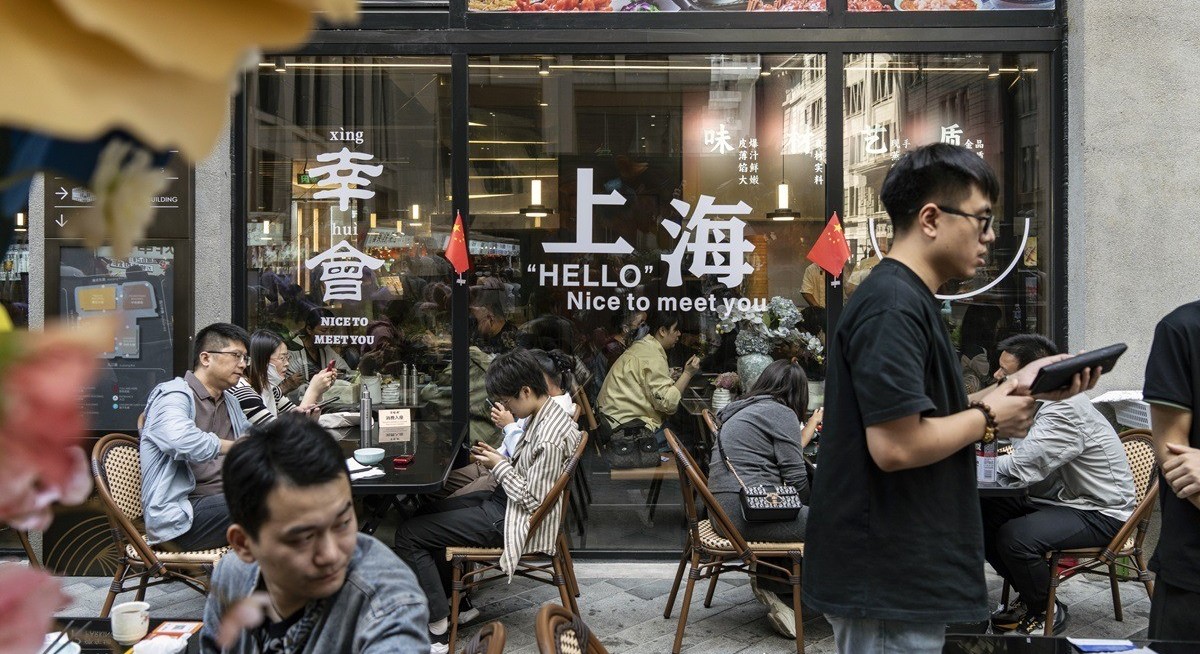
But the record spending surge during the long public holiday last month jolted some consumer costs upward, after signs already pointed to an easing of deflationary pressures in manufacturing and services.
The extent of the uplift in last month’s consumer inflation will probably prove temporary, since it was caused in large part by the timing of the Lunar New Year. The festival is a moving holiday that ran from Jan 28 to Feb 4 in 2025 but fell entirely in February of this year.
A number of holiday-related items became far more expensive in February. Flight tickets, transportation rentals, travel agency fees, pet services and car maintenance all recorded double-digit increases in prices on year.
To stay ahead of Singapore and the region’s corporate and economic trends, click here for Latest Section
Driven by a surge in the cost of fresh vegetables, beef, lamb and fruit, food prices were up 1.7% on year in February — in a reversal from the 0.7% drop in the previous month. The year-on-year decline in motor fuels prices narrowed to 9% from 10.4% in January.
Higher gold costs continued to feed into inflation. Gold jewellery prices soared 76.6% in February from a year ago, roughly the same as in the previous month.
China’s government kept this year’s consumer inflation target at 2% — though it’s viewed as a ceiling more than a goal — after trimming it last year to acknowledge deflationary pressures. Consumer prices were flat in 2025, marking the weakest inflation since 2009.
Top leaders last week issued their strongest pledge yet to end deflation, with a vow to “steer general price levels back into positive territory” this year.
While the focus of policymakers is shifting, the steps taken so far have been relatively measured. Since July, Beijing has tried to curb excessive competition within industries while at the same time making sure jobs are protected.

The government is intensifying efforts to rein in a glut in production. Economic planners singled out steelmaking and oil refining at the opening of the national legislative session on Thursday with promises of orderly reductions in capacity.
Dong said higher global non-ferrous metal and crude oil prices drove month-on-month increases in costs across several industries, including gas and petroleum extraction.
A government campaign against excessive competition, dubbed “anti-involution,” also began to bear results, Dong added, with lithium-ion battery prices rising 0.2% — their first year-on-year increases after 33 months of declines.
“CPI inflation recovered last month, thanks to temporary factors such as an easing of oil price deflation and volatility in food and tourism prices around Lunar New Year,” Zichun Huang, a China economist at Capital Economics, said in a note. “Tensions in the Middle East will push inflation higher for as long as global energy prices remain elevated.”
Uploaded by Tham Yek Lee




