



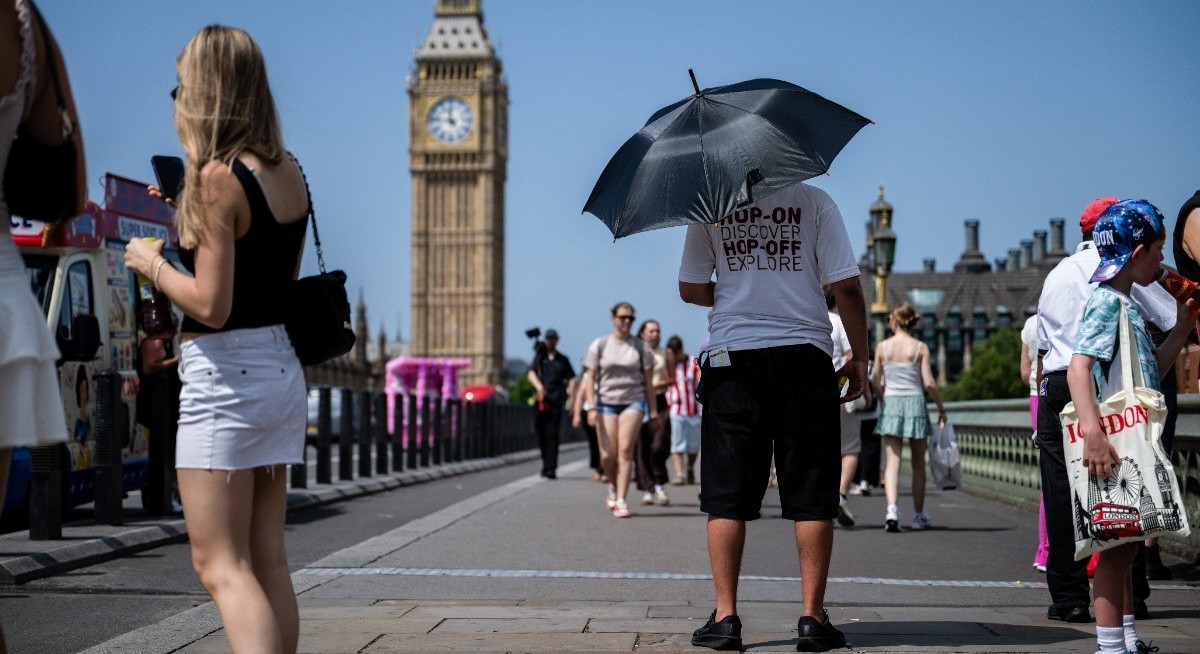



(July 1): Extreme weather events — such as the heat wave gripping Europe — are making a growing number of assets too risky to insure, according to a director at Europe’s largest primary insurer.
“Certain locations and perils cannot be covered as we would wish them to be covered,” Günther Thallinger, who sits on the management board of Allianz SE, said in an interview. “We cannot help it.”
Heat, floods, storms and wildfires “could become so frequent that they challenge traditional insurance models”, he said. “Risk-adequate pricing would not be affordable any longer.”
The warning comes as millions of Europeans endure some of the highest temperatures ever recorded in the region, with scientists identifying man-made climate change as the culprit. Researchers at World Weather Attribution estimate that June temperatures were between 5°C and 12°C above seasonal averages across France, Germany, Italy, Spain and southern England, as Europe heats up faster than other continents.
Insurers, bankers and financial analysts are now trying to calculate the short-to-medium-term costs of continual temperature rises. Carsten Brzeski, global head of macro at ING Group NV, said in a client note this week that heat waves represent a “new downside risk” to the region’s economic growth.
The analysis feeds into a growing awareness across Europe that homes, schools, hospitals, transport networks and other forms of infrastructure will need significant investments in order to adapt to the rapidly changing climate. Brzeski says Europe faces an accumulated economic loss equivalent to 0.8% by 2029, as tourists stay away, people become less productive and supply chains get disrupted.
See also: ETAF under Singapore's FAST-P raises US$250 million in first close
Insurance is the corner of finance that’s responding fastest to such risks, according to Sarah Kapnick, JPMorgan Chase & Co’s global head of climate advisory.
Wherever assets are exposed, prices on insurance coverage “are going up", she said in an interview with Bloomberg Television in London. And “the stresses that we see today are only going to get worse because heat waves like this ten years from now will be over 40°C and it will keep going”.
There are early indications that banks are starting to follow insurers in differentiating between clients based on their climate risk.
See also: Growing interest from clients to engage on adaptation and resilience finance: DBS
In Spain, where the temperature just hit a June record of 43°C, BBVA SA is now adjusting loan prices for corporate customers based on their exposure to global warming, Elvira Calvo, the bank’s head of sustainability business transformation, said in an interview. Sectors being targeted are agriculture, real estate and leisure, as well as utilities and infrastructure, she said. Retail clients are next, Calvo added.
Thallinger, who warned last year that the pace of global warming is making entire regions uninsurable, said Allianz is now trying to help customers figure out how to adapt so they do not lose access to coverage. He declined to say which sectors are most at risk, noting that it’s more a question of individual risk and clients’ attitude to addressing these.
The Allianz executive said he was surprised his earlier comments “triggered a lot of people” as he was simply referring to well-established climate science. The world is currently on course for 2.8°C of warming, a level that implies increasingly extreme weather shocks, rising sea levels and ravaged ecosystems.
It’s not just companies’ vulnerability to physical climate risks that’s important for their lenders and insurers; their contribution to emissions reductions can also create a competitive advantage, Thallinger said. Automakers and hyperscalers that embrace the transition, for example, will find that “climate action starts to become a defining element of competitiveness", he said.
Thallinger still champions the concept of net zero emissions, which has been vilified in the US and overshadowed by energy security concerns in Europe. While the political motivations surrounding the transition may be complex, Thallinger says failing to address emissions comes with obvious consequences.
“It’s totally clear: without net zero, it doesn’t work,” he said. And without it, adaptation becomes "open-ended".
Uploaded by Arion Yeow




