

Floating Button
Home News Construction

Tiong Woon’s turnaround story goes beyond ‘just rental, rental, rental’

Felicia Tan
Felicia Tan • 9 min read
Tiong Woon’s turnaround story goes beyond ‘just rental, rental, rental’
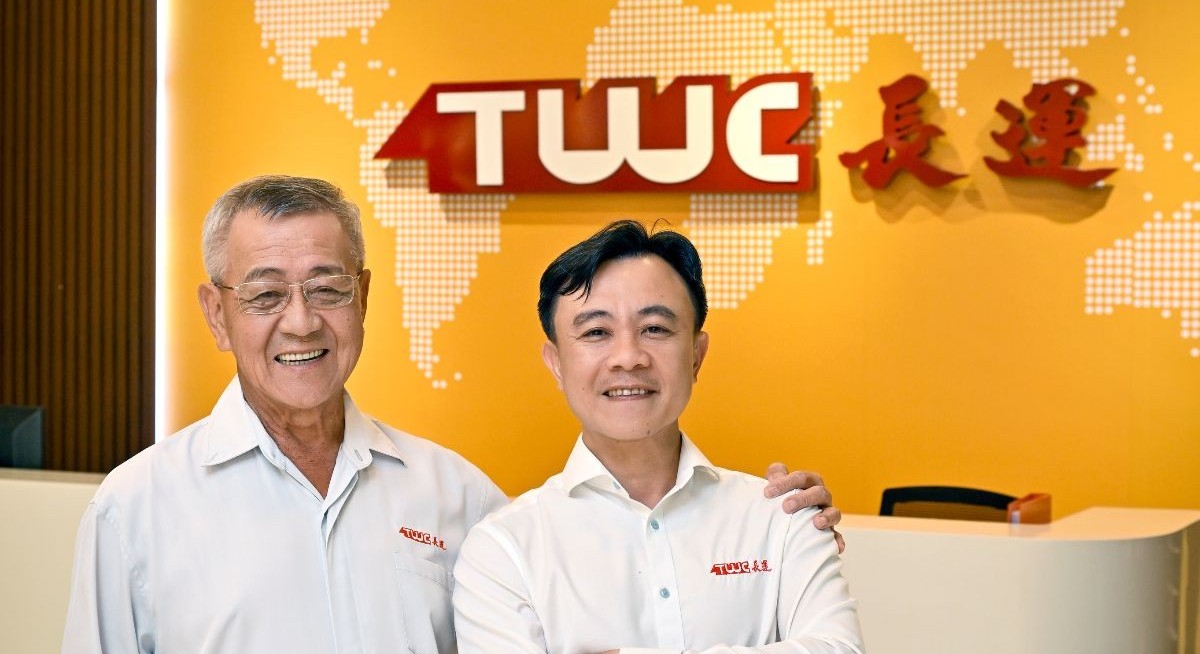
Tiong Woon executive chairman Ang Kah Hong and executive director and CEO Michael Ang. Photo: Albert Chua/The Edge Singapore
Font Resizer
Share to Whatsapp
Share to Facebook
Share to LinkedIn
Scroll to top
Follow us on Facebook and join our Telegram channel for the latest updates.

Mainboard-listed heavy lift specialist Tiong Woon Corporation has long been overlooked by the market. For the better part of the last five years, its shares have been languishing between 40 and 60 cents.

All that changed since mid-2025 when the stock surged to a high of $1.04 as at Feb 25, more than doubling from its lows. This comes as investors begin to better appreciate its improved earnings and additional growth potential, driven by Singapore’s construction upcycle.

Despite the handsome gains thus far, analysts remain bullish on this counter. CGS International’s Natalie Ong initiated an “add” call on the stock on Jan 16 with a target price of $1.23, valuing it at an FY2027 EV/Ebitda multiple of four times. UOB Kay Hian’s Heidi Mo and Tang Kai Jie also have an “add” call on the stock with a target price of $1.11, implying an FY2027 ending June P/E of 8.1 times. Lim & Tan Securities’ Singapore research team, which has a “buy” call, believes Tiong Woon is suffering from a valuation gap that is likely to narrow as earnings improve.

Beyond its share price, Tiong Woon’s recovery is rooted in fundamentals, driven by stronger demand for its heavy-haulage services from construction and marine transport customers. After posting a loss in FY2017 ended June 30, 2017, the company swung back to the black in FY2018 with earnings of $1.2 million. Its earnings have grown steadily thereafter, with FY2025’s bottom line at $19.2 million. More recently, on Feb 13, Tiong Woon reported earnings of $13.6 million in 1HFY2026, 13% higher y-o-y, putting it well on track for another strong full-year showing.

As of Dec 31, 2025, Tiong Woon’s net asset value per share stood at $1.43.

Things have been looking up for Tiong Woon since The Edge Singapore spoke to the company in March 2023. According to CEO Michael Ang Guan Hwa, a third-generation member of the business, Tiong Woon has grown “quite a fair bit”, with headcount rising by 10% to 20% and heavy haulage capabilities expanding.

See also: Construction costs overtake geopolitical concerns for real estate investors: CBRE survey

Strategic tie-ups and capacity expansion

A major development has been Tiong Woon’s strategic alliance with Mammoet, one of Europe’s leading heavy-lifting and transport companies. In December 2023, Tiong Woon acquired assets from Mammoet’s operations in Thailand, boosting its crane capacity to over 2,000 tonnes, up from 1,600 tonnes previously. The fleet now stands at more than 500 units, with utilisation rates above 50%.

At the time, Tom Rutgrink, commercial director of Mammoet’s Asia Pacific arm, said Tiong Woon was a “natural choice” for its partner in Thailand, given its experience and local footprint. Ang also expressed his excitement, noting that the partnership marked “yet another chapter” in Tiong Woon’s growth story.

See also: AI and tech can ease S’pore’s construction bottlenecks

According to Ang, the increased capacity means the group can take on a broader range of jobs, including more haulage-based decommissioning projects.

Tiong Woon, which is recognised as one of the top global players in heavy lift services, was ranked 15th on the IC100 Cranes 2025 Index in 2024 and 2025, improving from its 19th and 23rd ranking between 2020 and 2023. Ang has his sights set on breaking into the global top 10, while also targeting a top-three position within Southeast Asia.

To him, Tiong Woon’s integrated capabilities across its operations in Southeast Asia, South Asia and the Middle East, combined with its strong track record, provide a key advantage to its peers. In Singapore, particularly, the company’s warehousing solutions under its heavy haulage & transportation services business stand out as a meaningful differentiator.

On Feb 24, Tiong Woon announced that it has landed three projects across the semiconductor, public infrastructure and biopharmaceutical sectors, with an estimated combined value of over $40 million.

The projects, which are expected to be completed over the next two financial years, are collectively expected to have a positive financial impact on Tiong Woon’s earnings per share (EPS) and net tangible asset (NTA) value per share for FY2027.

Growing in Singapore and the region

In Singapore, Tiong Woon’s core businesses in oil and gas, construction and infrastructure will remain the foundation. At the same time, the company looks to grow its presence in integrated services for the semiconductor industry, with a particular focus on semiconductor plants.

To stay ahead of Singapore and the region’s corporate and economic trends, click here for Latest Section

Tiong Woon is also targeting the biochemical and petrochemical sectors, as well as major infrastructure projects. Among them is Changi Airport’s Terminal 5, a project Ang says Tiong Woon will play a leading role in, as well as “Long Island”, a continuous 120km stretch of accessible waterfront along Singapore’s southern coast, which Ang describes as “something quite interesting”. Taken together, he sees enough project activity to sustain demand for at least the next two to three years.

Across the region, the strategy varies by market. In Saudi Arabia, which is mainly rental-based, Ang sees a “big market” with many ongoing projects and infrastructure activity. While Tiong Woon has yet to replicate its integrated solutions model there, Ang sees clear potential to do so over time. In India, where the company has been present for over 10 years, the market is large but fragmented, with many heavy lift players. Tiong Woon’s approach is to play up its niche in complex, high-value heavy-lifting projects rather than compete across the board. In Thailand, the focus is on building works, with data centres emerging as a particularly active segment.

Keeping costs in check

Given the cyclical nature of the construction, managing margins remains a priority. Tiong Woon is selective about the projects it takes on, focusing on those where it can offer integrated execution and bring its full suite of capabilities to bear. The company also points to its strong safety record and diverse equipment fleet as factors that set it apart when competing for key contracts.

Gross margins have come under pressure in recent years, largely due to rising labour costs. To counter this, Tiong Woon has invested in multi-skilling its workforce, training workers across roles such as crane operation, fitting, carpentry and mechanical installation, to improve productivity without proportionally increasing headcount. The company also owns a dormitory that houses 300 to 400 workers, reducing the cost of external accommodation.

On the technology front, Ang, who holds a Bachelor of Science in Computing with Management from the UK’s University of Bradford, has been driving digitalisation across the business. Initiatives include digital timesheets, Internet of Things (IoT)-based vehicle tracking and data analytics for equipment performance and preventive maintenance.

Dividend policy

Tiong Woon does not have a formal dividend policy, but dividends have been on an upward trend since the FY2019 final dividend of 0.2 cents per share. In FY2025, the company paid a dividend of 1.75 cents per share, up from the 1.5 cents in FY2024.

“We believe in rewarding our shareholders,” says Ang. However, he also acknowledged the need to maintain a strong balance sheet in times of need. The decision to distribute dividends, he adds, is being taken seriously, although the group has been on a “very good and stable trajectory” for the past six years. When asked whether the board would be considering enacting a formal policy, the reply was “not at the moment”.

On the Environmental, Social and Governance (ESG) front, Tiong Woon has been tracking sustainability metrics since 2018 and views it as more than a compliance exercise. The company currently tracks its Scope 1 and Scope 2 emissions, but relies on its supply chain to track Scope 3 emissions.

That said, he believes the company’s ESG journey — which includes building a more diverse board with directors ranging from under 40 to over 70 years of age, and a mix of gender representation — is a positive one, as it provides “certain advantages” with certain clients. For others, Ang knows that pricing remains the primary consideration.

That said, ESG comes with cost-related burdens, including fuel consumption and energy usage, metrics which the company tracks.

Going beyond cranes

One thing Ang is also keen to set straight is the market’s perception of Tiong Woon as simply a crane rental company. As Ang sees it, the view that the company is “just rental, rental, rental” undersells what the company has become.

“Essentially, we have evolved way beyond the rental. We are an integrated solutions provider [working on] integrated projects,” he says, adding that the research analysts covering the stock have done a good job highlighting this shift.

Five to 10 years out, Ang believes the integrated solutions business will be the group’s primary value creator, noting that clients increasingly want a single provider who can handle the full suite of services from transportation to installation.

Tiong Woon’s resilience has been tested before. The company was on the Singapore Exchange’s Watch List in the early 2000s, hit by its exposure to shipbuilding and the offshore sector when that market turned. “We were a bit unfortunate to be hit [by that off-cycle],” says Ang.

Should a similar downturn occur, he says the company’s approach would be to invest capex selectively, as this investment would enhance Tiong Woon’s positioning rather than simply chasing growth. The company is also carefully picking its battles by deciding which markets to compete in.

The ability to rotate its fleet across geographies and projects also gives Tiong Woon more flexibility to weather a down cycle than it had in the past. Underpinning all of this is a balance sheet that has been steadily strengthening, which Ang views as the company’s most important line of defence.

Much of that long-term thinking traces back to the influence of his father, Tiong Woon’s executive chairman and second-generation leader of the business, Ang Kah Hong. What the younger Ang values most, he says, is his father’s ability to recognise patterns in terms of reading the shifts between downturns and upturns in the market cycle before they become obvious to others.

That instinct, built from decades of experience navigating the heavy lift industry through multiple cycles, is something Ang describes as “priceless.

For Ang, the conviction in Tiong Woon’s potential is personal. He joined the company after the dotcom bubble burst in 2003 at his father’s invitation and was not placed in a leadership role but in the marketing team before rotating through various departments. It was that experience, he says, that changed his perspective on the business. “It [stuck] with me [after] that this industry is quite interesting. It’s not as unsexy. It’s quite an interesting industry,” he says.

×
The Edge Singapore
Download The Edge Singapore App
Google playApple store play
Keep updated
Follow our social media
© 2026 The Edge Publishing Pte Ltd. All rights reserved.

