

Floating Button
Home News Corporate moves

Back in business: ASTI Holdings’ clean comeback from suspension to resumption

Teo Zheng Long
Teo Zheng Long • 8 min read
Back in business: ASTI Holdings’ clean comeback from suspension to resumption
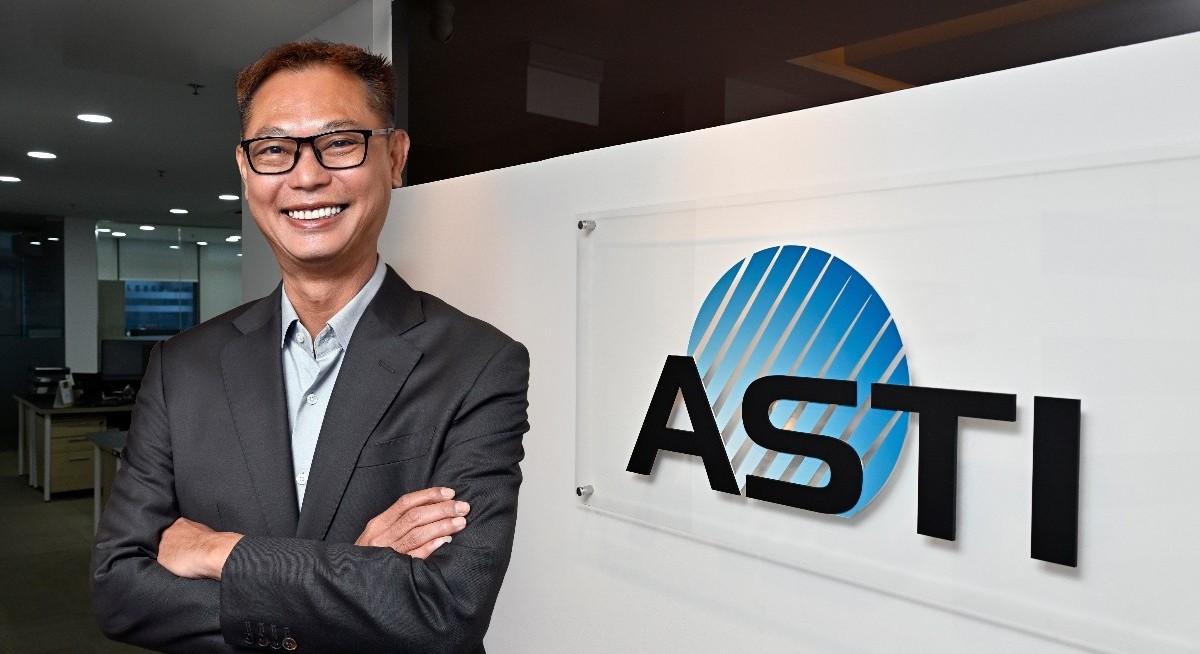
Eddie Ng, ASTI’s executive chairman and CEO, calls the restructuring journey and the trading resumption a “significant” milestone. Photo: Albert Chua/The Edge Singapore
Font Resizer
Share to Whatsapp
Share to Facebook
Share to LinkedIn
Scroll to top
Follow us on Facebook and join our Telegram channel for the latest updates.

Not all companies that delisted from the exchange did so because their controlling shareholders lost patience with the persistent, perceived undervaluation of their businesses. Some were asked by the Singapore Exchange (SGX) to delist for reasons ranging from failure to comply with regulations to limited prospects of improving their financial viability.

Upon issuance of delisting notices, companies typically have to offer a fair exit to shareholders. If they were unable to do so, minority shareholders could lose their entire investments in the worst-case scenario.

In July 2022, ASTI Holdings (SGX:575) , which was already on the then SGX watchlist for companies unable to meet a minimum market cap requirement, suspended the trading of its shares after receiving the notice of delisting. It had struggled for years to be profitable to no avail, and was not granted further extensions to exit the watchlist.

This year, after the conclusion of a long-drawn restructuring exercise, shares in ASTI finally resumed trading on Jan 22. While many companies suffered significant share price declines upon trading resumption, ASTI bucked the trend, gaining 150% to close at 3.6 cents by the end of the day. Its share price would gain a further 55%, or 2 cents higher, to close at 5.6 cents on Feb 23, valuing the company at $45.4 million.

Long and tough journey

Eddie Ng, ASTI’s executive chairman and CEO, calls the restructuring journey and the trading resumption a “significant” milestone. “As a former employee of an ASTI subsidiary, I always had a deep conviction in the company’s intrinsic value. When we [the new team] first took over in January 2024, the main priority was to address the delisting notice from SGX and the various compliance issues surrounding ASTI,” says Ng in an interview with The Edge Singapore.

See also: More Singapore-listed companies tapping digital private-market exchanges

Facing significant compliance, regulatory, and legacy issues, Ng and his management team had to resolve these fundamental problems before entering into meaningful discussions with potential offerors.

As part of the measures to reduce operating losses at ASTI, the new team decided to liquidate one of its key subsidiaries, Dragon Group International, in October 2024. As a result, ASTI had to recognise a hefty one-off impairment loss in FY2024, which dragged its net loss before tax for the year to $24.3 million. “This had a material impact on our financials and required careful balance-sheet recalibration,” says Ng.

Still, Ng was proud to share that the management team had cleared the backlog of four annual general meetings (AGMs) and one extraordinary general meeting (EGMs) within just 15 months before the trading resumption. “Our objective now is not only to settle the remaining legacy issue, but also to focus on how to get our foot back into the business to generate cash flow and ensure sustainable business performance to regain confidence from our shareholders,” he says.

See also: Metro Holdings to revamp department stores as it rules out expansion

James Soh, ASTI’s chief operating officer, focused on resolving production issues and boosting efficiency. At the same time, Ng kept his eye on maintaining customer relationships, dealing with regulators and auditors, and handling pressure from shareholders, while hopefully rebuilding confidence. “We are glad that we have overcome these challenges,” says Ng.

“Ultimately, the resumption of trading was a testament to the collective effort of our team, the Board, and the support of SGX RegCo’s disclosure-based regulatory regime. This journey proves the vital importance of strong compliance, sound corporate governance, and disciplined execution,” he adds.
Improvement in business operations

While there are still minor legacy issues to resolve, the company’s internal processes are now more robust, and business activities are supported by comprehensive, proven production data. “Before our restructuring, customers had less confidence in us and were not willing to place more orders with us.

However, with the improved internal processes and proven production data, they now have more confidence in us, hence translating to more orders for us,” says Ng.

These are being reflected in the recent financial results. For 9MFY2025 ended Sept 30, 2025, revenue was up 9.2% y-o-y to $27.0 million, mainly due to higher revenue from the backend equipment solution & technologies segment as a result of increased orders from customers.

In the same period, gross profit margin improved to 26.7% from 12.1% a year earlier, driven by higher revenue and lower direct fixed costs. Excluding foreign currency translation, ASTI was back in the black, reporting a net profit of $1.3 million, compared with a loss of more than $4.7 million a year earlier. Ng says the company is also seeing improvement in order visibility and is also enjoying higher utilisation, even as it maintains cost efficiency.

Right now, ASTI’s core business remains within the semiconductor back-end services domain, which provides tape-and-reel services, which refers to high-volume, automated packaging of semiconductor devices into embossed carrier tapes that are sealed and wound onto reels. It also deals with integrated circuits programming and inspection services, including 2D/3D inspection, orientation, handling, and programming of components after electrical testing.

To stay ahead of Singapore and the region’s corporate and economic trends, click here for Latest Section

Geographically, ASTI’s key operations are located mainly in the Philippines and Scotland, and are operated through its subsidiaries, ADTechs Holding, Reel Service (Philippines) Inc, and Reel Service.

Raising funds for expansions

As part of its restructuring, ASTI managed to eliminate its debts entirely. As at 30 Sept, 2025, the company holds cash and cash equivalents of $16.6 million, equivalent to approximately 36% of its current market value.

To raise more funds for business expansions and R&D initiatives, ASTI recently completed a placement exercise by issuing 128 million new shares at 2.5 cents per share, raising gross proceeds of $3.2 million. Various high-net-worth individuals participated in this placement exercise.

Specifically, ASTI plans to double the floor space of its existing factory footprint in the Philippines to 20,000 sqm to meet growing demand, says Ng.

Apart from expanding its production space, ASTI plans to invest in new automation and processing equipment to increase capacity and improve productivity to support higher volume demands from customers.

Beyond ASTI’s core back-end tape-and-reel services, Ng is also keen to introduce additional value-added and turnkey solutions to help the company deepen its integration with customers and strengthen its position within the supply chain.

Regarding geographical expansion, Ng shared that the company is considering expanding into Thailand to better support customers already operating there. “We are still evaluating the commercial viability and customers’ level of demand for this potential expansion,” he adds.

Without going into details, Ng shared that the company’s R&D efforts will focus on enhancing factory efficiency, production yield, quality and automation. The aim is to shorten process cycles, improve accuracy, and elevate overall performance in its backend operations. “Apart from these, we will also ask our R&D engineers to study what will be the best equipment for us to use going forward,” says Ng.

Customer relationship management

As for customer relationship management, Ng recalls that during the restructuring period, ASTI’s customers had no confidence in the new management team and were constantly monitoring the SGX announcement page for the latest developments. The customers include globally recognised names such as Analog Devices Inc, Murata, Abbott UK, and Jabil, among others.

“During the restructuring phase, we remained transparent to our customers, and we consistently engaged and provided them with the latest developments. We also proved to them with our full production data that led them to place more orders with us,” Ng says.

Apart from that, the result of a debt-free balance sheet also proved to be a key catalyst, as customers now have more confidence in ASTI’s ability to finish the various projects from a financial perspective.

“As of today, our customers’ trust and confidence are back with us. One of our customers even shared with us their upcoming plans for 2030, and they want us to be prepared for it and expand together with them,” Ng adds.

Sustainable profitability and growth strategies

With the recent turnaround in ASTI’s bottom line for 9MFY2025, the key thing now will be to achieve long-term profitability. Ng believes he can achieve this with the right combination of capacity expansion, disciplined cost management and increased automation and process efficiency. “I believe that the increase in automation and process efficiency is key, and we need to keep investing in R&D to be able to increase our production yield as well,” he says.

Ng acknowledges that ASTI is not exactly a big player in this field. Still, he believes that the company, as such, can incur lower operating costs and better focus on its customers. “We put a lot of focus on managing our operating expenses and are seeking ways to improve the factory’s efficiency, and this spells confidence in our customers,” he adds.

To capture opportunities from the ongoing semiconductor tailwinds, ASTI will continue its vertical expansion into adjacent backend and support services, and increase R&D investments to widen services and product offerings.

“We will strengthen our existing production efficiency and productivity and expand beyond the current back-end tape-and-reel services. Also, we will be leveraging our customer relationships to introduce new solutions for them and scale up our capacity to meet rising customer demands,” says Ng.

×
The Edge Singapore
Download The Edge Singapore App
Google playApple store play
Keep updated
Follow our social media
© 2026 The Edge Publishing Pte Ltd. All rights reserved.

