



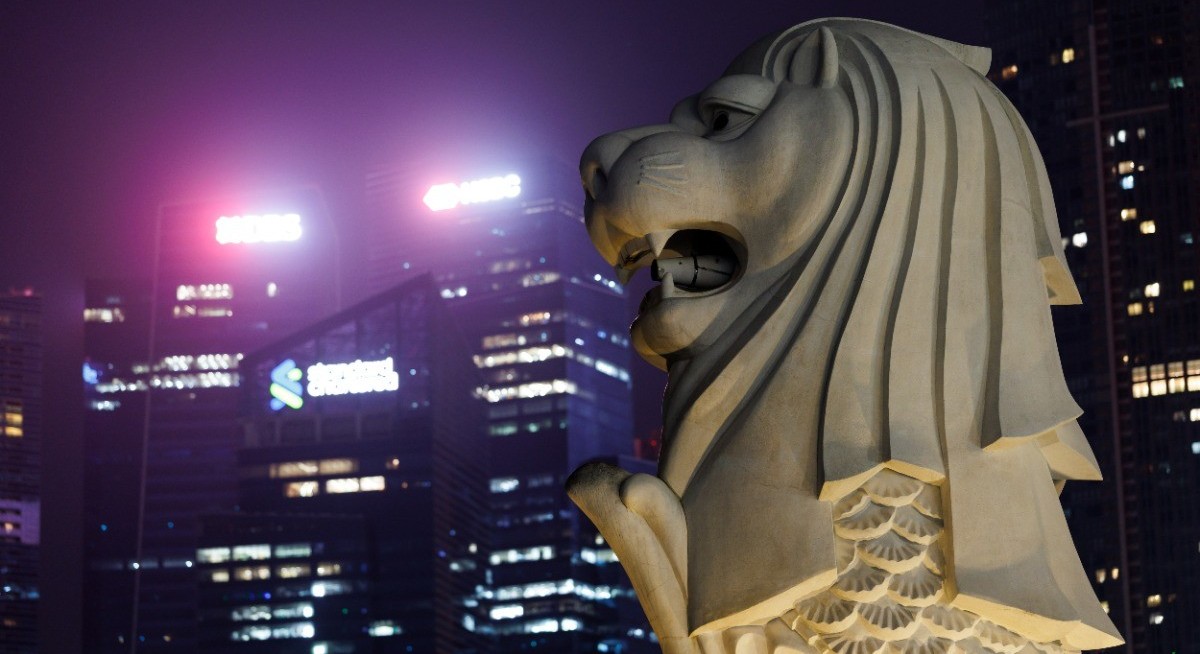



(May 25): Singapore said its economic outlook for this year has weakened as the energy crunch from the Middle East conflict weighs on global growth, flagging longer-term macro risks despite a robust first quarter thanks to the artificial intelligence (AI) boom.
While gross domestic product (GDP) January-March grew a seasonally adjusted 1% from the previous quarter — well above the median 0.2% forecast in a Bloomberg survey — the city-state warned the US-Israel conflict with Iran will drag on global activity and consumption through the year.
“Downside risks to Singapore’s economic outlook have risen significantly,” the Ministry of Trade and Industry (MTI) said in a release Monday. It cited threats including continued disruption to global energy supplies, a renewed escalation of US tariff hikes and a sudden pullback in global AI-related capital spending.
Balancing the stronger-than-expected first quarter against a weaker outlook for the rest of the year, the MTI kept its 2026 GDP growth forecast unchanged at 2%-4%, in line with the upgraded outlook it set in February. Growth came in at 5% last year.
Singapore’s exposure to AI through electronics exports and digital services has helped insulate the city-state from both the threat of US tariff hikes last year and now the energy crunch from the Middle East conflict.
“If the US and Iran can reach a deal soon that opens up the Strait of Hormuz, then that downside growth risk will diminish and Singapore’s growth could come in at the upper end of MTI’s forecast range,” said Khoon Goh, head of Asia research at Australia & New Zealand Banking Corp.
See also: Thai PM gathers tycoons for rare economy talk amid crisis alarm
That remains very uncertain. Hopes of resolution rose over the weekend, and oil prices fell Monday, after US President Donald Trump touted progress toward a deal, although both sides have signalled nothing has been finalised.

Even then, the trade ministry’s permanent secretary Beh Swan Gin said in a briefing that supply disruptions will likely persist for a few months after an agreement is reached, as crude and natural gas production facilities need time to come back onstream.
See also: South Korea’s export surge continues as AI boom fuels chip sales
Singapore’s relatively benign inflation helps ease concerns. The core inflation gauge — which excludes the costs of private transport and accommodation — decelerated to 1.4% in April. That came in below analysts’ expectation of 1.8% and the 2% level the central bank has frequently said it’s comfortable with over the medium term.
All-items inflation was steady at 1.8%, despite a sharp 7% increase in transport costs. The Monetary Authority of Singapore (MAS) last month tightened policy, the first such move in Asia.
The Singapore dollar gained as much as 0.3% to 1.2760 against the greenback on Monday. The currency is among the top performers in Asia this year as the nation’s stability lures investors seeking havens amid the war.
The MAS is assessing the situation “meeting by meeting” and sees its latest policy settings in April as still appropriate, deputy managing director Edward Robinson said. The central bank’s economic assessment is consistent with the outlook set in Singapore’s first-quarter data on Monday, he added.
From a year earlier, first-quarter growth came in at 6%, compared with 5.2% in the Bloomberg survey and 4.6% preliminary estimate last month.
Asian manufacturers embedded in the AI supply chain, including Taiwan and South Korea, are among the fortunate few that have seen their economies surge on the seemingly insatiable demand for their tech exports and services.
“Sustained global AI-related capital spending should continue to be a key driver of growth for the electronics and precision engineering clusters within the manufacturing sector,” the ministry said in a statement. Overall goods trade rose more than 25% in the first quarter.
Singapore’s resilience has so far spurred strong safe haven demand, supporting its dollar and driving its stock market to a record. Home sales last month hit a six-month high.
Uploaded by Chng Shear Lane




