



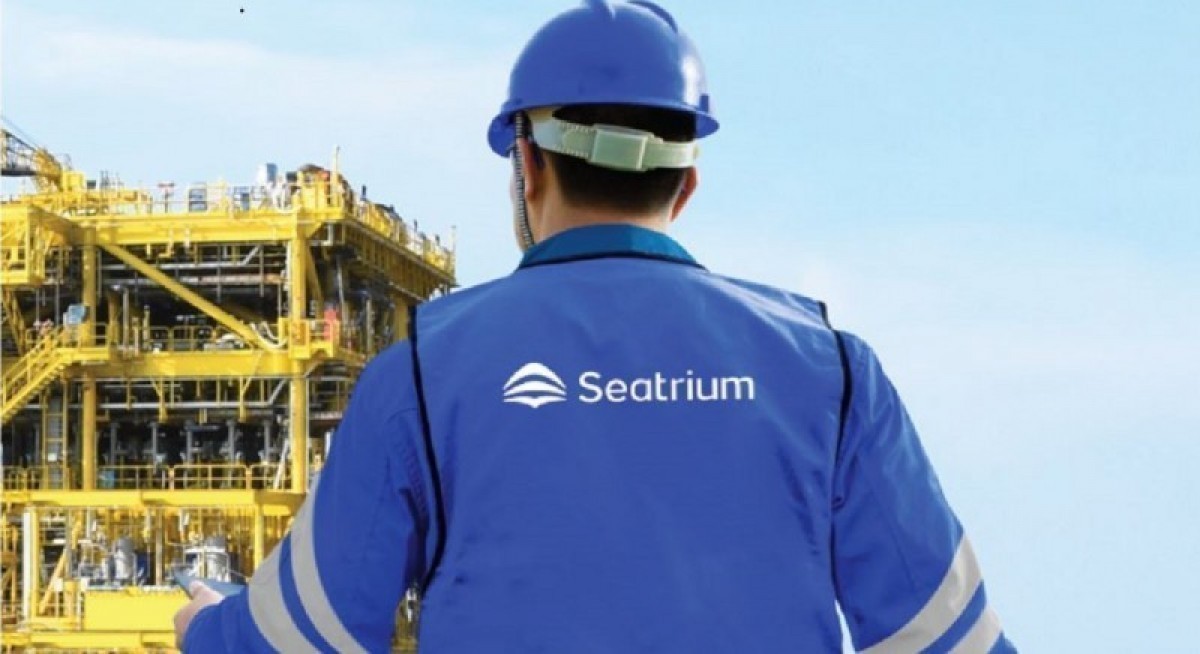



Seatrium has transferred its first electron from its Floating Living Lab (FLL) to Singapore’s electricity grid, according to a July 3 announcement.
With this milestone, Seatrium moves closer to bringing its floating energy infrastructure solution to the market, expanding its energy solutions against a backdrop of heightened global concern for energy security and positioning itself to capture opportunities in new emerging markets including power-as-a-service and new energy infrastructure ownership.
The FLL integrates distributed energy resources into floating power assets that serve both grid and marine consumers across Singapore and Southeast Asia. Featuring a stacked battery energy storage system (ESS) combined with gas bunkering infrastructure, the FLL converts electricity using onboard gas engines to support Seatrium’s operational energy requirements, with surplus power exported to the Singapore electricity grid.
This dual capability enables the FLL to reliably meet peak on-site demand while generating sufficient excess electricity that can meet the monthly energy needs of approximately 1,500 four-room HDB households, highlighting its role as an integrated and scalable energy solution.

Seatrium Digital senior vice president Lee Wey Lii says, “The FLL brings together Seatrium’s deep capabilities across digital, engineering and energy systems to reimagine offshore energy for a more connected, resilient, and lower-carbon future. The first electron transfer marks a key milestone, validating the FLL as a grid-integrated asset that contributes to national energy resilience while powering our internal demands.”
See also: Japan cuts gas in favour of coal as Hormuz disruption chokes LNG
Energy Market Authority (EMA) director for solar and grid solutions Violet Chen says that the FLL is an “innovative” testbed that allows emerging energy technologies to be validated in real world conditions, adding that EMA is pleased to partner Seatrium and support the development of the ESS. “As Singapore's grid incorporates more variable renewable energy, storage solutions like this will be important to maintain grid stability and resilience,” Chen adds.
According to the announcement, the FLL is a world-first, Remote-CON notated floating DER platform, classed by the American Bureau of Shipping (ABS). It is supported by a remote operations centre (ROC), built on DNV’s assurance frameworks for remote operations.
A DER is a small-scale energy generation, storage, and management asset located close to where electricity is consumed and is designed to aggregate and optimise these resources to improve energy efficiency, reliability, and grid performance.
See also: Seraya Partners launches Faraday Energy with US$500 mil investment and Schneider Electric as partner
The ABS Remote-CON notation certifies that an asset can be safely monitored and controlled from an onshore centre, meeting stringent standards for automation, connectivity, and operational safety.
Leveraging its integrated capabilities in engineering, digitalisation and energy systems, Seatrium intends to scale the proven FLL capabilities for nearshore electrification solutions in Singapore and beyond.
In its bid to expand engineering, procurement and construction (EPC) opportunities in decarbonisation projects, Seatrium says that it is working with partners to enhance its design and operational capabilities, via data-driven optimisation, AI-enabled tools, and digital twin technologies. These efforts will also enable it to grow its software and service offerings and advance floating energy storage as a new infrastructure asset class.
Seatrium says that as demand for flexible, lower-carbon and decentralised energy solutions grow, the company is well-positioned to deliver intelligent, resilient and scalable infrastructure – supporting customers and national grids while advancing the transition towards a more sustainable and digitally-enabled offshore energy landscape.




