



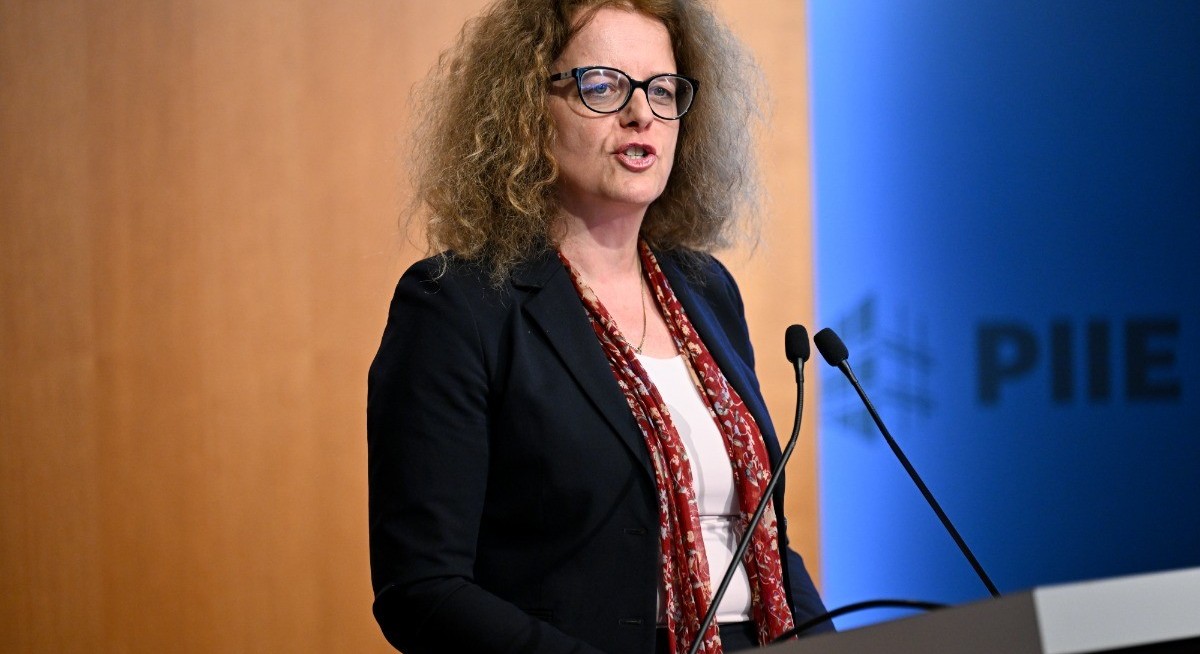



(May 26): The European Central Bank (ECB) should raise interest rates next month even if there’s a quick resolution to the conflict in the Middle East, according to Executive Board member Isabel Schnabel.
“Given the size and the persistence of the current shock, looking through is no longer an option in my view,” she told Reuters. “From today’s perspective, I think a rate hike in June will be needed.”
Commenting in an interview published on the ECB’s website on Tuesday, Schnabel said that “even if the war ended today, a lot of damage has already been done to energy infrastructure and global supply chains”.
“So, even then, I believe that a monetary policy reaction would be needed,” she said in the interview conducted on May 21. Still, she added that the ECB shouldn’t commit beyond June.
The ECB is widely expected to increase borrowing costs by a quarter point on June 11 as a surge in energy prices pushes up inflation across the region. However, some policymakers have cautioned against a too-restrictive policy given the economic fallout from the war.
New forecasts are also due then, with staff set to update three scenarios — baseline, adverse and severe. The projections will play a key role in deciding the ECB’s next steps.
See also: Paramount offers to fix EU concerns over US$110 bil WBD deal
The energy shock means that “in terms of persistence, we have actually moved beyond the adverse scenario, which assumed a rapid normalisation of oil prices,” said Schnabel, who is seen as the most hawkish Governing Council member. “By historical standards, this shock is very large.”
Unlike some of her more dovish colleagues, Schnabel pointed to first indications of second-round effects.
“We are seeing increasing signs that the shock is spilling over to other parts of the consumption basket,” she said.
See also: Nobel Laureate Aghion steps into the ring, fighting for European innovation and AI
Schnabel also warned against taking too much comfort on still-benign pay data.
“We have staggered wage negotiations and long durations of wage agreements,” she said. “If we wait for second-round effects to appear in hard data on wages, we will certainly be too late.”
The German central banker also highlighted that looking at headline inflation alone could be misleading after an energy price shock.
“What really matters for our inflation outlook is underlying inflation,” she said. “I see significant upside risks to inflation of non-energy industrial goods relative to our March projections.”
She also said that “given the high persistence of the shock, I believe that the negative impact on economic growth will also be stronger.”
“We have seen a sharp decline in confidence indicators, especially among consumers,” Schnabel said. “All of these imply downside risks to economic growth and upside risks to inflation.”
Overall though, “our credibility as inflation fighters is not in question,” she said. “But this anchoring is conditional on us responding to an inflation surge in a proper way.”
Uploaded by Felyx Teoh




