



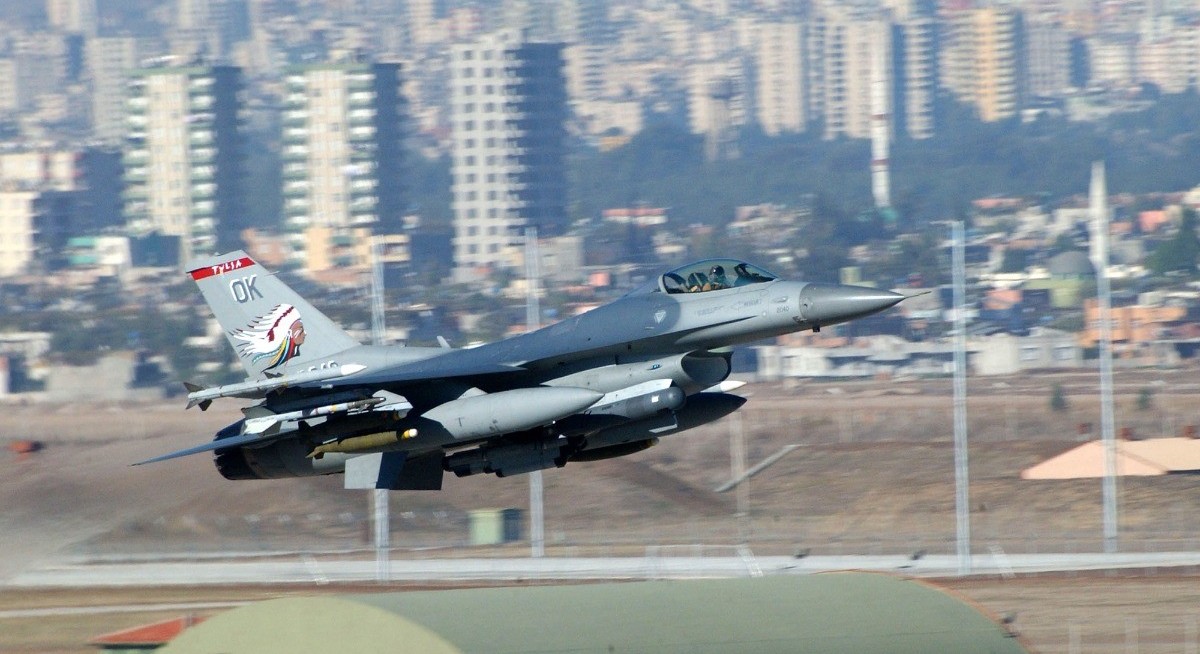


(March 9): The North Atlantic Treaty Organization (Nato) intercepted a ballistic missile fired from Iran in Turkish airspace on Monday, the Defence Ministry said, raising the risk that the military alliance could be drawn more directly into the conflict in the Middle East.
It follows a similar interception on March 4, after which Nato said it strengthened its missile defences in the region.
“A ballistic munition fired from Iran that entered Turkish airspace has been neutralised by Nato air and missile defense assets deployed in the Eastern Mediterranean,” the ministry said in a statement, hinting that the missile was intercepted by US naval forces in the area.
Debris from the munition landed in Gaziantep province in southern Türkiye, approximately 150km (93 miles) from the Incirlik Air Base — where hundreds of US military personnel are stationed and where US nuclear weapons are widely believed to be stored — and about 200km from an advanced Türkiye radar system in Kurecik used to support Terminal High Altitude Area Defence (THAAD) anti-ballistic missile systems.
Ankara strongly reacted to the targeting of its territory for a second time.
“We reiterate that all necessary steps will be taken decisively and without hesitation against any threat directed at our country’s territory and airspace,” the Defence Ministry said in a statement. “We remind all parties that adhering to Turkey’s warnings in this regard is in everyone’s interest.”
See also: US planes fly out of Korea as asset redeployment reports grow
Earlier on Monday, the US State Department issued a travel warning to southeast Türkiye, including Gaziantep, on risk of terrorism and armed conflict. It also suspended its consular services in Adana, where the Incirlik airbase is located.
Ankara has not allowed its bases or airspace to be used for strikes on Iran. After the first attempted attack against Türkiye, it also warned Tehran against actions that could expand the conflict further.
Tehran’s calculus has become harder to predict after several senior Iranian commanders — including Supreme Leader Ali Khamenei — were killed by initial US and Israeli strikes that shifted operational decision-making to lower-ranking officers, according to Turkish authorities.
See also: IMF urges preparation for ‘unthinkable’ amid Mideast conflict
The March 4 interception occurred in an area also not far from Incirlik Air Base.
Iranian officials warned more than a decade ago that Tehran could target Nato’s missile-defence installations in Türkiye should it come under attack from the US or Israel. At the time, Tehran said that the early-warning radar system in Kurecik was designed to help protect Israel against Iranian missile threats.
The site, roughly 700km (435 miles) west of the Turkey-Iran border, is a critical component of the military alliance’s ballistic-missile defence.
Uploaded by Felyx Teoh




