



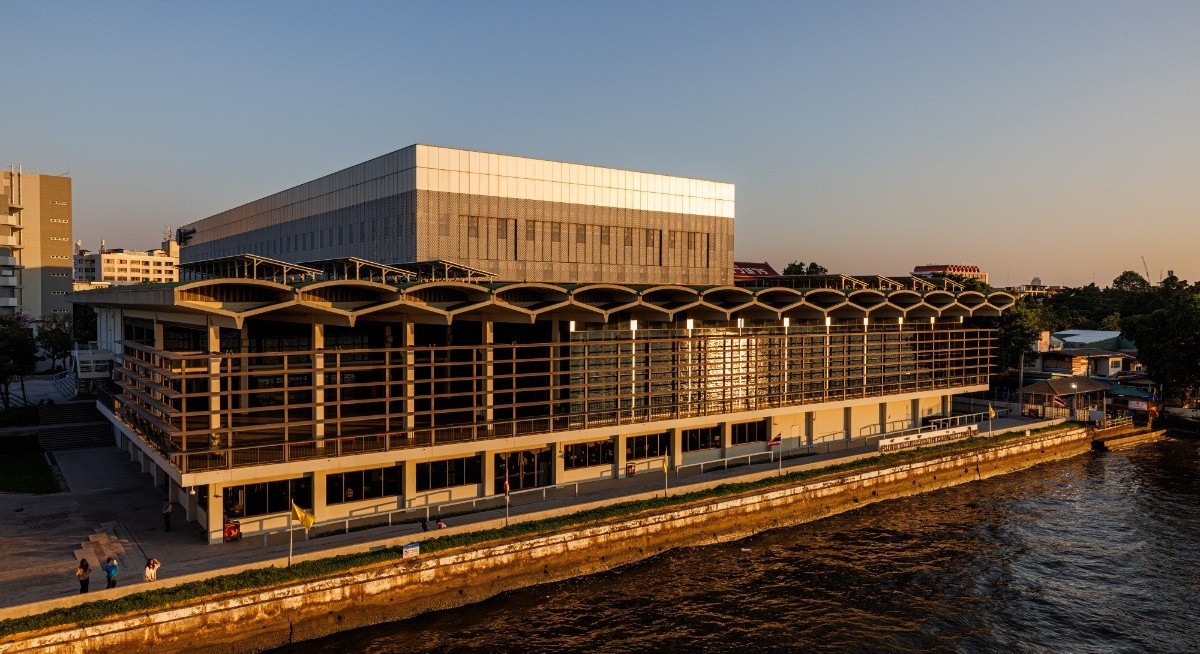


(April 9): The Bank of Thailand (BOT) will keep its interest rate at the current level “for as long as possible” to support the economy, even though inflation is set to accelerate due to the Middle East conflict, according to governor Vitai Ratanakorn.
“Inflation will definitely accelerate with oil price hikes and supply disruptions,” Vitai told reporters in Bangkok on Thursday. “But we will refrain from raising the interest rate as long as possible because higher interest rate will not dampen inflation.”
The BOT has slashed borrowing costs by a cumulative 150 basis points in an easing cycle that began in late 2024. In February, the monetary policy committee unexpectedly cut the key rate by 25 basis points to 1%, the lowest level since September 2022. The next policy meeting is scheduled for April 29.
The Southeast Asian economy is facing a double whammy from rising fuel costs following the Middle East conflict and ongoing global trade tensions. Prime Minister Anutin Charnvirakul told parliament on Thursday that his new government will prioritise measures to address economic challenges stemming from the war and help millions of people cope with rising living costs.

Thailand’s economic growth this year could weaken to around 1.7% if there’s a quick resolution to the Middle East conflict, Vitai said. That’s lower than the 1.9% predicted by Vitai before the start of the war. If Middle East tensions are prolonged until June, the rate of expansion will further weaken to 1.3%, he said.
See also: China tankers join line to test Hormuz exit and Iran truce
Thai central bank officials have previously signalled they will “look through” the likely spike in inflation driven by the supply shock in the global energy market. Hiking interest rate to tackle inflation would risk undermining demand without effectively supporting an economy hit by supply disruptions, Vitai said last week.
Headline inflation, which has been negative for a year, is set to return to the BOT’s target range of 1%-3% this year, earlier than its previous projection of the second half of 2027. While price pressures are already emerging following the government’s decision to raise retail diesel prices by about 70% in recent weeks, the central bank has said it will focus on ensuring macroeconomic and financial stability.
“The BOT is likely to respond to the 2026 energy shock not with another broad rate move but with a classical look-through strategy backed by targeted debt relief, targeted credit support, and close monitoring of second-round effects,” United Overseas Bank economists Enrico Tanuwidjaja and Sathit Talaengsatya wrote in a report on Thursday.
See also: Vance to lead Iran talks as Tehran says ceasefire violated
“In our view, that is the right response for an economy where the shock is clearly external and cost-push, the starting point for core inflation is still low, and the growth impulse remains externally supported rather than broadly domestic,” they said.
The baht was steady after Vitai’s comments on rates, heading for a 0.3% decline, while the benchmark stock index pared gains to 0.1% in afternoon trading.
The central bank may explore lowering the daily threshold of 50 million baht (US$1.6 million) for traders speculating in gold to ensure the limit is more effective, Vitai said. The introduction of trading limit from March 1, part of a raft of measures unveiled by the central bank to reduce the correlation between the baht and gold, has led to a decline in speculative bullion trading, he said.
The BOT, which is also the regulator for the banking sector, is planning to adjust the financial service fees charged by banks and consumer finance companies, Vitai said. A revised fee structure may be implemented from next month after consultation with stakeholders, he said.
Uploaded by Evelyn Chan




