



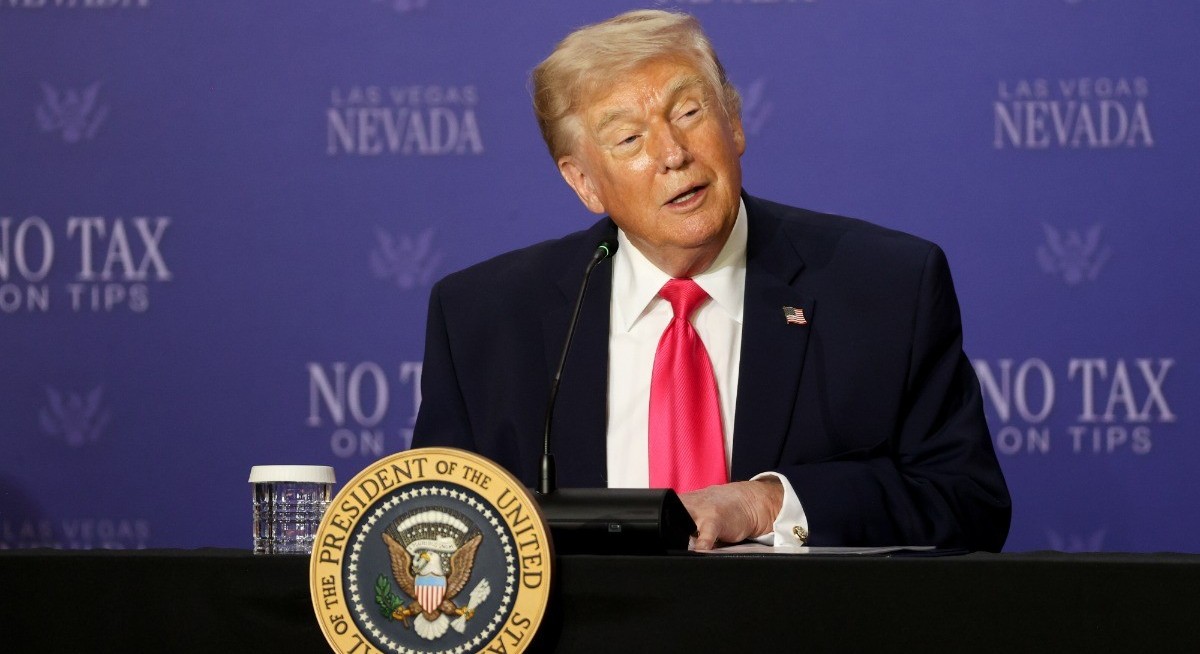


(April 22): President Donald Trump announced he was extending a ceasefire with Iran indefinitely a day before it was set to expire, even as plans for a fresh round of talks between the two countries fell apart.
In a Truth Social post, Trump said Tuesday he would maintain a blockade over ships coming to and from Iran in the Strait of Hormuz. He added that Pakistan, which had mediated between the two sides, asked for the US to hold off on fresh strikes and he was extending the ceasefire until Iran submits a new proposal “and discussions are concluded, one way or the other”.
In another post on Tuesday night, the president said that without the blockade, “there can never be a Deal with Iran, unless we blow up the rest of their Country, their leaders included!”
Vice-President JD Vance had been set to travel to Pakistan to resume talks with Iran, but representatives from Tehran refused to attend, citing what they said were unreasonable American demands. Iran’s semi-official Tasnim news agency said there is currently no prospect of Iran participating in negotiations.
A White House official confirmed in a statement that the vice president’s trip would not take place on Tuesday.
Trump’s announcement struck a markedly different tone from earlier in the day when he told CNBC that “I expect to be bombing” if Iran didn’t meet his conditions, adding the military was “raring to go”. In a telephone interview on Monday, Trump said it was “highly unlikely that I’d extend” the cessation of hostilities if no deal is reached.
See also: Ukraine says it would delay benefits to speed accession to EU
Oil held a two-day gain after the ceasefire was extended, with Brent trading at around US$98 a barrel after adding almost 9% in the previous two sessions.
Pakistan Prime Minister Shehbaz Sharif in a statement thanked Trump for extending the ceasefire “to allow ongoing diplomatic efforts to take their course”.
“I sincerely hope that both sides will continue to observe the ceasefire and be able to conclude a comprehensive ‘Peace Deal’ during the second round of talks scheduled at Islamabad for a permanent end to the conflict,” he said in a post on X.
See also: US waits on Iran to confirm talks as ceasefire winds down
Top Iranian officials didn’t immediately comment on Trump’s pronouncement in overnight hours, Tehran time. Iran didn’t request an extension of the ceasefire, the semi-official Tasnim news agency reported, citing unidentified sources. It also said the country won’t reopen the strait as long as the US naval blockade continues. Iranian forces are “at full readiness, with their fingers on the trigger”, the semi-official Fars News Agency reported, citing a statement by the country’s armed forces.
The developments marked the latest turn in the back and forth between Washington and Tehran since the two sides announced a two-week truce on April 7. Since then, they have publicly bickered over the terms of an agreement and alternatively opened and closed Hormuz, through which about a fifth of the world’s oil and liquefied natural gas exports flowed before the war.
The UK and France will hold a two-day summit of military planners from more than 30 countries to discuss how Hormuz can be kept open. UK Prime Minister Keir Starmer and French President Emmanuel Macron have been leading efforts to coordinate a plan to keep the strait open once the Iran war ends, though they’ve resisted Trump’s request for allied nations to reopen Hormuz by force.
A previous round of talks between the US and Iran after the original ceasefire was announced ended in failure, with US officials saying Iran wasn’t willing to accept limits on its nuclear programme and Iranian officials arguing that the US had made a series of demands it would not meet.
Iran Parliament Speaker Mohammad Bagher Ghalibaf, who led Tehran’s delegation during the first round of talks, had said Monday that his country would not “accept negotiations under the shadow of threats”.
Trump blamed the collapse of negotiations on what he called a “seriously fractured” leadership structure in Iran.
While the ceasefire extension might soothe investors for now, the path toward a lasting agreement to end the war is uncertain. The conflict, which has stretched into its eighth week, has killed thousands and triggered a global energy crisis — raising pressure on both sides to find an offramp.
To stay ahead of Singapore and the region’s corporate and economic trends, click here for Latest Section
Trump has demanded an end to Iran’s ambitions for a nuclear weapon and the return of its nuclear material. Tehran has baulked at handing over its enriched uranium and accused the US of violating the ceasefire by keeping a blockade on Hormuz.
Alex Vatanka, a senior fellow specialising in Iran at the Middle East Institute, said Trump had “kind of cornered himself”, because he doesn’t actually want a return to combat.
“He has made a strategic error of thinking that shouting louder and louder at the Iranians is going to pay off,” Vatanka said. “This is not going to work with this regime. Pressure works much better quietly than publicly.”
Uploaded by Chng Shear Lane




