



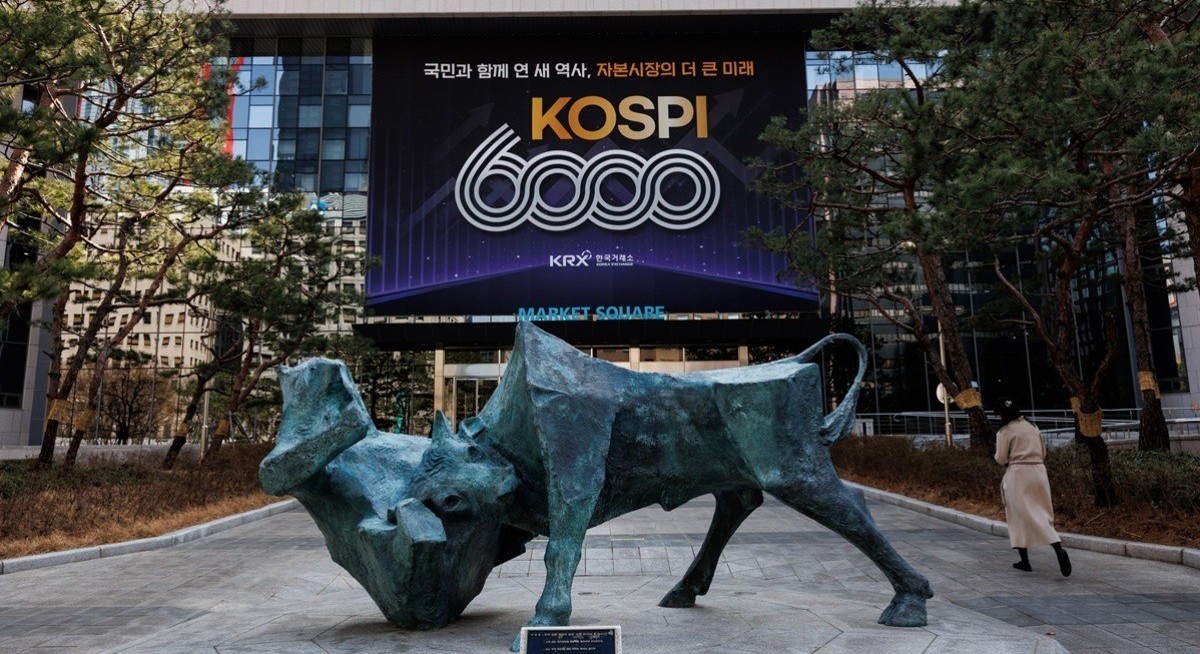


(March 6): Overseas investors are pulling money out of emerging Asian stocks at the fastest pace in nearly four years, as the escalating conflict in Iran triggers a reassessment of risk across global markets.
Global funds have sold a net US$11 billion of shares in developing Asia excluding China this week, set for the largest outflow since March 2022, according to data compiled by Bloomberg. They have withdrawn a record US$7.9 billion from Taiwan, roughly US$1.6 billion from South Korea, and about US$1.3 billion from India.
The outflows have contributed to a savage selloff in regional equities that included a record one-day drop in Korea’s Kospi index, and a series of trading halts in some markets. The MSCI Asia Pacific Index has slid more than 6% this week, putting it on track for its biggest loss in almost six years, and its largest underperformance versus the S&P 500 Index since April.
The foreign exodus also marks a reversal of one of the most profitable trades of recent months: “Sell America, Buy Asia”. This involved rotating out of expensive US equities and into Asian ones, banking on a softer greenback, subdued inflation and demand for regional chip stocks due to the artificial-intelligence boom.
Global funds had been buying Asian stocks “on expectations of a weaker dollar and benign inflation, but the flare‑up in Iran has thrown both assumptions into question,” said Gary Tan, a fund manager at Allspring Global Investments. “Investors are now reassessing whether heightened risk aversion could keep the dollar firmer for longer, and whether higher oil prices might reignite inflation pressures.”
One reason why Asia is seeing deeper stock losses is the region’s relatively high exposure to Middle East oil. A large share of the region’s fuel imports passes through the Strait of Hormuz, a chokepoint at the centre of the escalating tensions. The jump in crude is raising fears of another inflation surge just as many central banks were beginning to gain confidence that price pressures were easing.
See also: Malaysia to hold off on growth upgrade on Mideast risks, says Amir Hamzah
Economies including China, India and Indonesia rank among the world’s largest oil importers, in contrast with the US, which has become a net exporter of the commodity.
Morgan Stanley strategists have adopted a more cautious stance towards Asian and emerging-market equities due to risks emanating from the Iran war. They have downgraded India and United Arab Emirates to equal-weight from overweight, while upgrading Taiwan and Saudi Arabia to equal-weight from underweight.
“We stay defensive,” strategists including Daniel Blake and Jonathan Garner wrote in a note. “Asia remains critically dependent on Middle Eastern supply of crude oil, refined products and LNG and we believe the market is too complacent about supply chain risks.”
Uploaded by Liza Shireen Koshy




