



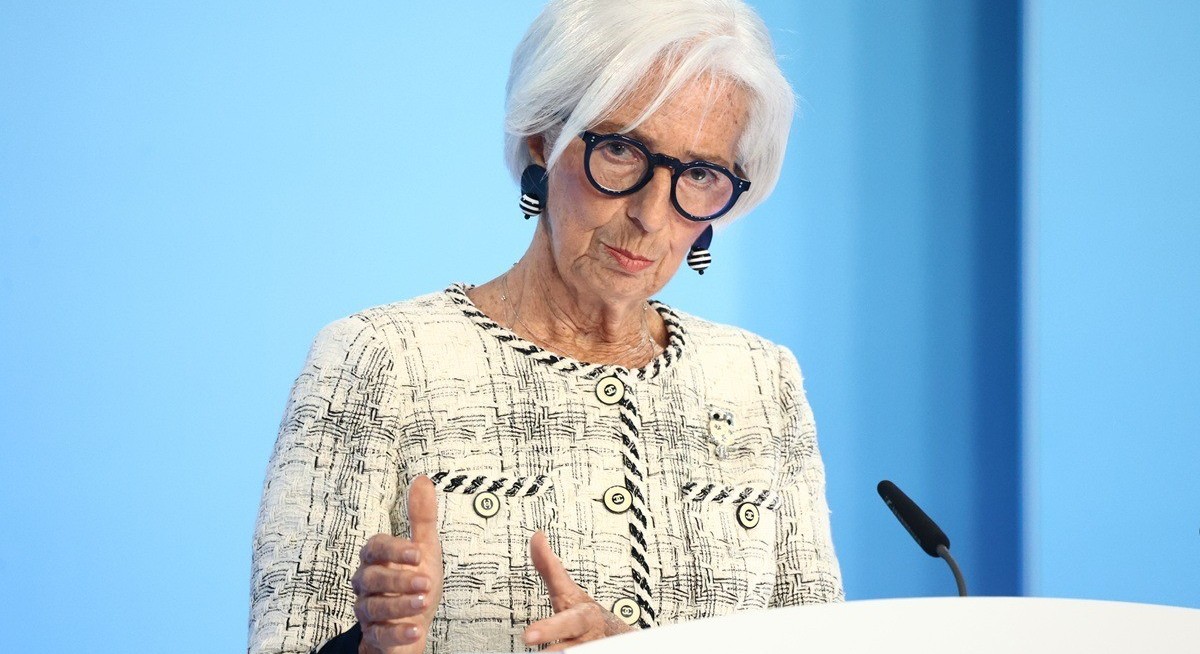



(May 28): European Central Bank (ECB) president Christine Lagarde said that governments might be inclined to tighten their grip on monetary authorities and stressed that upholding central-bank independence is even more important in an increasingly challenging global order.
Invoking Napoleon Bonaparte, who in 1800 founded the Banque de France and years later, as the demands of the state grew, gradually took back the independence he had granted, the Frenchwoman said that “it is precisely this temptation that the period ahead is likely to sharpen.”
“In a world where conditions are getting harder, the challenge is no longer to simply maintain legal independence, but above all to maintain the credibility that is needed to exercise it,” Lagarde said on Thursday.
Addressing a conference in Phnom Penh, Cambodia, she added that “the lesson of history is clear: it takes time to build trust, but only an instant to lose it.”
Concerns over threats to central-bank independence have intensified amid mounting political pressure on policymakers worldwide. In the US, Donald Trump’s nominee Kevin Warsh just took over from Jerome Powell under pressure from the president to lower rates. At the same time, the Iran war has also pushed up inflation in the US.
While the ECB’s autonomy is enshrined in the European Union treaty, some officials worry that political interference could also weaken their ability to deliver on their price-stability mandate. Executive Board member Isabel Schnabel recently warned of a risk of a “quiet erosion” of independence through fiscal and financial dominance.
See also: UK food companies plan to raise prices after Iran war takes toll
Lagarde said Thursday that over the past decade, the “de facto independence” has deteriorated in almost half of central banks in countries that account for 75% of global gross domestic product.
She also highlighted that the environment for policymakers is becoming less favourable with supply shocks becoming more frequent, fiscal pressures rising and trust in public institutions declining.
With such shifts, credibility — “earned through action” – is becoming decisive, said Lagarde, who is expected to oversee a rate hike at the ECB’s June 10-11 meeting.
See also: War stress pushes Indonesia, Thailand to lean on short-term debt
“It is precisely when monetary policy decisions are politically fraught and economically costly that credibility is most needed,” she said. “And it is also when credibility is hardest to keep.”
She outlined three practical conditions that seem essential to safeguard independence:
- clarity of the mandate
- direct communication with citizens
- preserving the room for maneuver of monetary policy
“That room depends first and foremost on fiscal responsibility: the legal frameworks cannot safeguard central bank independence when fiscal trajectories become unsustainable,” Lagarde said.
Uploaded by Liza Shireen Koshy




