



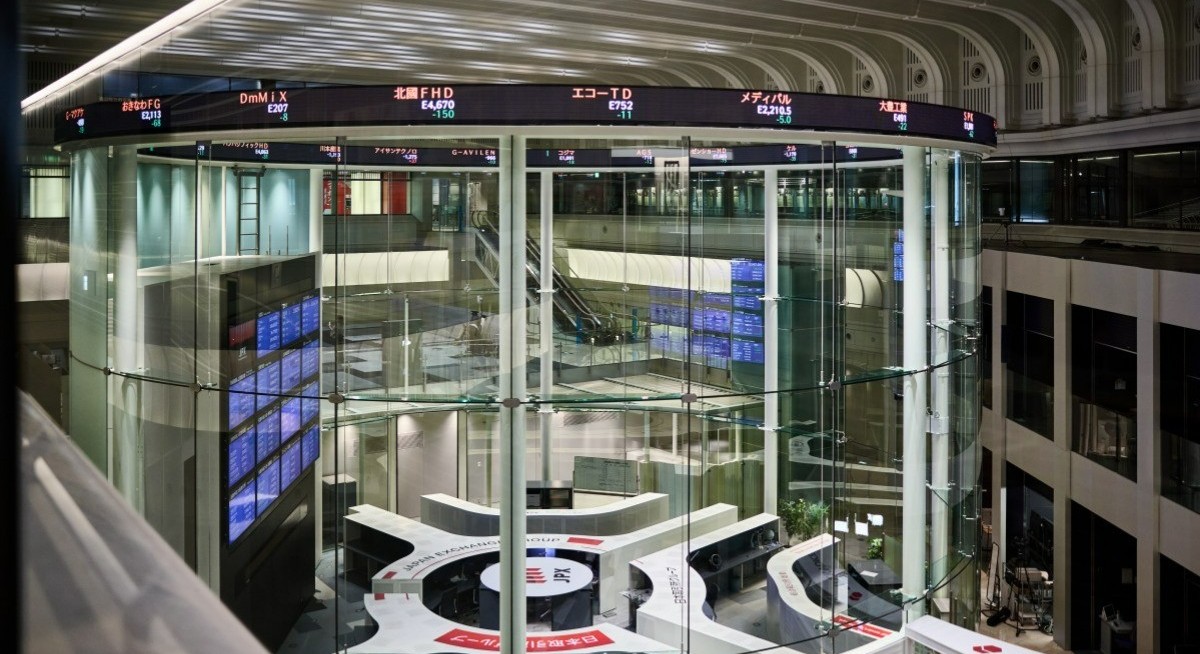


(April 23): Stocks and bonds fell as stalled US-Iran talks and the continued closure of the Strait of Hormuz drove oil prices higher, souring risk sentiment after a record rally on Wall Street.
MSCI’s Asia Pacific equity gauge fell 0.6%, with decliners outnumbering advancers two to one, as higher oil prices weighed on economic growth. Futures contracts for the S&P 500 Index and the tech-heavy Nasdaq 100 both dropped 0.5%, after the underlying gauges both closed at a record high on Wednesday on robust corporate earnings and the extension of the US-Iran ceasefire.
Brent crude climbed 1.1% to US$103 a barrel, putting it on track for a fourth straight day of gains, due to a lack of progress in US-Iran talks. The benchmark has surged about 70% this year, with most of the advance coming after the Middle East conflict started in late February. Bonds fell as higher oil prices stoked inflation concerns.
Investors have swung between cautious optimism and renewed concerns about the Middle East conflict even as President Donald Trump said a truce with Iran would stay in place indefinitely. Traders remain focused on whether the two sides can resume peace talks to reach an agreement, especially as the closure of the Strait of Hormuz keeps energy prices elevated.
“Markets have taken a glass-half-full view during this conflict, hoping for a quick resolution and normalisation of energy flows through the Strait,” said Carol Kong, a currency strategist at Commonwealth Bank of Australia in Sydney. “I still think markets will soon come to realisation the path to a long-lasting agreement is still some way away and energy prices will likely increase further before easing.”
Tensions remain high as the US and Iran failed to meet for a fresh round of peace talks, with both sides blocking the waterway to gain leverage during an extended ceasefire. Tehran says it has no plans to take part in negotiations imminently.
See also: Stocks rise on big earnings day as war talks stall
The US maintained a naval blockade on ships going to and from Iran’s ports to pile pressure on the Islamic Republic, in a move Iranian Foreign Minister Abbas Araghchi called a violation of the ceasefire.
Treasuries headed for a fourth day of losses, with the 10-year yield rising one basis point to 4.31%, while the dollar gained against most of its major peers.
In other corners of the market, gold slipped 0.8% to about US$4,700 an ounce, while silver declined 2% to about US$76.15 an ounce. Bitcoin was a touch weaker at about US$77,800.
See also: Stocks wipe out gains, oil rises as Iran in focus
Technology stocks, which rallied at the start of Asian trading robust corporate earnings, also erased gains. MSCI’s gauge for tech stocks in the Asian region fell 0.7%.
South Korea — a poster child for artificial intelligence investments — pared an earlier advance to be up just 0.3%.
One positive news was strong earnings from companies. Boeing Co jumped on solid first-quarter deliveries. Tesla Inc reported earnings that beat estimates. Texas Instruments Inc gave a strong forecast for the current period. In Asia, SK Hynix Inc reported a five-fold increase in profit.
Robust corporate profits, the revival of the artificial-intelligence trade and an otherwise resilient economy have buoyed stocks despite lingering geopolitical risks. Nearly 80% of the S&P 500 companies reporting first-quarter results have beaten analyst earnings estimates so far, according to data compiled by Bloomberg.
The Philadelphia Stock Exchange Semiconductor Index gained for a record 16th day as investors bet on continued strength driven by artificial intelligence-related demand.
“The recent rally in Asia tech despite ongoing supply chain disruption suggests investors are increasingly looking through near-term geopolitical risks,” said Gary Tan, a fund manager at Allspring Global Investments. “But a sustained re-rating versus the US will likely hinge on capex signals from hyperscalers in next week’s earnings reports.”
Corporate highlights:
To stay ahead of Singapore and the region’s corporate and economic trends, click here for Latest Section
- International Business Machines Corp posted quarterly sales in its software unit that were in line with estimates, failing to shake investor concerns about AI disruption to its business.
- ServiceNow Inc, a provider of software for business tasks, reported lacklustre results and said some sales deals have been delayed by the war in the Middle East.
- Lululemon Athletica Inc named Heidi O’Neill its new chief executive officer as the athletic retailer looks to move beyond a turbulent period of slowing growth and investor unrest.
- Taiwan Semiconductor Manufacturing Co will hold off on deploying ASML Holding NV’s most cutting-edge lithography machines for chip production through 2029 to save money, dealing a potential setback to the Dutch maker of the costly equipment.
Some of the main moves in markets:
Stocks
- S&P 500 futures fell 0.5% as of 11.59am Tokyo time
- Nikkei 225 futures (OSE) fell 1.4%
- Japan’s Topix fell 1.2%
- Australia’s S&P/ASX 200 fell 0.8%
- Hong Kong’s Hang Seng fell 0.9%
- The Shanghai Composite fell 0.3%
- Euro Stoxx 50 futures fell 1.1%
Currencies
- The Bloomberg Dollar Spot Index was little changed
- The euro was little changed at US$1.1697
- The Japanese yen was little changed at 159.54 per dollar
- The offshore yuan was little changed at 6.8370 per dollar
Cryptocurrencies
- Bitcoin fell 0.6% to US$77,976.12
- Ether fell 1.6% to US$2,353.12
Bonds
- The yield on 10-year Treasuries advanced one basis point to 4.32%
- Japan’s 10-year yield was unchanged at 2.390%
- Australia’s 10-year yield advanced four basis points to 5.00%
Commodities
- West Texas Intermediate crude rose 2.4% to US$95.15 a barrel
- Spot gold fell 0.8% to US$4,700.09 an ounce
Uploaded by Chng Shear Lane




