



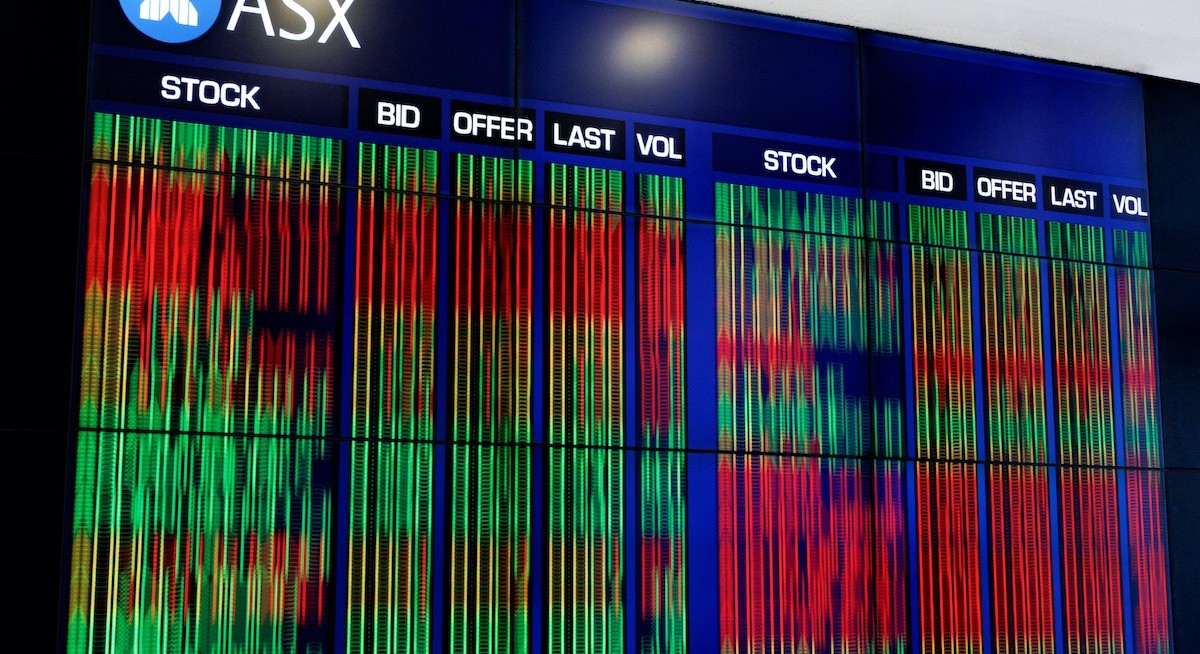


(March 4): Asian stocks plunged the most in nearly a year, led by the biggest South Korean crash ever, as mounting concerns over the Iran war triggered an exodus from some of the world’s best-performing markets.
The MSCI Asia Pacific Index slumped as much as 4.5%, with South Korean stocks plunging 12% amid mounting panic across trading desks. Before the slump, the Kospi Index — a poster child for AI investments — was the world’s best-performing gauge. Dubai stocks slipped 4.7% as trading resumed.
While Asia saw sharp declines, equity-index futures pointed to a modest gain for Europe and some losses in the US, suggesting the selloff may be contained to the region.
“Asian markets are choking on a toxic cocktail — surging energy prices, a resurgent dollar, and geopolitical tensions that nobody is sleeping through anymore,” said Hebe Chen, a senior market analyst at Vantage Global Prime. “This isn’t just a technical pullback but more of a psychological capitulation.”
The big moves in Asian stocks were in contrast to other markets, after President Donald Trump provided assurances on safeguarding shipping through the Strait of Hormuz, which helped calm nerves.
Brent crude gained 3.1% — compared with jumps of 4.7% and 7.3% in the past two days — and gold gained 1.2%. The Bloomberg Dollar Spot Index was little changed after two days of gains. Treasuries were a touch weaker, with the yield on the benchmark 10-year up one basis point to 4.07%, after bond markets tumbled earlier in the week.
See also: Oil leaps, stocks fall on war and credit fears
The US-Israeli attack on Iran has destabilised the Middle East and threatens to deliver a new inflationary shock to the global economy by pushing up oil prices. There’s also no clear sense of when or how the war will end, raising the prospect of a prolonged conflict and unforeseen consequences beyond the White House’s control.
The war continued to reverberate across the Middle East, with Israel bombarding Tehran in a fresh wave of strikes. The Islamic Republic fired missiles at Qatar, Bahrain and Oman, with Doha saying targets weren’t limited to military interests. Qatar and Iraq halted production at major energy sites.
“The risk here is the scale of the supply shock the war will create,” wrote Kyle Rodda at Capital.com. “Given the very chaotic nature of the events and the strong incentive for all combatants to escalate right now, this uncertainty could drag on for a while.”
See also: Blue Owl has £36m exposure to collapsed UK lender
This conflict is different from Trump’s trade war, his talk of invading Greenland or his assault on the Federal Reserve’s independence, all of which unnerved investors globally.
In each case, traders came to expect that Trump would backtrack if markets fell too far, a strategy that came to be known as the TACO trade, which stands for Trump Always Chickens Out — and created a buy-the-dip mentality that allowed stocks to rally back.
“For now, markets are trading headline to headline,” said Fawad Razaqzada at Forex.com. “Much will depend on whether tensions stabilise — or whether this proves to be the start of a more prolonged disruption to global supply.”
Markets are focused on oil as traders weighed Trump’s plan to insure and escort tankers passing through the Strait of Hormuz, with traffic in the vital waterway all but halted. Oil extended gains, with Brent hovering just above US$82 ($104.76) a barrel after rallying about 12% over two days, the biggest gain since 2020.
“When considered alongside other headlines, it’s questionable whether that alone is enough to reassure markets,” Hitoshi Asaoka, chief strategist at Asset Management One, said about Trump’s comments.
Oil’s advance and the dollar’s strength are a combination that’s not ideal for Asian economies. The dollar’s two-day gain is the most in nearly a year. A gauge of Asian currencies fell to the lowest since January this week, with the decline limited as China sought to anchor the yuan.
Even after the losses this week, Asian stocks are up about 4.7% this year, on top of a 25% jump in 2025. Equities have rallied since their slump in April — caused by Trump’s tariffs announcement — on bets the billions spent by companies on artificial intelligence will pay off.
To stay ahead of Singapore and the region’s corporate and economic trends, click here for Latest Section
“A lot of markets have done very, very well year-to-date,” George Efstathopoulos, a portfolio manager at Fidelity International, said on Bloomberg Television. “So we’re seeing a bit of positioning sort of lightening. But at the same time, I would argue it depends on how protracted this ends up being.”
Corporate news:
- Blackstone Inc’s talks with New World Development Co have hit a roadblock because the billionaire family that runs the cash-strapped Hong Kong developer is reluctant to give up control.
- Bayer AG forecast profits and sales to be little changed in 2026 as the company grapples with generic competition for its blockbuster blood thinner and continued uncertainty over its efforts to contain a pesticide litigation in the US.
- Adidas AG forecast higher profits this year and market share gains through 2028 as the German brand looks to maintain its momentum with retro sneakers and new running and football products.
- Anthropic PBC is on track to generate annual revenue of almost US$20 billion.
- Bayer forecast adjusted Ebitda for 2026 of €9.6 billion ($14.25 billion) to €10.1 billion.
Some of the main moves in markets:
Stocks
- S&P 500 futures fell 0.5% as of 6.50am London time
- Nasdaq 100 futures fell 0.8%
- The MSCI Asia Pacific Index fell 4.2%
- Hong Kong’s Hang Seng fell 2.5%
- The Shanghai Composite fell 1.1%
- Euro Stoxx 50 futures rose 0.2%
Currencies
- The Bloomberg Dollar Spot Index was little changed
- The euro was little changed at US$1.1615
- The Japanese yen rose 0.2% to 157.42 per dollar
- The offshore yuan was little changed at 6.9207 per dollar
- The British pound fell 0.1% to US$1.3338
Cryptocurrencies
- Bitcoin rose 0.9% to US$68,624.98
- Ether rose 0.7% to US$1,981.98
Bonds
- The yield on 10-year Treasuries advanced one basis point to 4.07%
- Japan’s 10-year yield declined 1.5 basis points to 2.115%
- Australia’s 10-year yield declined two basis points to 4.75%
Commodities
- Spot gold rose 1.3% to US$5,156.86 an ounce
- West Texas Intermediate crude rose 2.9% to US$76.70 a barrel
Uploaded by Chng Shear Lane




