



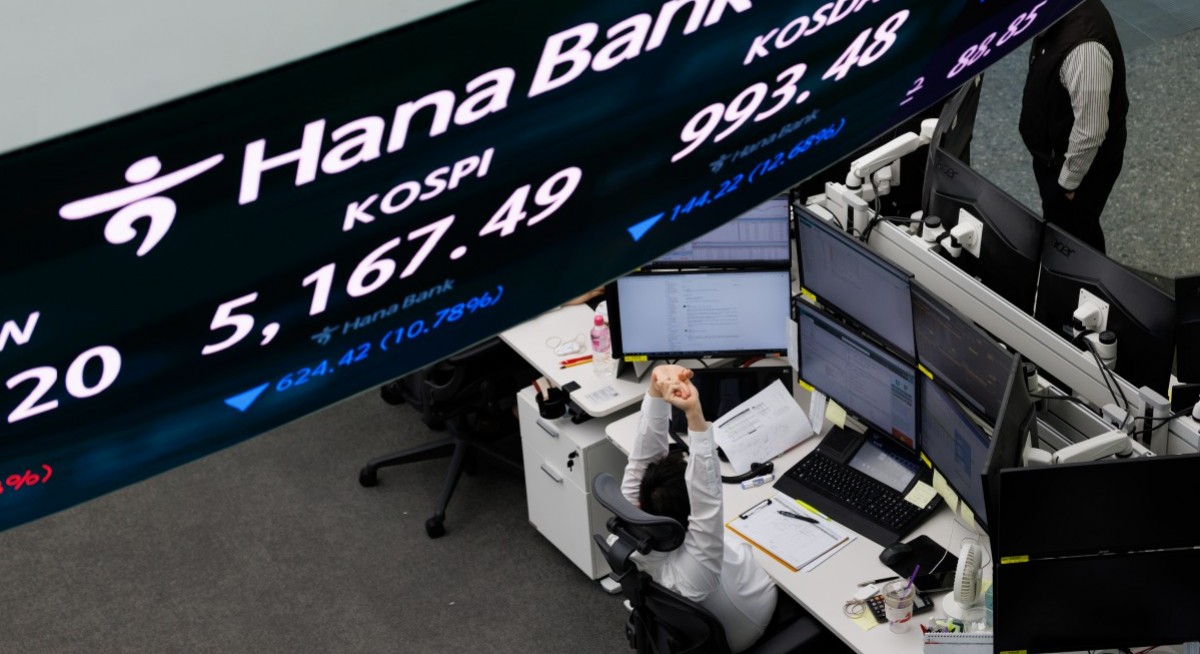


(March 9): A war‑driven meltdown in Asian shares is spurring global investors’ interest in adding exposure to major chip firms, reflecting confidence that the artificial intelligence boom can withstand the Middle East conflict.
Money managers from Aberdeen Investments to Invesco Ltd and Fidelity International are doubling down on their AI bets, arguing that the latest selloff resulted more from panic selling than deteriorating business conditions.
The plunge of over 6% in a key Asian equity gauge last week stood out against the S&P 500 Index’s 2% decline, underscoring signs of overreaction in the region. Before the Iran war broke out, leading chipmakers from South Korea and Taiwan had been big beneficiaries of Wall Street’s fears of AI’s disruptive impact, thanks to their dominance in the global supply chain.
“We see this volatility as an opportunity to add into the correction,” said Pruksa Iamthongthong, the head of Asia-Pacific equities at Aberdeen Investments. “The recent sell-off has been driven less by fundamentals and more by renewed stagflation concerns on higher oil prices.”
The US-Israeli strikes on Iran have caused a greater impact on Asia than Wall Street, with the technology-heavy Korean benchmark suffering its biggest-ever selloff last week. As investors unwound positions built with borrowed funds, panic selling took hold and sent chip giants Samsung Electronics Co and SK Hynix Inc tumbling.
Despite the weekly loss, the Asian share benchmark remains more than 7% higher for the year, versus a loss of 1.5% for the S&P 500.
See also: Oil leaps, stocks fall on war and credit fears
“The macro backdrop for Asia is the evolving semiconductor cycle, which I expect to continue to be robust this year driven by AI capex spending,” said David Chao, a global market strategist at Invesco Asset Management. He views “any downdraft as a buying opportunity” given the solid fundamental outlook.
Meanwhile, Fidelity International is looking to add exposure to Taiwan, a market dominated by chipmakers including Taiwan Semiconductor Manufacturing Co, according to Ian Samson, a portfolio manager at the firm. The island’s semiconductor companies are a “good stable, relatively inexpensive way of playing AI,” he said.
In a sign of longer-term optimism toward the sector, out of the six analysts who have updated their assessments of Samsung Electronics since the meltdown, five of them have a buy or outperform recommendation, with neutral from the other one, according to Bloomberg data.
See also: Blue Owl has £36m exposure to collapsed UK lender
To be sure, the possibility of a prolonged war and resurgent inflation are prominent risks that investors can’t afford to ignore.
But for some, the key is to adopt a selective approach.
“We’re not telling clients to chase every AI dip,” said Stephen Dover, the chief market strategist and head of Franklin Templeton Institute. “We’re using this correction to upgrade into higher‑quality Asia AI and semiconductor leaders with visible cash flows, stronger balance sheets, and clearer roles in the global AI stack.”
Uploaded by Isabelle Francis




