



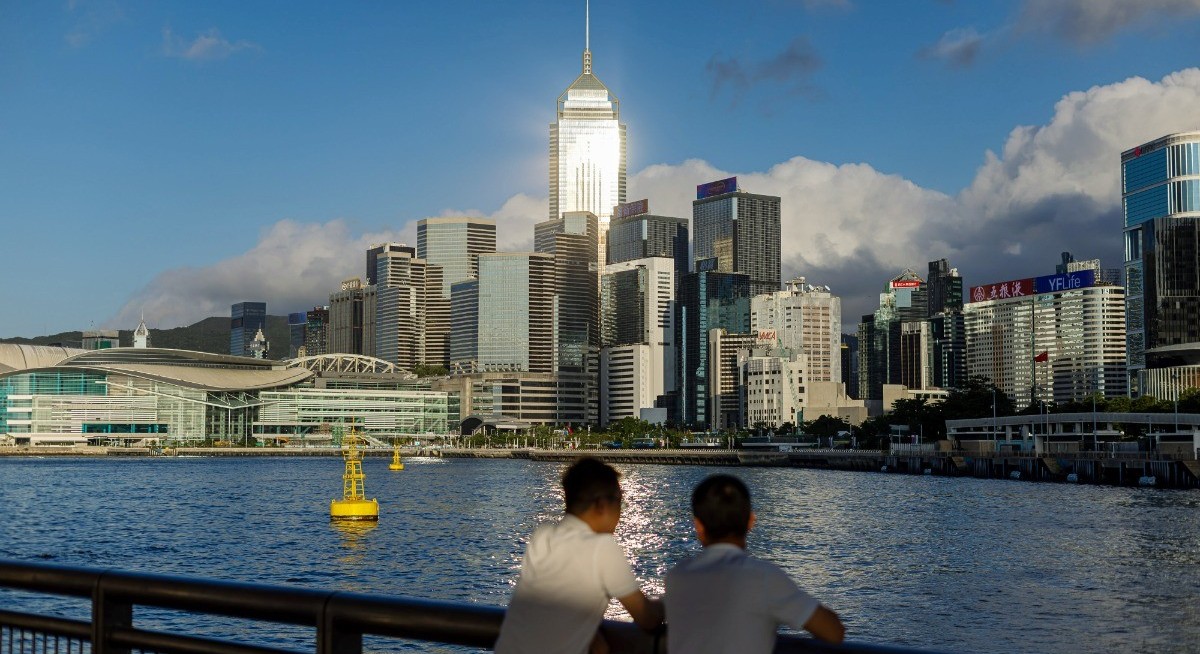



(July 3): Hong Kong has become a vital conduit for high-tech products moving in and out of China, emerging as one node in a US$2 trillion ($2.58 trillion) network of Asian trade fueled by a global boom in artificial intelligence (AI).
A review of official data by Bloomberg found the city accounted for more than half of China’s US$239 billion chip imports in the first five months of 2026, a record share. A decade ago, Hong Kong covered just a third of the mainland’s purchases of semiconductors.
Having recently overtaken Switzerland as the world’s biggest offshore wealth hub after an influx of Chinese money, Hong Kong is now carving out an economic niche for the AI age. Official figures published last week showed trade with China grew nearly 50% in May from a year earlier, the most since 1992 outside the pandemic.
“Hong Kong’s strong air cargo network and free-port status have made it a perfect trading hub for semiconductors, which are high-value, low-weight and time-sensitive,” said Gary Ng, senior economist at Natixis. “Chipmakers can ship via Hong Kong on a frequent, stable schedule or store for future sales with flexibility.”
Long a gateway between China and the world, the former British colony operates as a free port with no capital controls — a contrast with the mainland, where financial restrictions and red tape make it more difficult to move money and goods around the region. That’s helped turn Hong Kong into a critical cog in the commercial system taking shape across Asia, driven largely by the buildout of AI infrastructure.

See also: New World, Ares cut Hong Kong office tower unit prices up to 57% — Bloomberg
The technology is “hardwiring Asia into a tighter production bloc”, according to economists at HSBC Holdings plc, who estimate the value of AI trade within the continent has doubled from pre-pandemic levels to almost US$2 trillion in 2025.
But the middleman role cuts both ways. Hong Kong lacks the chip fabs of Taiwan and South Korea or heft of the mainland market, leaving the city exposed to the whims of geopolitics.
It’s already been swept up in the US-China trade war. During Donald Trump’s first presidency, Washington stripped Hong Kong’s special customs privileges, no longer treating it as separate from China. Since Trump reclaimed the White House and tightened curbs on China’s access to the most advanced US chips, Hong Kong has ramped up purchases of American-made semiconductors — likely those that fall outside the restrictions — sourcing many of them from third countries.
See also: Hong Kong home prices extend longest streak of gains since 2018

The exposure is pushing Hong Kong to hunt for new markets, with chief executive John Lee having personally led missions to the Middle East, Central Asia and Southeast Asia to diversify the economy.
For now, though, AI is where the growth is.
Despite its limited industrial base, the city exported almost US$159 billion of AI-related goods last year, according to Oxford Economics, the fifth-largest total in Asia and more than Japan.
Almost all of Hong Kong’s semiconductor shipments were re-exports, with more than 80% of them by value heading to the mainland, according to Bloomberg calculations based on data from Hong Kong’s Census and Statistics Department. Some 40% of those chips were supplied by China and a fifth by Taiwan, followed by Singapore and South Korea.

Between January and May, the city re-exported US$124 billion worth of semiconductors to the mainland, representing 52% of China’s total chip imports, customs data show.
To stay ahead of Singapore and the region’s corporate and economic trends, click here for Latest Section
The boom helped Hong Kong’s economy expand at its fastest pace in almost five years in the first quarter, despite the global energy shock caused by the war in Iran.
On Tuesday, the Hong Kong Trade Development Council more than doubled its 2026 export growth forecast for the city to over 20%, citing an AI-driven “technology upcycle”.

Research by the council shows AI-related electronics now account for 57% of Hong Kong’s exports, up from 44% in 2024. Barclays plc puts the share as high as 70%.
Hong Kong exempts imports from tariffs — an advantage during the tit-for-tat trade wars and export controls between Beijing and Washington. Goods that move on to the mainland, however, are still subject to Chinese taxes and duties.
Even so, mainland firms may prefer working through Hong Kong companies because access to the city often makes payments and currency conversion easier than when dealing directly with foreign suppliers.
“As a middleman, Hong Kong has figured out a way to handle the payments,” said Charles Mok, a research scholar at Stanford University and a former Hong Kong lawmaker who represented the city’s information technology constituency. “That makes it easier for mainland buyers.”
The city has surpassed mainland China as Taiwan’s top chip export market, with triple-digit growth in shipments from South Korea.
The shift has unfolded alongside China’s emergence as the world’s largest supplier of AI-related goods, even as the mainland remains a net importer of advanced chips. China’s overseas sales of semiconductors soared 111% in May, the fastest growth since 2013.
The boom has taken Hong Kong’s trade with China to record highs. In May alone, the city absorbed over US$40 billion of Chinese exports — the biggest monthly total since 2015 and roughly three to four times what the mainland shipped to Japan or Germany.
Semiconductors drove much of the increase, according to Chinese customs data, accounting for more than a third of the export value.

For much of ocean freight, Hong Kong’s middleman role has been in retreat for years as China built world-class ports in Shanghai, Ningbo and Shenzhen and mainland goods began moving directly to global markets. Yet in the highest-value trade, the city has held on.
“When it comes to products that have very high intellectual property content, Hong Kong still has a role in assuring quality, verifying standards and protecting IP,” said Heiwai Tang, economics professor at the University of Hong Kong. “Hong Kong still has all the institutional advantages.”
The city’s common-law courts, a legacy of British rule, remain more trusted by international investors than the mainland’s legal system, even as Beijing has tightened its grip on Hong Kong in recent years.

Hong Kong’s status as an international aviation hub is another source of leverage. Mainland China enforces stricter controls on electronics carried by planes, a hurdle for AI goods shipped by air, said Michael Li Chi Fung, vice chairman of the trading group Nam Pak Hong Association.
“With its proximity to the mainland, Hong Kong functions as a distribution hub that can seamlessly combine air and land transport,” Li said. “This is something that other transshipment hubs like Singapore simply cannot do.”
Uploaded by Chng Shear Lane




