



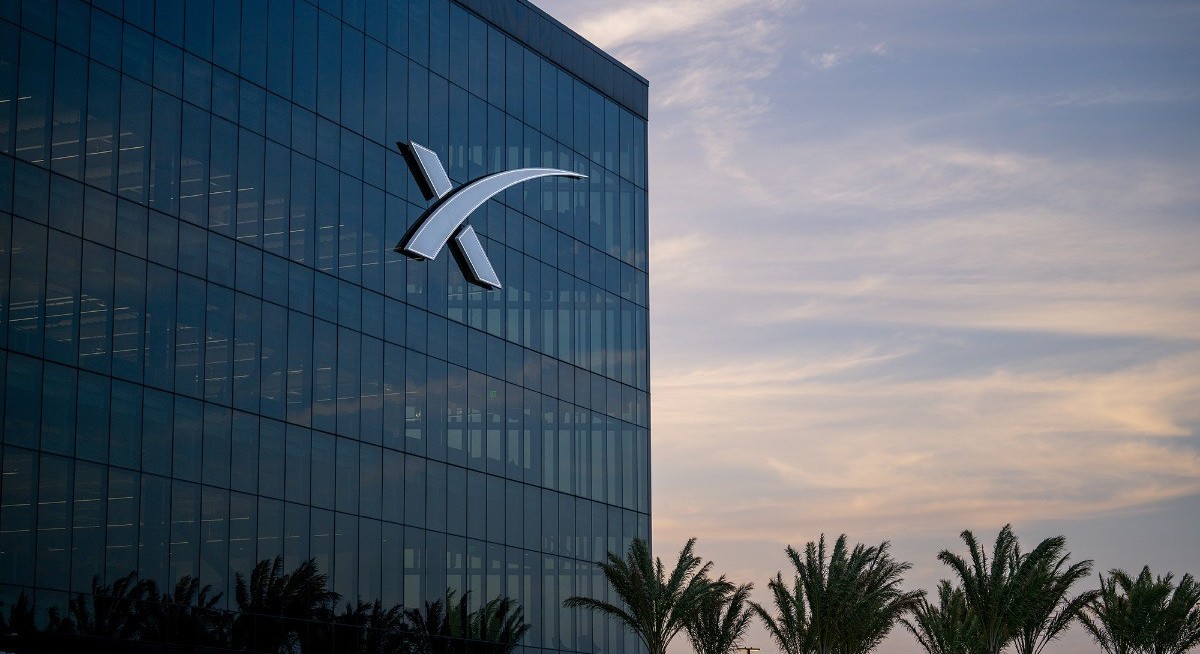


(March 3): A US$1.75 trillion valuation for billionaire Elon Musk’s SpaceX in an initial public offering (IPO) would be “justifiable”, according to a PitchBook analyst.
The IPO value could be achieved if investors take a three- to five-year investment horizon and are tolerant of what Franco Granda, a senior analyst at PitchBook, called “Musk-amplified volatility”. The prospect of raising as much as US$50 billion in the listing would give the company a war chest to fund the scale-up of its Starship rocket, expansion of Starlink, and build out its direct-to-cell offering.
At that valuation, investors would be willing to ascribe SpaceX a price-to-sales ratio of more than 100-times on a trailing basis, the analyst estimated. That compares to Palantir Technologies Inc’s lofty price-to-sales ratio of roughly 77 times, by far the highest in the S&P 500 Index, data compiled by Bloomberg show.
Using growth-adjusted multiples of the highest-valued public peers for Starlink and SpaceX’s launch business, Granda’s sum-of-the-parts framework supports a US$1.75 trillion valuation Bloomberg News reported the company is seeking. That lofty valuation does not account for SpaceX’s acquisition of xAI, he said in a phone interview.

The debate around valuation will come down to the willingness of investors to assign a “platform premium” to SpaceX, the analyst said. “The combination of Starlink’s subscriber growth, launch dominance, and the direct-to-cell buildout is a profile that doesn’t exist anywhere else in public markets.”
For Granda and other SpaceX bulls, investors need to look further out to justify the targeted valuation. PitchBook estimates SpaceX could bring in US$150 billion of revenue in 2040, a roughly tenfold jump from last year’s nearly US$16 billion. If investors agree with Granda’s expectation, the valuation multiple on a sales basis could collapse to roughly 12 times from closer to 110 times.
While that makes it more palatable for investors who can buy into Musk’s vision and see rampant growth for Starlink and the company’s rocket initiatives, said Granda, “people will scrutinise the fact that people are looking at 2035, 2040 numbers”.
If the Starbase, Texas-based company succeeds in hitting its valuation target, SpaceX would be bigger than Meta Platforms Inc as well as Musk’s own Tesla Inc — larger than all but five of the S&P 500’s companies.
See also: SpaceX weighing confidential IPO filing as soon as March — Bloomberg
In a December memo, SpaceX said it’s preparing for a possible IPO in 2026 that would be aimed at funding an “insane flight rate” for its developmental Starship rocket, artificial intelligence data centers in space and a base on the moon.
PitchBook’s bullish view tallies the prospects of data centres in space and a moon base as call options and say they account for zero revenue in the firm’s model.
Still, investors who are looking to hold SpaceX should be prepared for volatility that is “like Tesla on steroids”. Given the lower proportion of shares available for trading after a listing, SpaceX shareholders should be primed for the stock to move 20% to 30% on any milestone delays, according to Granda.
SpaceX’s near-term catalysts include a test of Starship, its heavy lift rocket, anticipated this month before the company is expected to demonstrate cryogenic fuel transfer between two Starship vehicles in orbit later this year. The latter is a “binary risk for the entire moon/Mars thesis,” he said.
The analyst also noted that SpaceX is grappling with a regulatory bottleneck that could hold up its planned cycle.
“The FAA has expanded SpaceX’s licence to include 25 launches per year, but the environmental review process for each vehicle modification remains slower than SpaceX’s iteration cycle,” Granda said. “We view regulatory drag as the single highest risk to 2026 launch cadence and the most likely source of timeline slippage that public market investors will need to price.”
Uploaded by Felyx Teoh




