



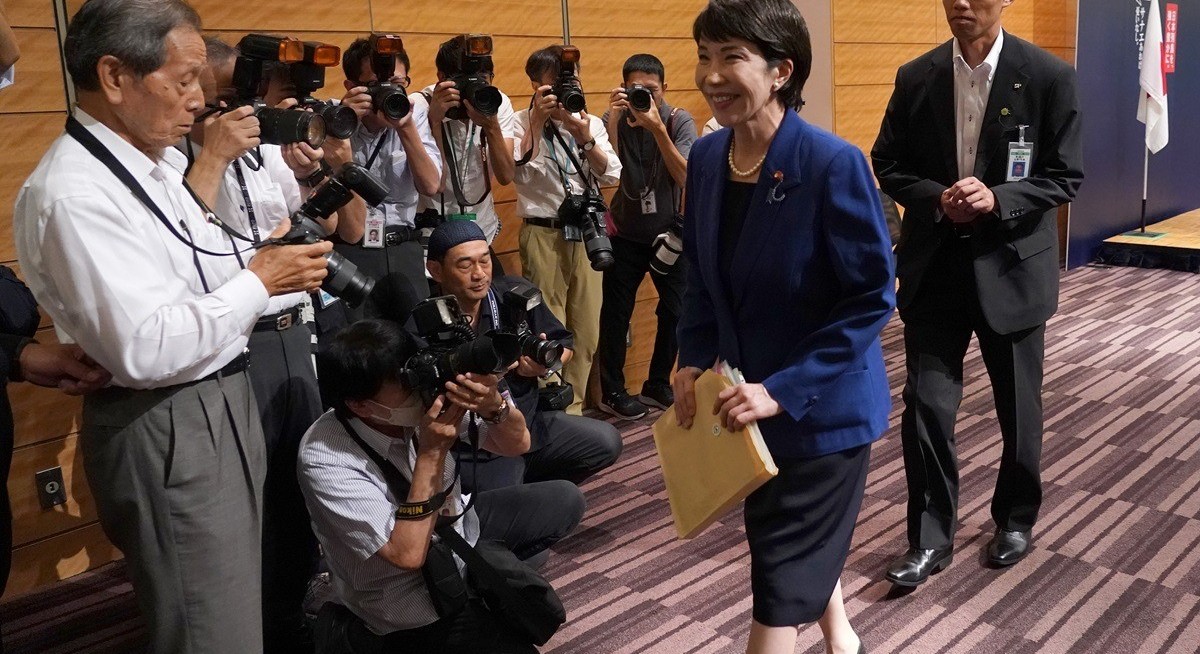


(March 10): Japan’s economy expanded in the final quarter of 2025 more than initially reported thanks to stronger corporate investment, as Prime Minister Sanae Takaichi urges further spending to develop key industries.
Gross domestic product rose at an annualised pace of 1.3% versus the prior quarter in the three months through December, with the revised figures showing that business spending was stronger than reported in preliminary figures. Business investment was upgraded to 1.3% growth on a non-annualised basis from 0.2%.
The upgrade to Japan’s fourth-quarter economic performance comes just as the outlook for business activity is clouding over owing to the conflict in the Middle East. Elevated oil prices and a slide in the yen will put a strain on the economy through costlier imports if the situation persists, possibly prompting Takaichi to consider ramping up fiscal support.
“While external demand remains sluggish, consumption and capital investment are solid, confirming positive growth driven by domestic demand,” said Taro Saito, the head of economic research at NLI Research Institute. “I expect this trend to continue into the current quarter, sustaining positive growth, but the impact of high crude oil prices will fully materialise in the second quarter, posing a risk it could weigh on consumption.”

In addition to affecting households, the impact of overseas developments could threaten the economy in other ways. Japan is attempting to keep its trade deal with the US intact following a US court ruling against President Donald Trump’s tariffs. Pressure on Japanese companies to invest in the US as part of the deal could discourage domestic spending. Meanwhile, China continues to step up retaliatory measures in response to Takaichi’s remarks related to Taiwan.
See also: Japanese stocks rebound as oil’s pullback fuels dip buying
Given the uncertainty surrounding the outlook, the Bank of Japan (BOJ) is widely expected to hold its settings steady when it next sets policy on March 19. Pricing in the overnight index swaps market shows traders see a slightly larger than 50% chance of a hike at the April meeting.
Consumer spending was revised higher, in a rare sign of resilience for domestic demand as households continue to cope with inflation that hovered above the BOJ’s 2% target for four consecutive years through 2025. Net exports stayed flat.
A separate report on Tuesday showed that household spending adjusted for inflation fell 1% in January from a year earlier, the Ministry of Internal Affairs and Communications reported, a result that missed the consensus estimate of a 2.4% advance. Outlays on housing and education led the declines in that report.
See also: Japan’s stagflation risk mounts with US$100 oil and sagging yen
Even before strife erupted in the Middle East the premier was planning to offer companies incentives via her proactive spending measures so that Japanese companies would increase their domestic investment. She also plans to ease the burden of inflation on households with various measures. Takaichi said on Monday she’s considering new steps on gasoline.
“To support consumption, the Takaichi administration should actively implement measures to suppress gasoline prices,” Saito said.
Uploaded by Tham Yek Lee




