



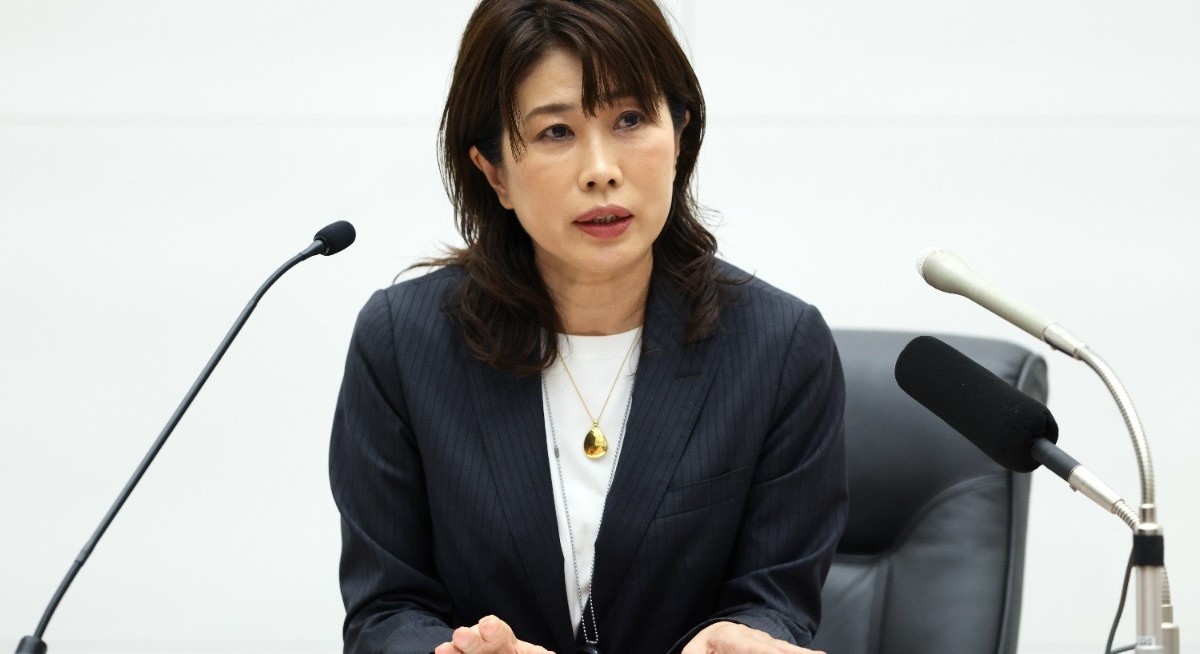



(June 30): New Bank of Japan (BOJ) board member Ayano Sato said the country’s inflation views aren’t very strong yet, suggesting her tilt towards accommodative policy as an appointee of Prime Minister Sanae Takaichi.
“While we may observe some risk of inflation overshooting, I do not believe that an inflationary norm has yet become firmly established,” Sato said at her inaugural press conference on Tuesday in Tokyo. She refrained from commenting on her policy views.
Sato begins her five-year term just two weeks after the BOJ raised its benchmark interest rate to the highest level in 31 years. Speaking soon after the yen slid to its lowest level against the dollar since 1986, she noted both pros and cons of a weak currency, adding that high foreign-exchange volatility isn’t desirable and that policymakers need to watch its impact on prices.
The yen was little changed following the press conference, trading at around 162.39 per dollar.
How Sato votes — starting at the July 30-31 meeting — will be closely watched as investors assess how much influence Takaichi’s appointments will have on the board not only now, but also how they could eventually reshape the BOJ’s policy stance. Earlier this month, Takaichi’s first appointee, Toichiro Asada, was the only dissenter against the central bank’s latest rate hike.
“I have only just been appointed to the policy board today, so my first priority is to prepare thoroughly for the next monetary policy meeting,” Sato said. “I would prefer to refrain at this stage from commenting either on the decisions made at the latest policy meeting or on my own policy stance.”
See also: Japan’s manufacturer mood improves to highest level since 2018
Sato, a former Aoyama Gakuin University professor, succeeds Junko Nakagawa, who surprised investors in April with her dissent from a stand-pat decision in favour of another rate hike. That vote reinforced expectations that the BOJ would move in June.
While Sato alone is unlikely to alter the direction of the nine-member board, investors are watching her comments as an indication of Takaichi’s policy preferences. The prime minister surprised markets in February by nominating both Sato and Asada, two well-known reflationists, rather than pairing one of them with a more centrist candidate, as many had expected.
Those appointments strengthened the perception that Takaichi could act as a headwind to the BOJ’s normalisation campaign, even as some economists warn the central bank risks falling behind the curve. With the terms of two of the board’s most hawkish members set to expire in a year, there is a possibility that the balance of opinion could gradually shift in a dovish direction.
See also: Japan nears longest postwar growth even as households struggle
“I haven’t received any particular orders from Prime Minister Takaichi,” Sato said. “I intend to carry out my responsibilities at the BOJ with the aim of contributing to the development of Japan’s economy by achieving price stability.”
The Takaichi government has repeatedly emphasised the importance of maintaining accommodative financial conditions. A draft of its annual economic policy guidelines seen by Bloomberg describes appropriate monetary policy as “very important”. Ahead of the BOJ’s June meeting, Minoru Kiuchi — the economic policy minister who attended the discussions as the administration’s representative — said he “strongly” expected the BOJ to work closely with the government.
While official inflation gauges have stayed below the BOJ’s 2% target largely thanks to subsidies from the Takaichi administration, the central bank’s underlying indicator that excludes such special factors is well above that threshold. Nearly all economists surveyed by Bloomberg after the June meeting expect the BOJ to hike rates again this year.
Uploaded by Tham Yek Lee




