



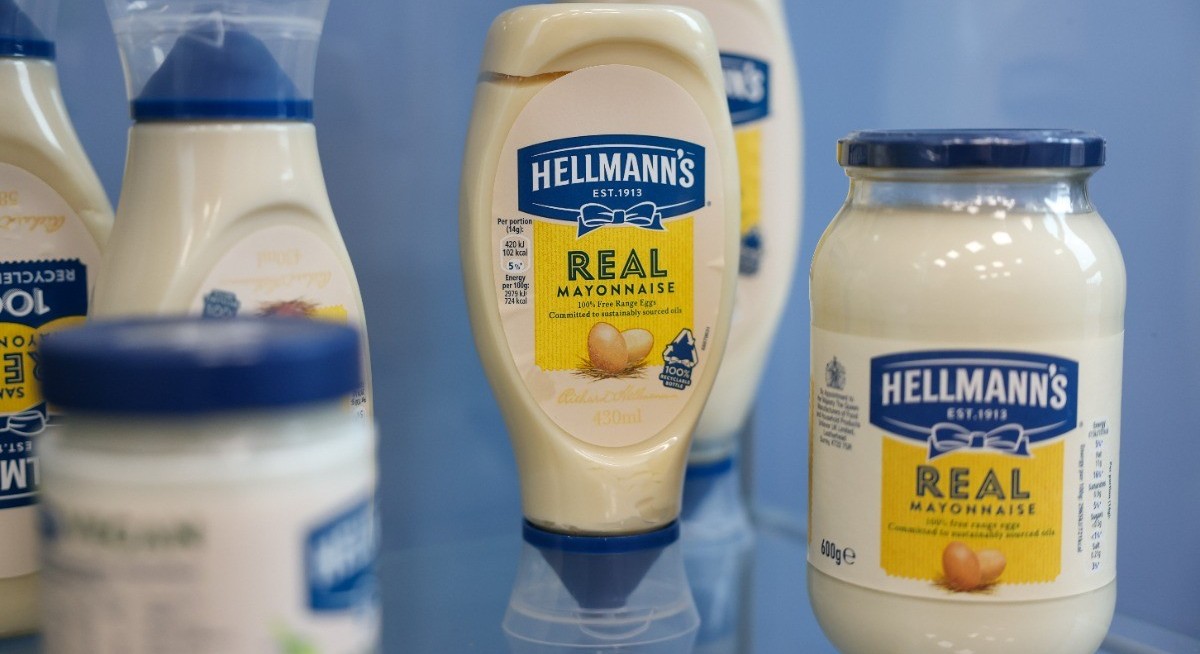


(March 20): Unilever plc is in talks to sell its food business to McCormick & Co, transforming the owner of Hellmann’s mayonnaise into a maker of beauty and personal care products in the biggest transformation since it was founded almost a century ago.
The Anglo-Dutch consumer goods company said Friday it had received an offer from the Maryland-based spices and seasonings maker, but that there was no certainty a deal would be achieved. Barclays estimates Unilever’s food division has an equity value of some €28 billion (US$32.4 billion or $41.43 billion) to €31 billion.
A sale would mark the end of Unilever competing with Big Food rivals like Kraft Heinz Co, Nestlé SA and PepsiCo Inc, and transform the multinational into a major household and personal care company on par with L’Oréal SA, Beiersdorf AG and Estée Lauder Cos.
Bloomberg reported this week Unilever is in the early stages of weighing a separation of all or part of its food business. Unilever shares rose as much as 1.9% in early trading. The stock is down about 5% in the last 12 months.
Chief executive officer Fernando Fernandez, now a year into the role, has made it clear that he sees beauty, personal care and wellbeing as the keys to future growth. He aims to generate two-thirds of Unilever’s turnover from brands like Dove soap, Liquid IV hydration sachets and Dermalogica skin care in the medium term, up from about half of revenue currently.
Still, Unilever said its food business was highly attractive with a strong financial profile, and that it was confident in its future as part of the group. The company’s two strongest food brands are Hellmann’s mayonnaise, which has dominant market shares in the US and Brazil, and Knorr stock cubes, its second best-selling brand overall just behind Dove.
See also: Mastercard to buy stablecoin start-up BVNK for up to US$1.8 bil
Diversification “largely made sense” in the 1990s and into the 2000s when scale was beneficial for consumer groups, Bernstein’s analysts led by Callum Elliott wrote Friday. That model has changed: “The benefits of scale across categories no longer outweigh the drawbacks of complexity,” he wrote.
Analysts earlier this week cautioned that while a sale would provide a boost for shareholders and allow the company to focus on faster-growth areas, it would be a distraction for management and investors in the near-term.
“At some point, Unilever will need to rip off the Band-Aid and one could argue there is never a good time, but we don’t think the timing is now given everything else going on,” Barclays’ Warren Ackerman wrote.
See also: Canada mortgage billionaire buys stake in The Economist magazine
The multinational still owns a long list of more local brands, including the UK’s fiery mustard brand Colman’s, France’s mayonnaise-maker Amora and India’s Kissan jams. Fernandez has already said the company earmarked between €1 billion and €1.5 billion in small food brand disposals.
Unilever has over the last decade sold off other food assets including its global spreads division, which included I Can’t Believe It’s Not Butter!, and more recently snack brand Graze and fake-meat maker The Vegetarian Butcher. It spun off its ice cream company into the Magnum Ice Cream Co, retaining a nearly 20% stake it plans to sell down over the coming years.
Major food companies like Unilever and rival Nestlé are struggling to drive growth as cash-strapped consumers rein in spending and turn to cheaper store brands. The increasing popularity of GLP-1 weight-loss drugs is also a threat as buyers eat less overall or opt for less calorie-dense products.
Beauty, on the other hand, has been an important growth market for multinationals, as younger and older consumers alike spend on everything from multistep skin-care routines to fragrance collections.
McCormick, which can trace its history back to 1889 as a root beer seller in the US, became a large seller of spices and seasonings like Billy Bee, and has been acquiring local leaders in markets like the UK and Poland in recent years. Its moves during the past 20 years have demonstrated the company wants to expand beyond spices and become a major seller in the condiments aisle, as hot sauces and flavoured mayos are big business especially among younger consumers.
The biggest push into condiments came in 2017 when McCormick bought Reckitt Benckiser Group plc’s food division, RB Foods, for US$4.2 billion ($5.37 billion), giving it the crucial brands French’s mustard and Frank’s RedHot sauce.
McCormick about a decade ago attempted to buy Britain’s Premier Foods, owner of Mr Kipling and Bisto gravy, but the deal was rejected as undervaluing the company. Premier Foods subsequently entered a partnership with Japan’s Nissin Foods.
Uploaded by Chng Shear Lane




