



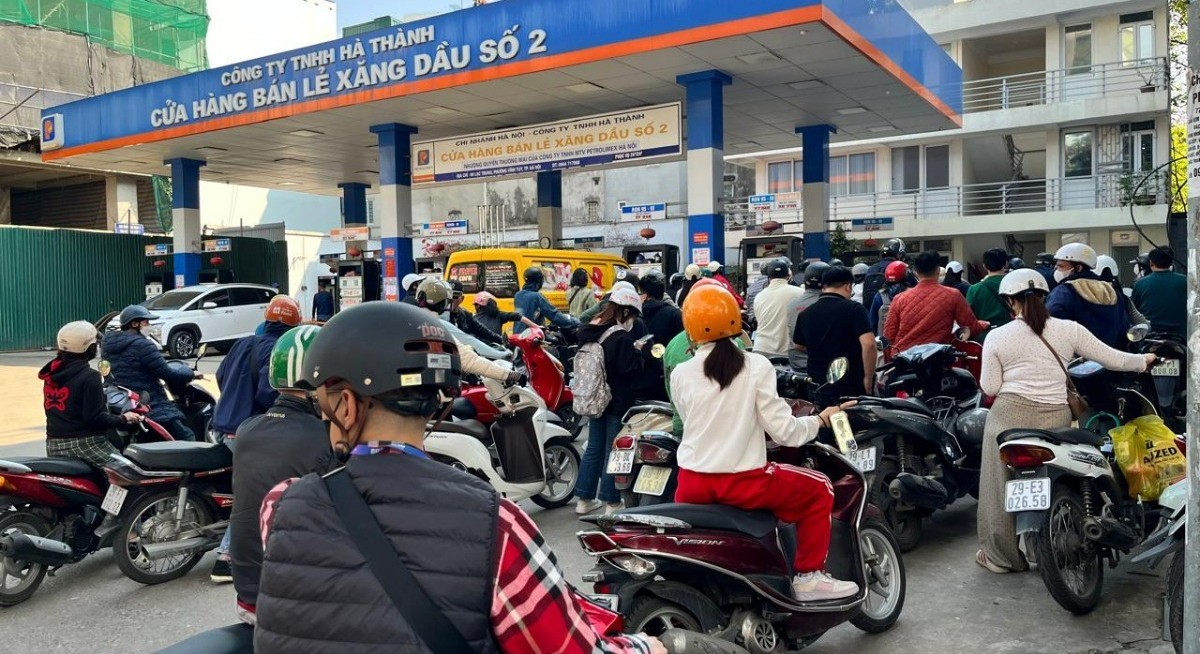


(March 10): A widening supply crunch is forcing Asian governments to put more restrictions on fuel use and instruct citizens to avoid panic-buying, as the war in the Middle East limits the availability of energy.
Vietnam reduced import tariffs on some petroleum products and said oil not yet committed for export must be sold to domestic refineries. The country’s civil aviation authority warned that jet fuel shortages could emerge from early April, with suppliers delaying deliveries or possibly invoking force majeure clauses to terminate contracts.
In Thailand, the government instructed agencies to adopt work-from-home arrangements and suspended non-essential overseas travel as part of emergency measures to curb energy demand. The Philippines — which imports nearly all of its oil — has already begun a temporary four-day week for government offices, where elevator use has been limited and air-conditioning set to a minimum 24°C.
Pakistan also reduced the working week, closed schools and temporarily halted salaries for cabinet ministers among more than a dozen austerity measures announced by Prime Minister Shehbaz Sharif in a televised address late Monday. India invoked emergency powers to redirect supplies of liquefied petroleum gas away from industrial users to households.
“It is no longer just a price issue, but primarily a supply issue — and India’s emergency reserves are being drawn down quickly,” said Madhavi Arora, an economist at Emkay Global Financial Services Ltd. “Any government will prioritise its citizens over industries during times of shortages. But industries are being hit, which will ultimately affect economic growth.”
Upheaval has spread across the Middle East and beyond since the US and Israel launched strikes on Iran on Feb 28. Oil and gas consumers are growing increasingly concerned that supplies will be disrupted by Iranian strikes on energy infrastructure and the near-closure of the Strait of Hormuz, a chokepoint through which a fifth of the world’s oil and liquefied natural gas must pass.
See also: Gulf oil giants deepen cuts as Aramco urges Hormuz restart
The conflict, which has sucked more than a dozen countries into the fray, has led to a surge in global energy prices, including oil, natural gas and products such as diesel. Crude spiked toward US$120 ($152.66) a barrel on Monday after major producers in the Persian Gulf were forced to cut output, though prices retreated sharply after US President Donald Trump said the war would be resolved “very soon”.
The effects are reverberating around Asia, where airlines are raising ticket prices and mapping out contingency plans that include grounding planes. Vietnam has proposed allowing them to impose fuel surcharges and adjust the price cap on domestic fares to help maintain operations. The operating costs for national carrier Vietnam Airlines could rise by 50% to 60% per month, the aviation authority said.
“Asia’s airlines are structurally more exposed to Middle East disruptions than their Western peers, and the contrast is quite stark,” said Linus Benjamin Bauer, founder of global aviation advisory firm BAA & Partners. “Many Asian carriers also hedge fuel less aggressively, which means cost shocks flow through faster to the P&L.”
See also: Trump hints at early end to Iran war, easing oil-shock concerns
On the ground, long lines formed at gas stations from Manila to Hanoi. Vietnam’s Ministry of Industry and Trade urged people and businesses not to hoard gasoline illegally and to implement fuel-saving solutions, such as using public transport or cycling short distances.
Thailand plans to increase the use of biofuel blends to reduce demand for imported crude, Energy Minister Auttapol Rerkpiboon said on Monday. Authorities will freeze prices of liquefied petroleum gas through May to cushion households from rising energy costs, and Transport Minister Phiphat Ratchakitprakarn urged the public to avoid panic buying as concerns grow over potential fuel shortages.
Thai media showed footage of signs at gas stations near the border with Myanmar, reading: “No Myanmar Vehicles” in two languages, after a surge in cross-border traffic. Long lines have formed at the pumps in Myanmar over the past week amid concerns about fuel supplies under the country’s military government. The government in the Philippines, meanwhile, promised subsidies for public transport operators.
The Philippines has enough crude supplies, either stockpiled or en route, to last until April, Energy Secretary Sharon Garin said. The government, as well as private companies, is in talks to source oil from the Americas, Australia and Africa. “It’s just a matter of how much we are willing to pay for it,” she said.
Vietnamese officials, meanwhile, are considering importing crude oil from Venezuela, news website VnExpress reported, citing Deputy Trade Minister Nguyen Sinh Nhat Tan.
Uploaded by Chng Shear Lane




