



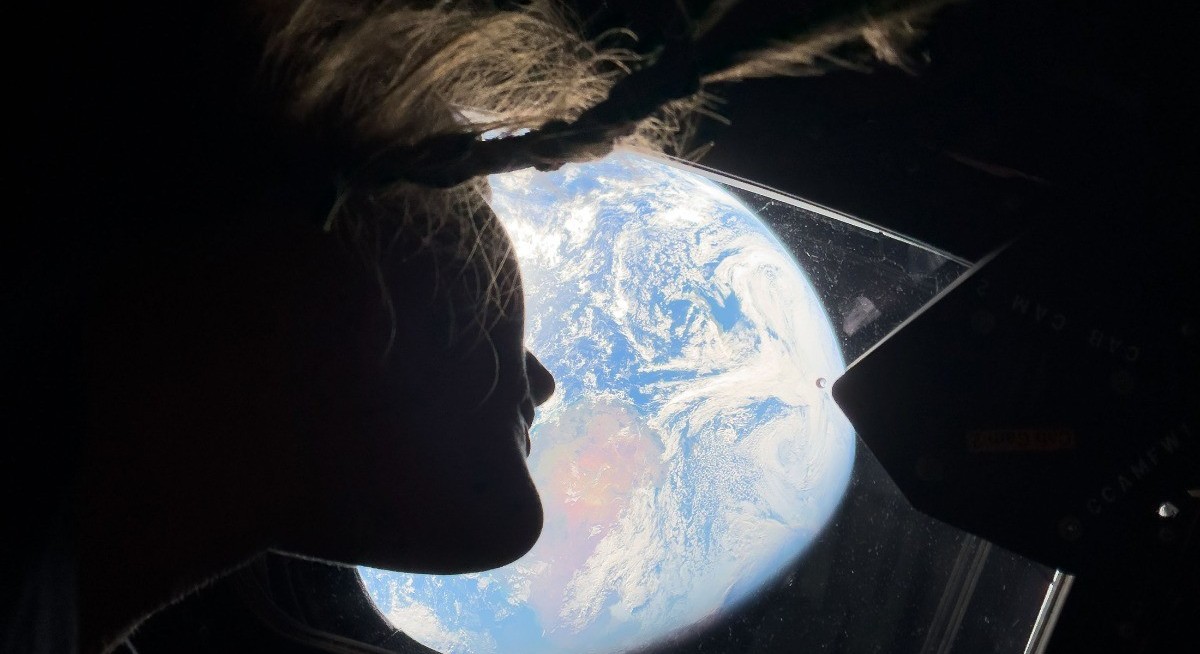


(April 7): Nasa's four Artemis astronauts swung behind the moon and are headed home, in a journey that shattered space travel distance records and brought people the closest they have been to the lunar surface in more than 50 years.
“All of your flight controllers and your flight director have flipped their Artemis II patches around. We are Earth-bound and ready to bring you home,” Jenni Gibbons, a Canadian space agency astronaut and backup crew member for Artemis II, told the astronauts as they emerged from an expected communications blackout around the moon.
At their nearest distance to the moon, the Artemis II’s Lockheed Martin Corp-built Orion capsule came within an estimated 4,067 miles of the lunar surface, according to calculations by Nasa. From the crew’s point of view, the moon would have appeared roughly the size of a basketball in someone’s outstretched hand.
The spacecraft reached its maximum distance from Earth minutes later, reaching 252,756 miles, Nasa administrator Jared Isaacman said in a post on X.
The astronauts earlier broke the distance record for space travel. Shortly before 2pm New York time on Monday, they surpassed the distance the Apollo 13 crew traveled in 1970 of 248,655 miles (400,170km) from Earth, Nasa said.
“We will continue our journey even further into space before Mother Earth succeeds in pulling us back to everything that we hold dear,” Canadian astronaut Jeremy Hansen said as the crew broke the record. “But we most importantly choose this moment to challenge this generation and the next to make sure this record is not long lived.”
See also: Samsung beats high estimates after AI chip sales defy war fears
Hansen then suggested naming two craters on the moon’s surface. The first suggestion was Integrity, after the nickname for the crew’s capsule, and the second was Carroll, after mission commander Reid Wiseman’s late wife. Wiseman and the crew teared up during the suggestion and all embraced.
The close approach was the pinnacle moment of Nasas Artemis II mission, which launched to space on Wednesday, April 1, sending Nasa astronauts Wiseman, Victor Glover, Christina Koch and Hansen en route to the moon.
During the flyby, the Artemis II crew entered the predicted communications blackout before they passed by the far side of the moon, blocking their line of sight with Earth. Similar blackouts occurred during the uncrewed Artemis I mission and the Apollo missions.
See also: Nvidia partner Foxconn’s sales meet estimates on solid AI demand
“This is a poignant moment, as it’s the first time in over 50 years that we have humans completely unreachable by anyone else on Earth,” Leah Cheshier Mustachio, a public affairs officer at Nasa’s Johnson Space Center, said as the crew slipped behind the moon. “No matter how distant or secluded we could reach anyone living on Earth. But while the crew flies behind the moon, it’s simply impossible to make contact with them.”
After the flyby wrapped up, the crew spoke with US President Donald Trump, who invited them to visit the White House.
“Today you’ve made history and made all America really proud, incredibly proud,” Trump told them.
The astronauts also had a unique chance to observe a solar eclipse from Orion. The sun passed behind the moon from the spacecraft’s vantage point, giving the astronauts the ability to image and study the sun’s outer atmosphere, known as the corona. They had an opportunity to see and take pictures of various planets, including Venus, Mars, Saturn and, of course, Earth.
“No matter how long we look at this, our brains are not processing this image in front of us. It is absolutely spectacular, surreal,” Wiseman said of the eclipse. “There’s no adjective. I am going to need to invent some new ones to describe what we are looking at out this window.”
Dress rehearsal
The mission serves as an elaborate dress rehearsal meant to test vehicles that will be used to help land humans on the lunar surface in potentially two years.
To stay ahead of Singapore and the region’s corporate and economic trends, click here for Latest Section
Leading up to closest approach, the crew took numerous images of the highest priority targets on the moon’s surface, and described in detail the colours and lighting of the surface they saw with their eyes. Nasa has been hopeful that the astronauts will be able to use their eyes — “the best cameras in the universe” as Nasa flight director Judd Frieling put it during a news conference — to see parts of the far side of the moon that no human has seen before.
“It turns out there’s about 60% of the far side, I think, that has never been seen by human eyes because of the lighting conditions,” Wiseman said before launch. “Apollo always wanted that light on the front side of the moon for their landing and launch capabilities.”
In the days after launch, Nasa scientists had been working to finalise the science objectives and list of lunar targets they want the crew to pay attention to during the flyby. By comparing how certain targets look from different angles and under different lighting conditions as the capsule moves, they hope the crew can help scientists learn more about how the moon’s surface evolved over time.
“The human eye, especially when it’s connected to a well-trained brain, which I assure you these four people have, are capable of, just in literally the blink of an eye, making nuanced colour observations that Apollo observations told us can tell us something scientifically,” Kelsey Young, Nasa’s Artemis science flight operations lead, said during a news conference on Saturday.
The Artemis II crew also broke more than just distance records on Monday. Glover becomes the first Black astronaut to travel to the moon, while Koch is the first woman to do the same. Hansen is also now the first Canadian to travel to the moon.
“To all of you down there on Earth and around Earth, we love you from the moon,” Glover radioed ahead of the loss of communications.
Uploaded by Tham Yek Lee




