
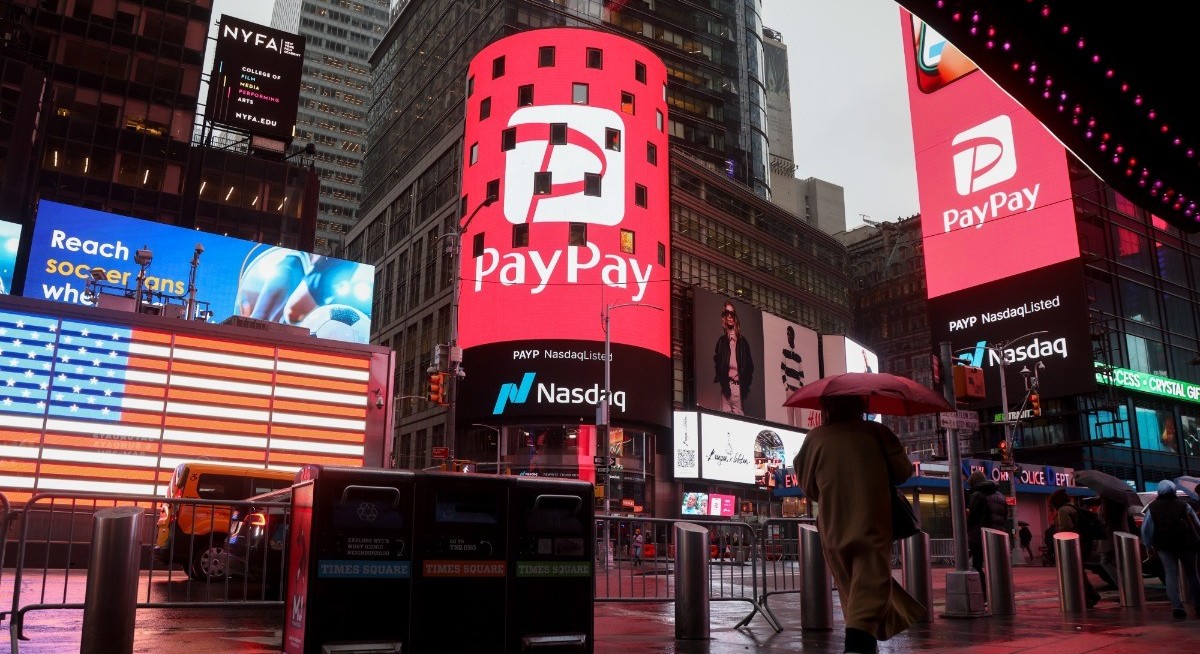

(March 13): SoftBank Group Corp-backed PayPay Corp is open to a dual listing with a presence on Tokyo’s bourse, its chief said after the digital payments company’s US$880 million ($1.13 billion) trading debut in New York.
American depositary receipts of Japan’s dominant payments app rose 14% to close at US$18.16 in New York on Thursday, above its initial public offering (IPO) price of US$16 and valuing the company at US$12.1 billion. The IPO — the biggest in the US by a Japanese company in a decade — is a boon to SoftBank and its telecom arm, which together own a majority of PayPay’s shares.
While going public in the US is what PayPay needs for growth at the moment, the company will remain flexible about exploring a similar move in its home country, chief executive officer Ichiro Nakayama said in an interview. “We are not ruling that option out at all,” he said.
Besides giving the QR-code payments app fuel for growth at home and abroad, the IPO raises SoftBank’s US profile and gives support to its finances at a time founder Masayoshi Son is preparing to inject an additional US$30 billion in OpenAI. Thursday’s offering represents just 8% of PayPay’s outstanding shares.
PayPay is the latest demonstration of how SoftBank’s solid operations at home help fuel Son’s ambitious goals. Since its launch in 2018, PayPay has amassed 72 million users, equivalent to roughly half of Japan’s population and accounting for an estimated 20% of cashless payments by value. It’s outrun local rivals like Rakuten Group Inc’s Rakuten Pay through heavy marketing, aggressive subsidies and SoftBank’s support in signing on merchants.
PayPay, which has so far remained largely corralled within Japan’s cash-reliant ecosystem, will now focus on boosting profitability using its access to overwhelming data on consumer behaviour, Nakayama said. “While doing so, we will explore how our business model might be effective elsewhere — and that’s not limited to just the US,” he said.
See also: Japan's Mizuho plans to replace 5,000 clerical jobs with AI in 10 years
PayPay’s stock could end up losing momentum if its business remains limited to Japan, said Naoki Fujiwara, a senior fund manager at Shinkin Asset Management. “Whether PayPay is able to globalise its business or not will be key.”
In the US, PayPay faces an uphill battle for traction, given local users’ reluctance to use QR codes and a fragmented regulatory landscape. The challenge would be to break the hold of widespread credit card use and NFC-dominant players like Apple Pay. PayPay is not wedded to QR-code payments and would be willing to explore deals to expand into other technologies if necessary, Nakayama said.
PayPay has accrued troves of data through day-to-day transactions on small-ticket items as Japan’s digital wallet of choice for splitting checks and payments among friends. The company recently enlisted Visa Inc. to explore partnerships at home and abroad, and it may also team up with others, he said.
See also: Apple in talks with banks to start payment service in India, Bloomberg reports
“We see new opportunities sprouting from the sheer volume of data we have,” Nakayama said, noting that such data — steeped in people’s lives — is helpful for risk management. “All of the movements of daily life appear in that data.”
Building momentum following an IPO in the US has proven to be difficult for many Japanese companies drawn by the promise of big checks and global name recognition.
Some have been reduced to a penny stocks while companies like Pixie Dust Technologies Inc, a developer of ultrasound technologies, have delisted. Kura Sushi USA Inc is a rare example of success, with the popular sushi chain operator’s share price more than quadrupling since its debut in 2019 — a testament to the importance of establishing a viable business presence in the US.
PayPay’s debut was heavily subscribed by a small number of institutional investors, which skews demand on what’s already a limited float. The Abu Dhabi Investment Authority, a unit of Qatar Investment Authority and an arm of Visa agreed to buy as much as US$220 million worth of shares in aggregate, filings showed.
Prior to the IPO, Son had been pushing for a valuation as high as US$20 billion for PayPay, Bloomberg reported. Nakayama declined to give a short-term target value, saying that that was for the market to decide. “We just want to be as big as we can,” he said.
Uploaded by Tham Yek Lee


