



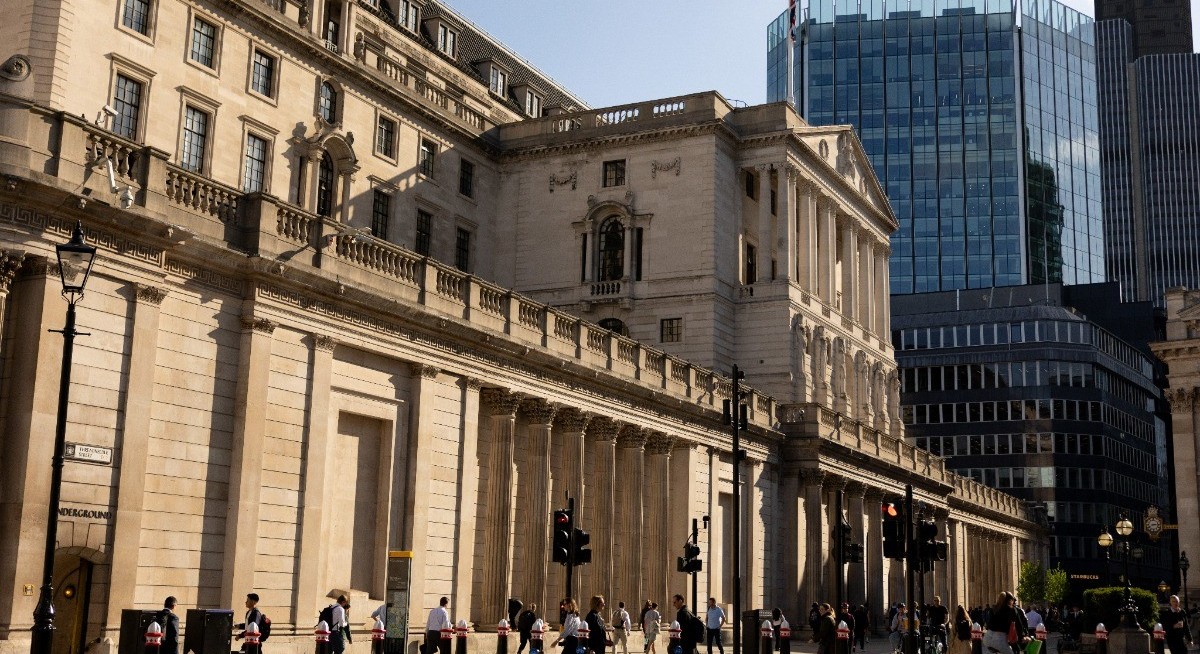



(June 18): The Bank of England (BOE) held interest rates at 3.75% as it said the recent fall in oil prices was “encouraging”, even while two of the nine policymakers voted for an immediate quarter-point hike over concerns of persistent inflation.
External member Megan Greene joined April’s lone dissenter, chief economist Huw Pill, in voting for an immediate increase in bank rate to 4% citing the unstable outlook for prices despite the recent truce between the US and Iran. The committee left its guidance unchanged and lowered its estimate of peak inflation to 3.25% in the fourth quarter of this year, below the 3.6% it had projected in April.
“Oil prices have fallen in recent days and that’s encouraging,” Governor Andrew Bailey said in written remarks alongside the decision. In the paragraph reflecting his own views, he added that “the situation remains unpredictable and there is clearly a risk that energy prices remain elevated for an extended duration”.
The pound against the dollar, trading around half a percent weaker at US$1.3225, the lowest since early April. Traders marginally pared bets on future rate hikes, fully pricing one quarter-point increase this year and around a 30% chance of a second.
“We think the BOE will be able to avoid the kind of monetary tightening that the European Central Bank has already started to deliver and that the Fed hinted at last night,” said Luke Bartholomew, deputy chief economist at Aberdeen. “The two votes for a hike show there are some policymakers still concerned about underlying inflation pressures.”
The minutes showed the Monetary Policy Committee (MPC) agreed that the “appropriate policy response should be robust” if prices creep higher, as the seven who voted to hold warned about the risk of second-round effects.
See also: UK lags rivals in curbing influx of cheap parcels from China
The BOE is trying to strike a balance between taming inflation, which at 2.8% is above the bank’s 2% target, and supporting growth amid elevated joblessness and weak GDP. The committee emphasised the “weakness in demand and the labour market was likely to lessen the strength of second-round effects”.
Official data published just hours before the BOE’s announcement showed 64,000 jobs have been lost since the Iran war started in February, and regular private-sector pay growth has fallen to its weakest in five years. The MPC minutes said the latest jobs data was “consistent with a gradual loosening in the labour market”.
Gross domestic product fell 0.1% in April, although the bank said it believed the underlying rate of growth was 0.2% in the first quarter and would remain at a similar level in the second.
See also: British Steel's Chinese owner demands compensation after UK takeover
The truce between the US and Iran has allayed investors’ most pessimistic scenario for inflation, as oil this week dropped below US$80 ($103.15) a barrel for the first time in three months, down from a peak of US$108 a barrel.
However, with uncertainty surrounding the durability of the 60-day ceasefire, the BOE kept its neutral guidance that it would “continue to monitor closely the situation in the Middle East” and that “the committee stands ready to act as necessary to ensure that CPI inflation remains on track to meet the 2% target in the medium term”.

In an interview with broadcasters following the decision, Bailey said the BOE needs to assess how much damage has been done to infrastructure in the Middle East, highlighting that energy prices remain above pre-war levels.
“There’s a huge willingness and commitment to get supplies back online, and that’s good, but we need to see that assessment,” he said. The deal is “good news but there is uncertainty around a number of things”. The BOE’s minutes noted “the possibility of lingering instability” in the Persian Gulf.
The bank’s decision follows the US Federal Reserve’s hold on Wednesday but it sounded a hawkish note by warning that high inflation will not be tolerated. The European Central Bank raised its own rates a quarter point to 2.25% this month.
Bailey, as well as external members including Alan Taylor and Catherine Mann, have described the BOE’s policy stance as an “active” hold, with tighter financial conditions doing the work for the MPC.
To stay ahead of Singapore and the region’s corporate and economic trends, click here for Latest Section
At this week’s meeting, most MPC members judged that the tightening in financial conditions since the outbreak of the Middle East conflict “provided insurance against inflation risks”. They said that allowed the BOE to hold.

Before the strikes on Iran in February, the MPC was expected to cut rates this year. Early on Thursday, markets expected a rate rise, though conditions have eased since March, when traders had expected three rate rises in 2026.
In the individual comments of the rate-setters, several officials underscored that the outlook for energy prices remains highly uncertain despite the interim US-Iran deal signed overnight. Taylor, a dove on the committee, said rate cuts could be back on the cards should the truce hold.
External rate-setter Swati Dhingra said there is not “a compelling case to increase Bank Rate pre-emptively without new evidence of more intense first-round shocks”. Deputy Governors Dave Ramsden and Clare Lombardelli said holding borrowing costs steady was appropriate for now as they awaited more news on the war and how long an energy shock might last.

However, others on the panel were more cautious with Bailey warning that the risks to inflation and rates remain “on the upside”. Greene said the central bank should “insure against the possibility of larger second-round effects until we have evidence to determine they are not materialising” as she backed an immediate rate hike.
“Today’s BOE meeting was all about subtext, and the message was one of buying time,” said Madison Faller, global investment strategist, JPMorgan Private Bank. “We still think the balance of risks skews more towards a hike over the next year than not.”
Uploaded by Chng Shear Lane




