



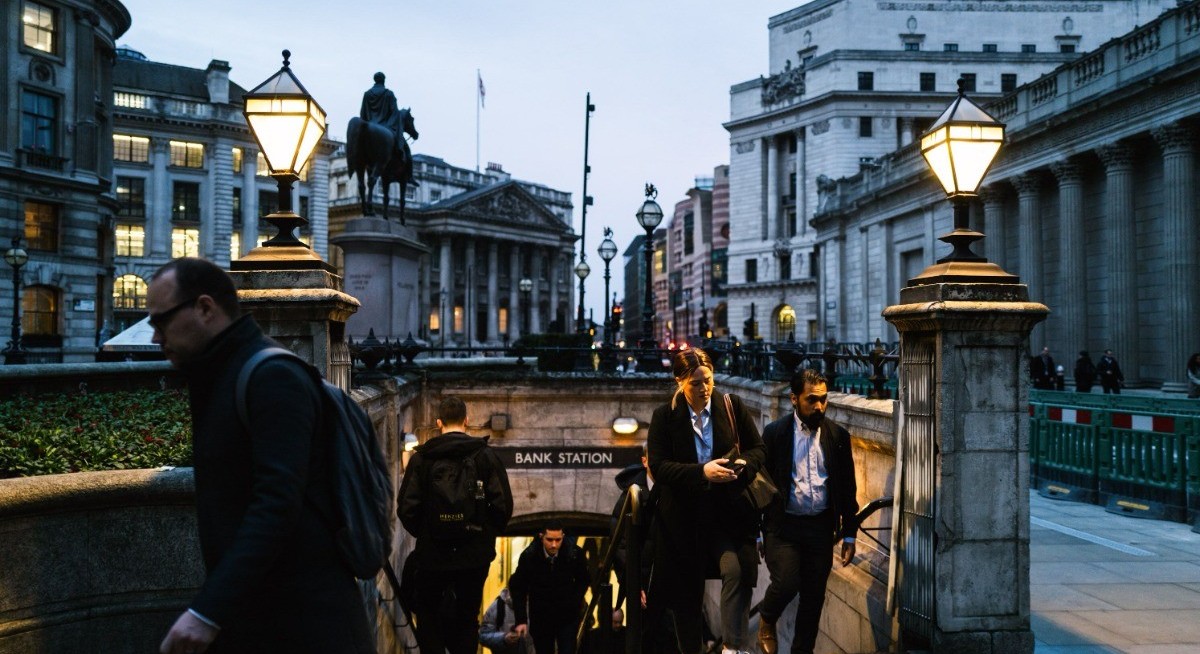


(March 19): The Bank of England (BOE) said it “stands ready to act” against a surge in inflation triggered by war in the Middle East, prompting traders to ramp up bets on an interest-rate hike as soon as next month.
The nine-member Monetary Policy Committee (MPC) voted unanimously to leave rates unchanged at 3.75% on Thursday — their first decision without any dissent in four and a half years.
Minutes from the meeting evidenced a major shift in tone, while the conflict disrupts production in the world’s most important oil-producing region and stops tankers passing through the crucial Strait of Hormuz.
Rate-setters opened the door to hikes, with governor Andrew Bailey warning that policy must “respond to the risk of a more persistent effect on UK consumer price index inflation”. In a separate statement, he added: “Whatever happens, our job is to make sure inflation gets back to its 2% target.”

Traders reacted to the hawkish tilt by increasing bets on hikes, fully pricing in two quarter-point increases and a strong chance of a third by the end of the year. Gilts extended earlier losses, with two-year yields rising as much as 20 basis points to 4.30%, while the pound rose 0.4% against the dollar to US$1.3310.
See also: Top UK port operator’s £10 bil sale draws KKR, GIP, DP World
The panel dropped language from February’s decision that told investors the benchmark rate was “likely to be reduced further”.
The scale of the challenge was underscored by Swati Dhingra, one of the BOE’s most dovish officials, saying that a hike may be needed in the event of a long-lasting energy supply shock. Several rate-setters indicated they would have backed a cut to borrowing costs had the conflict not broken out amid a subdued growth picture domestically.
“If the war is protracted — and hence poses more durable upside risks to inflation — it is possible that the bank’s next move on rates is an increase,” said Kallum Pickering, the chief economist of Peel Hunt.
See also: UK motor finance payouts set at £7.5 bil after FCA changes
The UK was the latest in a wave of global central banks to signal a cautious approach in the wake of the conflict. The US Federal Reserve also held rates on Wednesday, with outgoing chair Jerome Powell saying it was too soon to gauge the effects of the war on America’s economy. The European Central Bank is also expected to keep policy unchanged later on Thursday.
Traders had reversed their bets on the BOE easing policy further since the first strikes on Iran in late February. European natural gas prices surged overnight after Iranian missiles damaged the world’s largest liquefied natural gas export plant, sending benchmark futures jumping as much as 35% higher on Thursday morning.
Bailey pointed to signs that the instability is already feeding through to UK consumers through increased petrol costs, and flagged the risk that it pushes up household energy bills later in the year. The BOE revised its near-term inflation forecasts sharply higher, predicting price growth will accelerate to 3.5% in March — around half a percentage point faster than they had expected before the war.

The committee stressed that monetary policy can’t influence the global energy price surge, and the governor underlined how the best resolution depends on restoring safe passage for ships through Hormuz. However, the MPC is “alert” to the possibility of second-round effects that keep inflation high, as the crisis evokes painful memories of the 2022 energy price shock that followed Russia’s invasion of Ukraine.
While inflation hit double digits then and prompted criticism of a slow response from the BOE, officials are facing a very different economic backdrop this time. The labour market has weakened in recent quarters, despite holding up better than expected in data published hours before the BOE’s announcement.
The market ructions are major blow to Chancellor of the Exchequer Rachel Reeves, raising the prospect of renewed job losses and higher mortgage rates, while making it more expensive to service Britain’s near GBP3 trillion (US$4 trillion or $5.12 trillion) debt mountain. Government borrowing costs have surged since the war broke out, with the benchmark 10-year gilt yield up 63 basis points.
“The surge in oil and especially natural gas prices this morning tilts the risks further towards hikes,” said Rob Wood, the chief UK economist of Pantheon Macroeconomics.
Uploaded by Tham Yek Lee




