



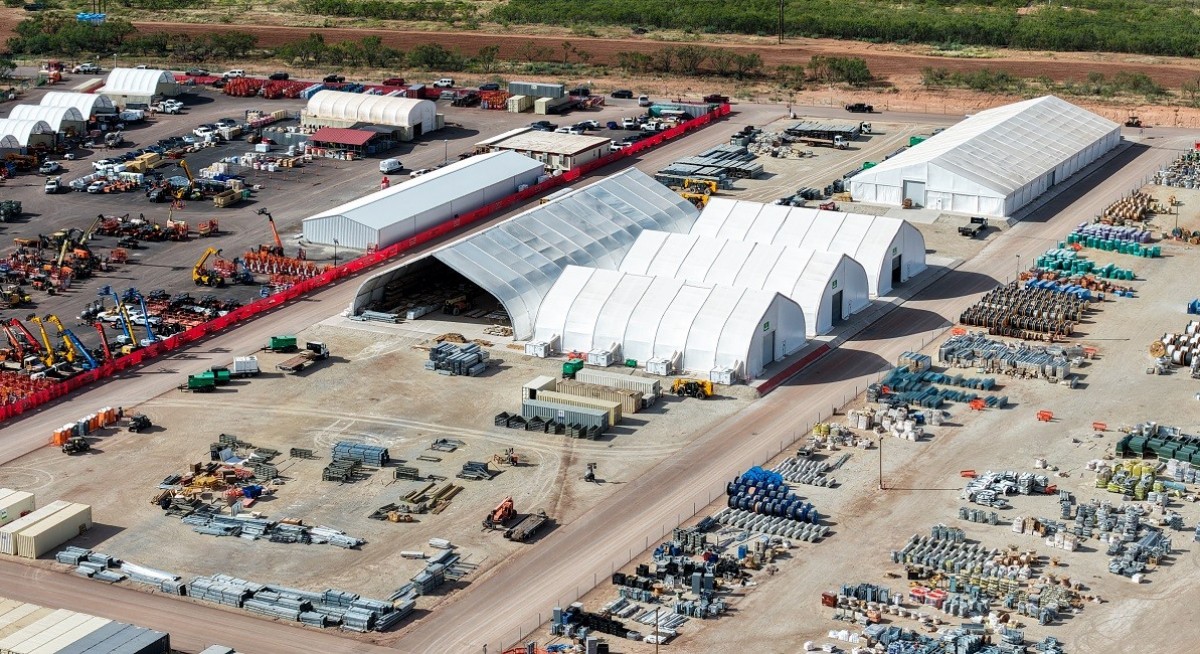



Currently, the stock market seems to cheer companies that invest heavily in data centres, bringing the market cap value of Nvidia to US$4.3 trillion and Oracle to US$869 billion. Nvidia is using its cheap capital to invest US$10 billion in integrated chip maker Intel, as well as US$100 billion in OpenAI partnership. Do these investments make sense or are they signs of investor hype that would further fuel the AI bubble?
Historically, September has tended to be a relatively weak month for US stock market returns. However, recent announcements from Nvidia and Oracle on increased investments in data centres and cloud infrastructure have added nearly US$170 billion ($219.3 billion) and US$244 billion respectively to their market caps, boosting all three major US indices — the S&P 500, Dow Jones and Nasdaq — to record highs. The artificial intelligence (AI) industry is booming in terms of both investments and market value of AI companies, listed or unlisted start-ups. According to McKinsey, equity investment in AI reached US$124 billion in 2024, driven by generative AI, but agentic AI will be the new emerging technology. Agentic AI is different from current passive AI models because it can make and act on its own decisions rather than producing outputs for human decisions.
All AI models rely on servers in data centres that require hardware, processors, memory, storage and energy. By 2030, McKinsey forecasts that global data centres would need US$6.7 trillion to meet exponentially rising computing power demands. The International Energy Agency (IEA) has estimated that global data centre electricity consumption — heavily driven by AI — is projected to reach around 945 terawatt-hours (twh) by 2030, representing just under 3% of the world’s total electricity usage. Of the total investments needed, 15% will go to real estate developers and construction companies, 25% will be allocated to utilities and energy providers and telecom operators, and 60% will flow to semiconductor companies and information technology (IT) suppliers producing chips and computing hardware. Over-investing in data centre infrastructure risks stranding assets, while under-investing means falling behind.




