


Floating Button
Home Views Asean

The trade war just got a lot more complicated

Manu Bhaskaran
Manu Bhaskaran • 10 min read
The trade war just got a lot more complicated
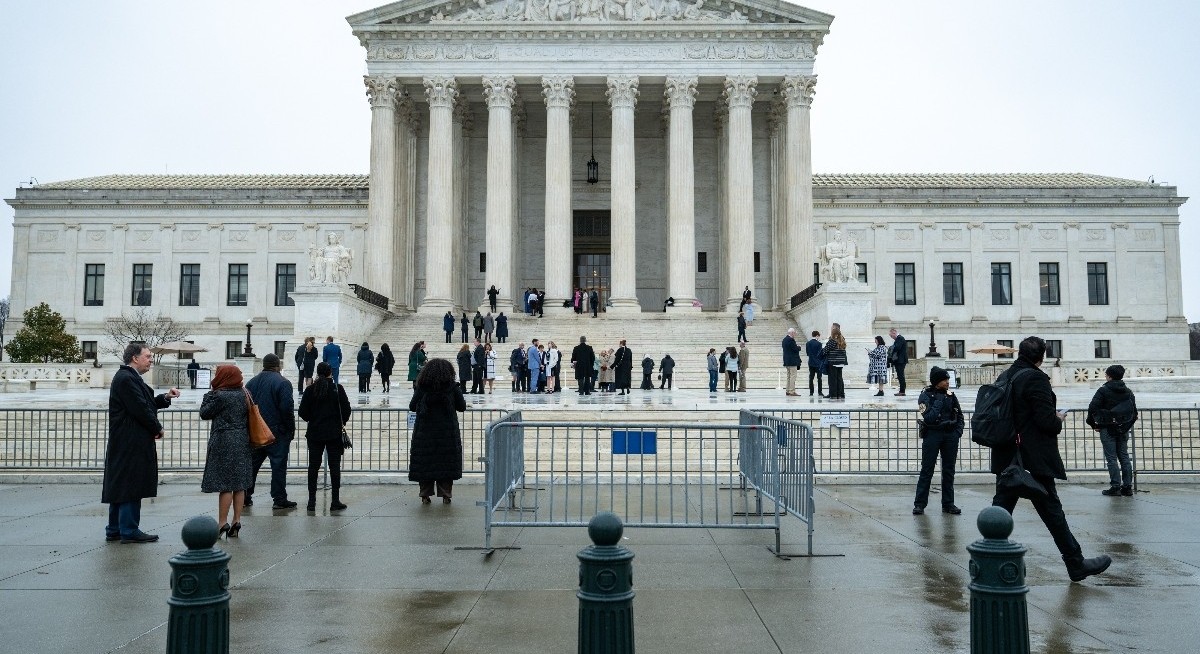
The Supreme Court strikes down key Trump tariffs, sending global trade, the US economy and political strategy into uncertainty. Photo: Bloomberg
Font Resizer
Share to Whatsapp
Share to Facebook
Share to LinkedIn
Scroll to top
Follow us on Facebook and join our Telegram channel for the latest updates.

There’s never a dull moment in world trade these days, certainly not since US President Donald Trump unleashed his trade war last April. Last week’s US Supreme Court judgement invalidating much of his tariffs will impede the president’s trade strategy, but Trump is undeterred, vowing during his State of the Union speech on Feb 24 to impose new tariffs under other laws.

So, high-tariff and other protectionist policies will persist — but there will be further legal battles, as these other laws do not seem to give him the authority to impose the tariffs he envisages.

Consequently, the world economy will drift into an even greater period of uncertainty. Doubts will linger over the effective tariff rate, and confusion will reign as trade deals based on his now-illegal tariffs begin to unravel. Without the tariff revenues he had anticipated, America’s fiscal position will also deteriorate, adding pressure on the US dollar and bond markets.

In addition, the court decision punctures Trump’s apparent political Teflon coating and is likely to embolden his opposition. At the geopolitical level, the absence of credible and effective trade measures weakens America’s bargaining position, particularly relative to China. Any relief for Asian economies from lower tariff rates is therefore likely to be short-lived.

Legal uncertainty

First, there is the legal uncertainty. The US Supreme Court ruled that the tariffs Trump imposed under the International Emergency Economic Powers Act (IEEPA) were illegal, while tariffs under other legislation remain in place. Trump has signalled that his government will use alternative mechanisms to restore tariff levels to those prevailing before the court decision.

See also: Bank of Thailand surprises with 4-2 vote to cut key rate

But this is not possible because these alternatives give the president less freedom than the IEEPA. These other laws, such as Sections 122 and 301 of the Trade Act of 1974, Section 232 of the Trade Expansion Act of 1962, and Section 338 of the Tariff Act of 1930, come with more constraints than the IEEPA tariffs.

This raises several dangers for Trump’s new tariffs. For example, the Section 122 clause used by Trump for his new 10% tariff on all countries is allowed only for a balance of payments emergency. But since there is no such crisis currently, legal suits to invalidate them could well succeed. Another challenge is that congressional approval is mandatory after 150 days, and that might not be forthcoming.

Trump’s Republicans hold a slim majority in the House of Representatives, and several members are likely to defect, as the tariffs are unpopular with voters ahead of the November 2026 mid-term elections. House Speaker Mike Johnson conceded that it would be “a challenge to find consensus on any path forward on the tariffs”, suggesting that Congress is unlikely to take up legislation to codify Trump’s revised tariffs.

See also: Indonesian wealth fund co-CIO resigns as leadership gap widens

A second source of uncertainty is what will happen to the trade deals the US imposed on other countries. Asian and other governments will likely avoid declaring the deals invalid after the court decision, so as not to provoke Trump’s ire. But they may still find ways to delay compliance with the one-sided and often onerous commitments they were forced to accept.

Since the deals were not drawn up as legal documents with tight wording, there will be lots of wriggle room for America’s trading partners to delay implementation of the more offensive obligations, such as those regarding investment commitments or regulatory alignment.

Already, India’s trade negotiators have postponed their planned visit to finalise India’s trade deal. European Union legislators are also suggesting that parliamentary approval for their deal with the US be delayed.

There is also a third area of uncertainty. About US$165 billion ($208 billion) of revenues were raised under the now-illegal tariffs, a large amount that should be refunded to importers. In practice, however, importers are likely to face a prolonged process to secure refunds, possibly involving litigation in the lower courts.

The optimistic view that tariff refunds will stimulate demand is probably misplaced. Given the practical difficulties, any boost to corporate spending from returned funds is likely to be muted and spread over time. The tussle over refunds is also expected to be politically contentious.
Businesses dislike uncertainty over such important issues. As a result, hiring and capital spending plans may be deferred or scaled back for several months, which alone could slow economic activity, not just in the US but globally.

Economic implications

In the meantime, the court decision will have important economic implications:

Sink your teeth into in-depth insights from our contributors, and dive into financial and economic trends

  • An initial reduction in protectionism, which may not last: The Yale Budget Lab estimates that the revocation of IEEPA tariffs lowers the estimated effective tariff rate from 16% to 9.1%, with China gaining the most as its effective tariff rate falls from a pre-judgement level of 24% to 8.3%. Even if Trump gets his way and raises the new tariff rate to 15%, the resulting effective tariff of 13.7% would still be lower than the pre-ruling level. Thus, his trade officials will have to resort to high sectoral tariffs, such as on semiconductors and pharmaceuticals, in order to raise the fiscal revenues needed and to achieve the same level of protectionism the administration desires.
  • Longer-term US fiscal position under a cloud: The IEEPA tariffs contributed three-quarters of total tariff revenues collected. These were revenues that the US government desperately needs to fund the tax cuts and higher spending under Trump’s signature Big Beautiful Bill. The Yale Budget Lab projects that tariff revenue for the 2025-2036 period will now fall from the original US$2.3 trillion to just US$1.1 trillion. In short, the US is poised to suffer a significant deterioration in an already bad fiscal position. It will not be long before the financial markets focus on that.
  • Trade flows could surge again in the short term: Robust demand in the US, particularly for technology-related equipment, continues, and this could prompt importers to bring forward their imports to take advantage of the new 10% tariff before tariff rates are raised again. This may prolong the upswing in Asian export data and further delay or offset any downsides associated with the IEEPA tariffs.

There will also be political consequences. Domestically, the court decision undermines Trump’s image of political invincibility. Opposition to his controversial policies, already growing, is likely to gain new momentum. Most of his Republican allies in Congress and elsewhere have been reluctant to challenge him even when they disagreed on specific policies — but now some may feel emboldened to oppose him. Trump will find it harder to push through policies, whether on trade or other matters.

At the geopolitical level, the Supreme Court decision invalidating IEEPA tariffs strengthens China’s hand relative to the US. China can claim that its position — that the tariffs Trump imposed were illegal — has been vindicated.

The disarray on the US side contrasts sharply with the unified way the Chinese system operates, reinforcing President Xi Jinping’s view that China’s more effective political system could eventually help him overcome Trump’s coercive tactics. This suggests Trump may struggle to secure the deals with China that he wants, as a more confident China is likely to take a robust approach toward the US. His planned visit to China at the end of March may not prove a great success.

What happens to Asian economies?

The threat calculus will change in different ways for various Asian economies:

  • In the short term, China benefits from enjoying the largest quantitative fall in tariffs among America’s trading partners. But China is also uniquely exposed to the alternative tariff authorities that the US will now turn to. Given the geostrategic dynamics and America’s longstanding gripes with Chinese trade practices, China will almost certainly be targeted with more tariff actions.
  • India’s trade architecture, which encompasses restrictive agricultural import regimes and discriminatory business registration requirements, as well as its digital services tax, exposes the country to being targeted by Section 338.
  • For Asian economies such as Malaysia and Singapore, which are heavily exposed to electronics exports, the most concerning alternative is Section 232, where investigations into semiconductors and other related industries are ongoing. Most of these countries have already signed tariff agreements with Washington, under which tariffs on electronics have been temporarily suspended pending the outcome of investigations.
  • For other Asean countries, the post-IEEPA period will likely result in net reductions. Unlike China and India, the tariffs imposed on these economies have overwhelmingly relied on the IEEPA. Alternative authorities provide much weaker coverage; most of these economies have been compliant with World Trade Organisation rules, making it harder for the US to establish a clear finding of discriminatory trade practices. While there may be second-order effects from sectoral tariffs or specific practices such as currency manipulation, these are manageable compared to blanket IEEPA tariffs.

In the medium term, the new tariff configuration is not likely to disrupt the supply chain diversification that Southeast Asian economies are benefiting from. With China more exposed to the likely alternative tariff mechanisms, supply chain reconfigurations are likely to continue, given the structural drivers of US-China competition and domestic changes in China’s economy.

There might, however, be delays in the process, as firms re-evaluate the implications of the new tariff map. The Supreme Court ruling may have thus reduced Washington’s trade policy volatility, but the global drivers remain unaltered.

What should Asean economies do?

The fundamental challenges in the global trade environment remain unchanged by the court decision. Despite this setback, the Trump administration is likely to use other means to raise tariff rates again. Its protectionist instincts remain, and ways will be found to block imports without using tariffs.
In addition, both the US and other countries are increasingly resorting to industrial policies that favour domestic producers over exporters. In Europe and Japan, policy prioritisation is growing, driven by national security and resilience considerations in the formulation of trade and industrial strategies.
All this makes export promotion more challenging for this region. Yet giving up on export-led growth is not a serious option for most of the regional economies, which lack the scale to achieve high growth without a large export contribution. The region’s policy leaders need to address the following areas:

  • While Asean has made some progress in promoting regional integration, it has not gone far enough. Since the political obstacles in the way appear formidable, it might be better if Asean agreed to allow the more open economies in the region, such as Vietnam, Malaysia, Brunei and Singapore, to move ahead with integration. A two-speed Asean is not ideal, but it would be better than doing nothing.
  • Sub-Asean regional integration should be taken further. The Greater Mekong Sub-Region, covering Myanmar, Thailand, Cambodia, Laos and Vietnam, has been a success. It should be allowed to widen its integration. The Johor-Singapore Special Economic Zone could be sped up and made more ambitious.
  • Bolder initiatives should also be considered. For instance, those Asean economies that are members of the Comprehensive and Progressive Trans-Pacific Partnership (CPTPP) could work closely with like-minded powers such as Japan to accelerate efforts to foster collaboration between the CPTPP and the European Union.

The complex global political and trade environment is a test for Asean, and it would be a pity if the region’s leaders fail to rise to the challenge.

Manu Bhaskaran is the CEO of Centennial Asia Advisors

×
The Edge Singapore
Download The Edge Singapore App
Google playApple store play
Keep updated
Follow our social media
© 2026 The Edge Publishing Pte Ltd. All rights reserved.

