
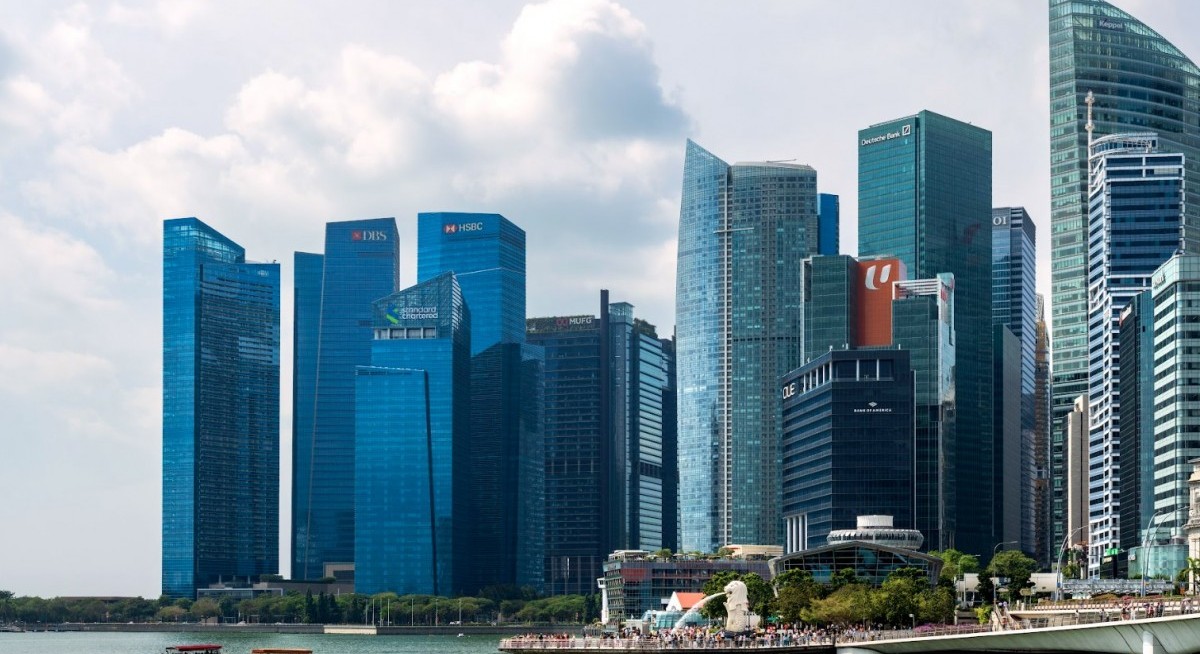

The counterpoint is that banks are interest-rate-sensitive investments. Risk-free rates affect banks’ share prices through various investment models. Sora and other benchmark rates affect banks’ net interest income, securities book and indirectly, their net asset value.
For interest rates, Singapore is often a price taker given that it has an exchange rate policy versus the monetary policy set by the central banks of countries with large domestic economies. Despite this, Sora fell more rapidly than the Secured Overnight Financing Rate (SOFR), partly because of the US Federal Reserve’s data-driven focus and the debasement of the US dollar by the Trump administration. The debasement continues with Stephen Miran, who is now on the Fed’s board, saying to Bloomberg TV that the Fed should cut rates despite the Iran war.
As of March 5, the conflict in the Middle East has driven up the price of oil. Brent crude is at US$83 ($105.93) per barrel, up from US$70 as of Feb 27. In his Substack, Nobel laureate economist Paul Krugman says his back-of-the-envelope calculations indicate that a US$15 a barrel rise in oil prices will raise overall US consumer prices by about 0.3%. A US$50 a barrel rise from the pre-bombing level, which would take the price to more than US$120, would raise consumer prices by about 1%. “For perspective, that’s roughly what Trump’s tariffs have done. Yet those tariffs, while they have hurt, have caused neither runaway inflation nor a recession. Neither will rising oil prices on their own, even if they go well above US$100 a barrel,” Krugman writes.
Nonetheless, higher oil prices coupled with tariff volatility could cause inflation to remain heightened, limiting the ability of the Federal Reserve to cut the federal funds rate despite Miran’s stance.
See also: Death and taxes are certain for Singapore smokers
Regionally, to date, higher oil prices have impacted gas prices, including in Singapore, which may mean higher electricity prices here, putting pressure on inflation. Inflationary pressures, in turn, may imply that Sora could find a floor providing some much-needed stability for the banks’ net interest margins.
Elsewhere, the idea of a Switzerland of the Middle East has been shattered with swarms of Iranian drones in Dubai, sending tax exiles in a tax shelter to bomb shelters. Already, Bloomberg has reported that several Chinese financial institutions, including banks, are scaling back their exposure to Middle East borrowers, including a sovereign wealth fund.
On the flip side, the local banks have a very limited exposure to the Middle East. OCBC has some exposure, but a spokesperson says it’s not significant. UOB doesn’t really have a presence in the Middle East.
See also: Let’s go beyond task forces and workgroups when tackling problems
A DBS spokesman says: “Our direct exposure to the Middle East is limited, and mostly to high-quality investment-grade names. As with any geopolitical development, we are monitoring the situation closely with the safety and well-being of our Dubai staff a top priority. We also remain attentive to potential second-order effects — including higher energy prices and supply chain disruptions — and their impact on our clients.”
Other safe haven plays in Singapore are likely to be stocks focused on the local domestic market, such as local construction stocks. The best proxies to the Asia for Asia trend are likely to be ETFs that represent sectors such as tech and market indices within Asia, including the Straits Times Index, the Hang Seng Index and the Hang Seng Tech Index.
It’s too late to speculate whether Trump and his advisers went to war without a plan. His biographer, Michael Wolff, author of Fire and Fury: Inside the Trump White House, notes that Trump believes he must claim victory — and that, in his view, the war ends only when he does. Let’s hope that moment comes soon.


