



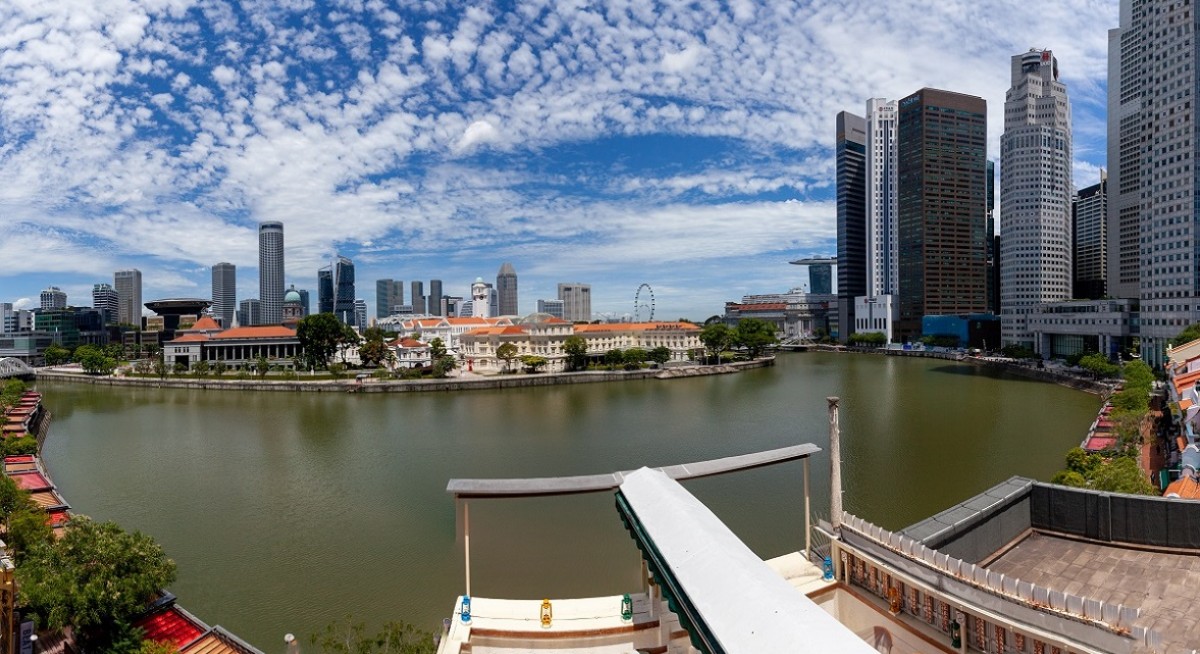



The exhibition, Manila Galleon: From Asia to the Americas, traces commercial links strengthened by the advent of Spanish rule in the Philippines and the voyages of Ferdinand Magellan, Miguel Lopez de Legazpi and Andres de Urdaneta. Such connections didn’t commence with conquest, but they were enhanced. The show doesn’t endorse imperialism. Singapore, a post-colonial success story, is too shrewd to uncritically laud the arrival of the European era. But it has also gained enormously from shipping; its port is one of the busiest and the government is plowing tens of billions of dollars into an upgrade. In short, trade is good. And a neat thing for Singapore to showcase, the more so if links with China and India, and the professional diaspora of those giant countries get to feature.
Chip wars wouldn’t faze 17th-century Augustinian monks in the Philippines. The friars and their Spanish patrons might have waved away trendy economic concepts like reshoring and friend-shoring. Efforts to sideline China or ringfence manufacturing and technological development may well have met with guffaws.
Commonly described as being in retreat, globalization has taken many forms over the centuries. It didn’t begin when the Cold War ended or even in the late 1970s when Deng Xiaoping began opening China’s economy. Trade and investment links are in a constant state of evolution. That’s the takeaway from a compelling display on the banks of the Singapore River. For anyone depressed about contemporary attempts to erect barriers between goods, people and capital, a visit to the Asian Civilizations Museum should provide relief.




