

Floating Button
Home Capital Broker's Calls

Look upstream to SIA Engineering, China Aviation Oil as war breaks out: OCBC

Jovi Ho
Jovi Ho • 4 min read
Look upstream to SIA Engineering, China Aviation Oil as war breaks out: OCBC
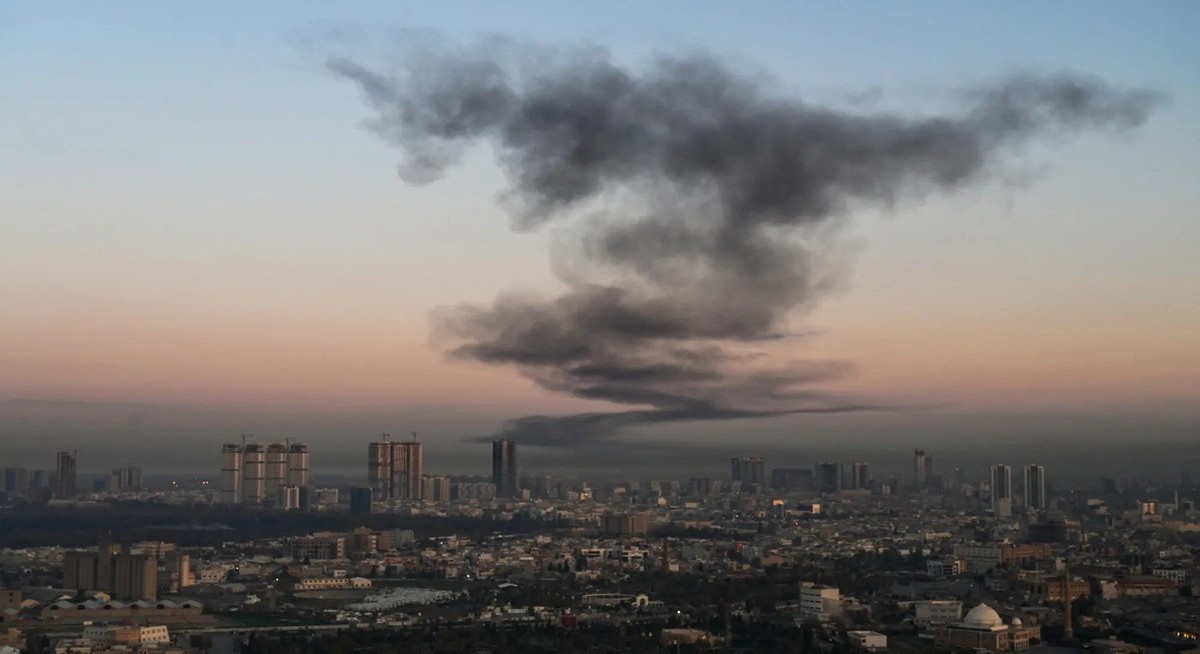
In an extreme scenario where the Strait of Hormuz faces a prolonged blockage, OCBC does not rule out the possibility of Brent crude “surging into triple digits”. Photo: Bloomberg
Font Resizer
Share to Whatsapp
Share to Facebook
Share to LinkedIn
Scroll to top
Follow us on Facebook and join our Telegram channel for the latest updates.

Ongoing disruptions in the Middle East airspace, which is causing significant flight delays and cancellations, as well as a surge in airfares, may weigh on tourist arrivals in Singapore, says OCBC Group Research analyst Ada Lim. This comes on top of an 8.1% y-o-y drop in visitors to 1.5 million in January.

That said, the extent and severity is heavily dependent on how long the conflict persists, and corresponding spillover to macroeconomic conditions. A potential mitigating factor is that Singapore’s top five source markets — China, Indonesia, Malaysia, Australia and India — constituted 54.9% of total visitor arrivals in 2025, adds Lim in a March 6 note.

Given the soft visitor numbers, it came as no surprise that revenue per available room (RevPAR) for January slipped 1.2% y-o-y to $220, says Lim.

Occupancy and average room rates dipped 0.6 percentage points (ppts) and 0.4% y-o-y to 81.2% and $271, respectively.

“We expect Singapore hotels to turn in a firmer set of numbers for February — alongside stronger visitor arrivals — supported by the biennial Singapore Air Show, which reportedly drew a record 65,000 trade visitors in four days, up from 60,000 in 2024,” writes Lim.

See also: JPMorgan sticks with ‘overweight’ on Singtel as share buybacks begin early

CapitaLand Ascott Trust (CLAS) is the only hospitality S-REIT under OCBC’s coverage. With a fair value of $1.01, Lim expects “no direct impact” from the war as CLAS does not own properties in the Middle East.

“A prolonged conflict may trigger stagflation concerns and dampen travel appetite; however, we think CLAS’ large and geographically diversified portfolio will mitigate location-specific dips, while a sizeable 65% exposure to stable income sources (i.e. master leases, management contracts with minimum guaranteed income and living sector assets) based on FY2025 gross profit should provide some downside income protection,” notes Lim.

Other stocks to consider

See also: PhillipCapital keeps ‘buy’ on 17Live but cuts target price on softer growth assumptions

Instead of investing in hotels as a proxy for travel trends, Lim prefers “upstream players” like SIA Engineering and China Aviation Oil, which are less consumer-facing.

Supply chain disruptions may potentially worsen the shortage of aircraft parts, further fuelling the ongoing aircraft maintenance, repair and overhaul (MRO) “upcycle”, says Lim, with a $4.05 fair value estimate on SIA Engineering.

Meanwhile, China Aviation Oil’s trading revenue may stand to benefit from ongoing oil price volatility, according to Lim. That said, a potential reduction in flight capacity in Europe may weigh on the volume of jet fuel uplifted, she adds.

China Aviation Oil, the largest physical jet fuel buyer in the Asia Pacific, posted record financial performance for FY2025 ended Dec 31, 2025, with net profit up 41.7% y-o-y to US$110.64 million. The FY2025 results came in above consensus estimates, notes Lim. On March 9, Lim upgraded China Aviation Oil to “buy” with a higher $2.48 fair value estimate, up from $1.60 previously.

Given airspace closures, there will likely be a build-up of inventory across the global cargo network as various players re-assess trade routes and the evolving situation, writes Lim.

“In the medium to long run, prolonged disruption to sea freight movement due to the closure of the Strait of Hormuz may result in a shift in demand from sea to air cargo — especially for time-sensitive shipments — supporting an increase in air freight rates,” she adds.

SATS could capture these re-routed trade flows, and Lim says “long-term investors” can consider accumulating the stock on price weakness. Shares in SATS have sunk around 12% since the US and Israel launched joint airstrikes on Iran. Lim’s fair value estimate is $4.32.

For more stories about where money flows, click here for Capital Section

“Overall, we see the recent market movements as sharp knee-jerk reactions,” says Lim. “Volatility is expected to dominate in the near term, but we expect fundamentals to eventually reassert themselves, barring any significant deterioration of the conflict.”

OCBC Group Research’s base case assumes no blockage of the Strait of Hormuz — a gateway for about 20% of global oil flow. OCBC believes spare capacity from the Organization of the Petroleum Exporting Countries (OPEC) will help cap prolonged disruption and “allow the geopolitical premium to unwind later in the year”.

In an extreme scenario where the Strait of Hormuz faces a prolonged blockage, OCBC does not rule out the possibility of Brent crude “surging into triple digits”, and “a sustained rally would raise clear stagflation risks”.

Infographics: Singapore Tourism Board, OCBC Group Research

×
The Edge Singapore
Download The Edge Singapore App
Google playApple store play
Keep updated
Follow our social media
© 2026 The Edge Publishing Pte Ltd. All rights reserved.

