

Floating Button
Home Capital Global Economy

Tariffs and the economy after the US Supreme Court ruling

Alec Phillips, Elsie Peng and David Mericle
Alec Phillips, Elsie Peng and David Mericle • 6 min read
Tariffs and the economy after the US Supreme Court ruling
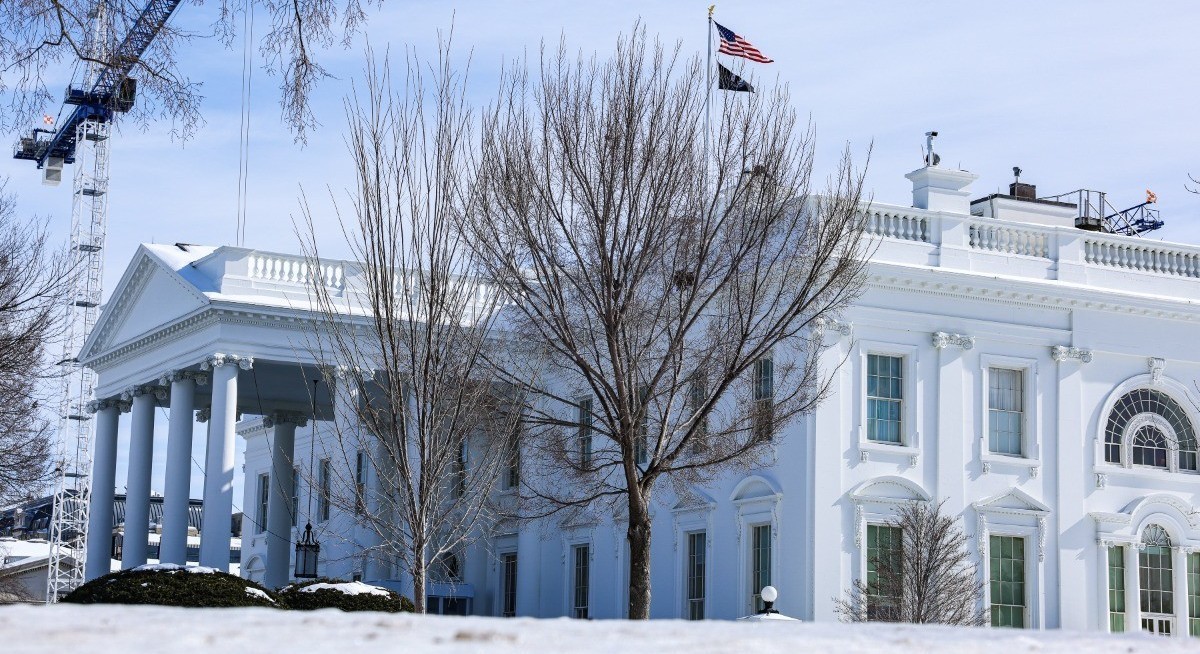
On Feb 20, the US Supreme Court ruled against the tariffs the Trump Administration imposed under the International Emergency Economic Powers Act (IEEPA), in a 6-3 decision. Photo: Bloomberg
Font Resizer
Share to Whatsapp
Share to Facebook
Share to LinkedIn
Scroll to top
Follow us on Facebook and join our Telegram channel for the latest updates.

On Feb 20, the US Supreme Court ruled against the tariffs the Trump Administration imposed under the International Emergency Economic Powers Act (IEEPA), in a 6-3 decision. This includes the “reciprocal” tariffs applied on trading partners at various rates as well as tariffs applied to Canada, China, Mexico and other countries under separate emergency declarations, but it does not affect tariffs imposed under other laws (e.g., the metals and auto tariffs imposed under Section 232, or the 2018–2019 China-focused tariffs under Section 301).

The Court’s decision is silent on the question of refunds, which is likely to lead importers to seek repayment in a separate process in lower courts. To date, we estimate IEEPA tariffs have collected around US$180 billion ($227.8 billion) and we expect most of this to be refunded in increments over the next year or so.

As expected, US President Donald Trump responded by announcing a new “global tariff” under Section 122 of the Trade Act of 1974 to replace the prior reciprocal tariff regime. An executive order signed Feb 20 imposed a 10% surcharge on imports from all countries, with essentially the same exemptions as the prior reciprocal tariffs (energy, precious metals, a number of other products subject to current or prospective Section 232 sectoral tariffs and USMCA-compliant imports from Canada and Mexico). Soon after, Trump announced that he was raising the 10% surcharge to 15%, but as of this writing (Feb 25) the White House has not released additional detail or a new executive order.

Tariffs under Section 122 are limited under law to 15%, which creates some near-term certainty as tariff rates cannot rise further without taking more administratively involved steps under other laws like Section 301.

New uncertainty

However, using Section 122 creates new uncertainty in two ways. First, it is not yet clear how trading partners with reciprocal tariffs under 15% would be treated, but we assume that this will mean an increase in the tariff rate, at least in the short run.

See also: Canada GDP shrinks 0.6% in 4Q as inventory drops

Australia, Singapore, the UK, GCC countries, and many smaller economies faced a 10% reciprocal tariff rate prior to the court ruling, and this will rise to 15% if applied as an across-the-board surcharge, as seems likely.

A few larger economies, notably the EU, Japan, Switzerland, and Taiwan, agreed to deals with the Trump administration that imposed a maximum 15% rate inclusive of the existing US tariff, which generally ranged between 0% and 2.5%. These trading partners look likely to face an incremental tariff increase assuming the 15% now “stacks” on top of the existing US tariff rate.

Second, Section 122 limits these tariffs to 150 days “unless such period is extended by an act of Congress”. The Feb 20 executive order specifies that the current rate expires July 24, and comments from Trump and other administration officials suggest they intend to use other laws to impose new tariffs after that. In theory, the White House could briefly end the Section 122 tariffs after 150 days and restart them, though this seems likely to invite legal challenges.

See also: German inflation eases to 2% as economic recovery starts slowly

However, the fact that the Section 122 tariffs are set at a higher rate than prior tariffs for some trading partners but a lower rate for others is likely to create new friction with trading partners and additional volatility in trade flows, with imports likely to rise from countries that temporarily face lower tariffs while volumes might fall from countries with temporarily higher tariffs. This raises the odds that the administration might seek to modify this new tariff regime through other authorities, like Section 301.

Trump’s comments suggested that the US Trade Representative (USTR) will finalise Section 301 investigations into some trading partners during the 150-day period, but it is unclear how the White House will prioritise these investigations.

The US already has Section 301 tariffs in place on imports from China and could easily adjust these to restore the tariffs struck down by the court, but this seems unlikely ahead of Trump’s visit to China in late March.

For Canada and Mexico, we expect the administration to pursue the USMCA review process rather than imposing Section 301 tariffs on either US neighbour. These three countries accounted for 36% of US imports in 2025.

Several other trading partners accounting for just over half of imports in 2025 have agreements with the US and are also unlikely to be prioritised for Section 301 investigations (this includes Argentina, Australia, Bangladesh, Cambodia, Ecuador, El Salvador, the EU, Guatemala, India, Indonesia, Japan, Korea, Malaysia, Switzerland, Taiwan, Thailand, the UK, and Vietnam).

We expect this to leave countries representing around 10% of US imports at greatest risk for near-term Section 301 investigations, including Brazil and South Africa. However, without any other obvious tariff authority to fall back on after July 24, we assume that the administration will rely on Section 301 to impose tariffs on most other trading partners after that point.

For some trading partners, this could mean a rise in tariff rates back to what was imposed under IEEPA, while for others it could mean a reduction below 15%. We also note that Section 301 investigations related to a particular trade-related policy or sector could cover several countries at once.

For more stories about where money flows, click here for Capital Section

Overall, we expect that a rate similar to the 15% just announced will last through the end of the year with the same exemptions as the IEEPA tariffs, but that at the start of 2027, the administration will use Section 301 and other authorities to restore tariff rates to a level similar to what was in place prior to the Supreme Court ruling. We think the risks to these assumptions lie in either direction at different points, with risks leaning toward lower tariffs after July, as the administration might struggle to fully replace the expiring Section 122 tariffs using other authorities. But after the midterm election and by the start of 2027 the risks lean toward higher tariffs, in our view.

Tariffs on more specific categories?

While Trump did not raise this possibility explicitly, it is also possible that the administration could expand its use of Section 232 to impose tariffs on specific product categories. While the White House threatened such tariffs on several sectors (e.g., pharmaceuticals, semiconductors, etc.) over the last year, we removed tariffs from pending Section 232 investigations from our baseline assumptions several months ago and do not expect any further sectoral tariffs this year.

Exhibit 1 shows that we estimate that the changes will reduce the increase in the effective tariff rate since the start of 2025 from just over 10pp [percentage points] to about 9pp once the Section 122 tariffs are implemented. This is roughly in line with what we had expected prior to the ruling. The risks are tilted toward the increase in the effective tariff rate drifting a bit higher back toward 10pp over time, for example if the White House moves to limit exemptions or imposes larger tariffs using Section 301. But we assume that this risk is limited ahead of the midterm election.

The Appendix provides our detailed estimates of how tariff rates for each country will change after the latest policy changes.

Alec Phillips, Elsie Peng and David Mericle are Goldman Sach economists

×
The Edge Singapore
Download The Edge Singapore App
Google playApple store play
Keep updated
Follow our social media
© 2026 The Edge Publishing Pte Ltd. All rights reserved.

